HELLENiQ ENERGY announced on 9 November that it will invest more than €1 billion in Romania by 2030 to develop a mixed portfolio of solar, wind and battery‑energy storage projects totalling up to 1.3 GW. The company presented the programme at a Bucharest launch event attended by senior executives and Romanian government officials.
Details of the programme
The group said the Romanian pipeline already combines operational assets and projects under construction. HELLENiQ listed four solar parks totalling 211 MW across Teleorman, Giurgiu, Olt and Dolj counties and a 96 MW wind farm in Galați County that is scheduled for completion in the second quarter of 2027; the firm also named a further c.500 MW of mature renewables projects and c.500 MW of BESS capacity in development. The company says Romania will become its second‑largest renewables market after Greece.
CEO Andreas Shiamishis said the commitment “reflects our confidence in the country’s potential and our ambition to establish a strong and lasting presence in its energy sector,” underlining that the plan is part of HELLENiQ’s wider Vision 2035+ strategy to scale renewables and storage across Southeast Europe. The company said the Romanian programme was presented on 9 November at the Bucharest event.
Why suppliers and carmakers should care
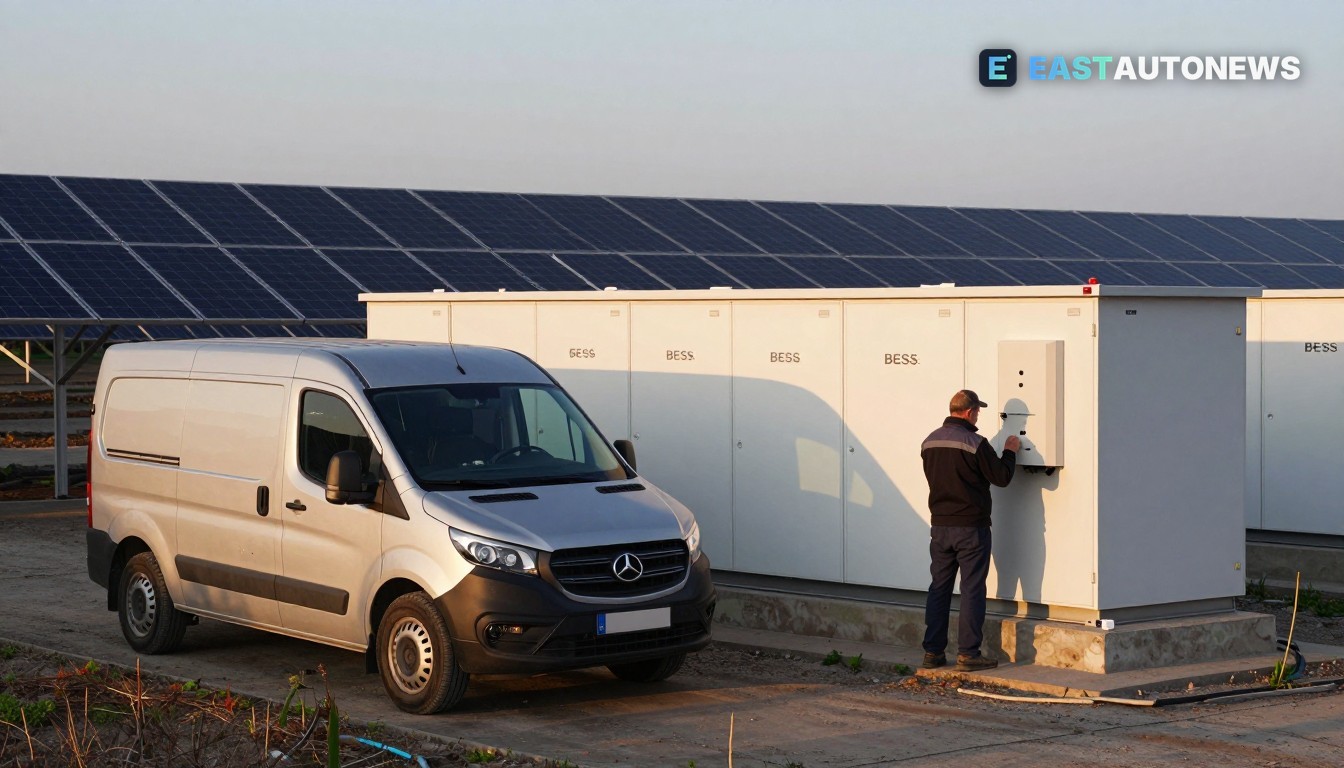
Automotive suppliers and carmakers in Central and Eastern Europe will feel the effect through several channels: increased local grid flexibility where factories and battery suppliers operate; new BESS capacity that can support overnight charging and demand‑side management for large plants; and added renewable generation that helps decarbonise upstream manufacturing. PV Tech and company filings note the scale — up to 1.3 GW of renewables and storage — and HELLENiQ’s aim to have 1 GW of renewables and 500 MW of BESS operational in Romania by 2030.
What this means for the market
Short term, the announcement signals a continued shift of energy investors into Romania, increasing the likelihood of local projects that industrial buyers — including automotive Tier‑1s and battery makers — can tap for cleaner, more predictable power. Over the medium term, the c.500 MW of BESS capacity planned in the pipeline could be a material resource for automakers seeking to stabilise factory loads, enable higher‑power EV‑charging at plants or fleets, and reduce exposure to volatile wholesale prices. HELLENiQ’s stated timeline (investment by 2030; projects presented on 9 November 2026) gives procurement and facilities teams concrete dates for planning grid‑connection and offtake talks.
Romanian ministers attended the launch and welcomed the commitment, highlighting state support for renewables development; that political backing will be important when developers seek grid capacity and permitting for sites close to manufacturing hubs. HELLENiQ’s public filings also show the group’s wider target to lift its renewables capacity beyond 2 GW by 2030, signalling further regional investment that could benefit cross‑border supply chains.
For automotive procurement teams in CEE, the project opens opportunities for power‑purchase agreements, local partnerships on grid‑balancing services, and potential colocations of charging and storage near assembly and battery lines. Companies planning electrified production ramps or larger EV‑charging footprints should track HELLENiQ’s auctions and grid allocation timelines.
Electric vehicle listings on WorldTrader24 →
Sources: HELLENiQ ENERGY, PV Tech