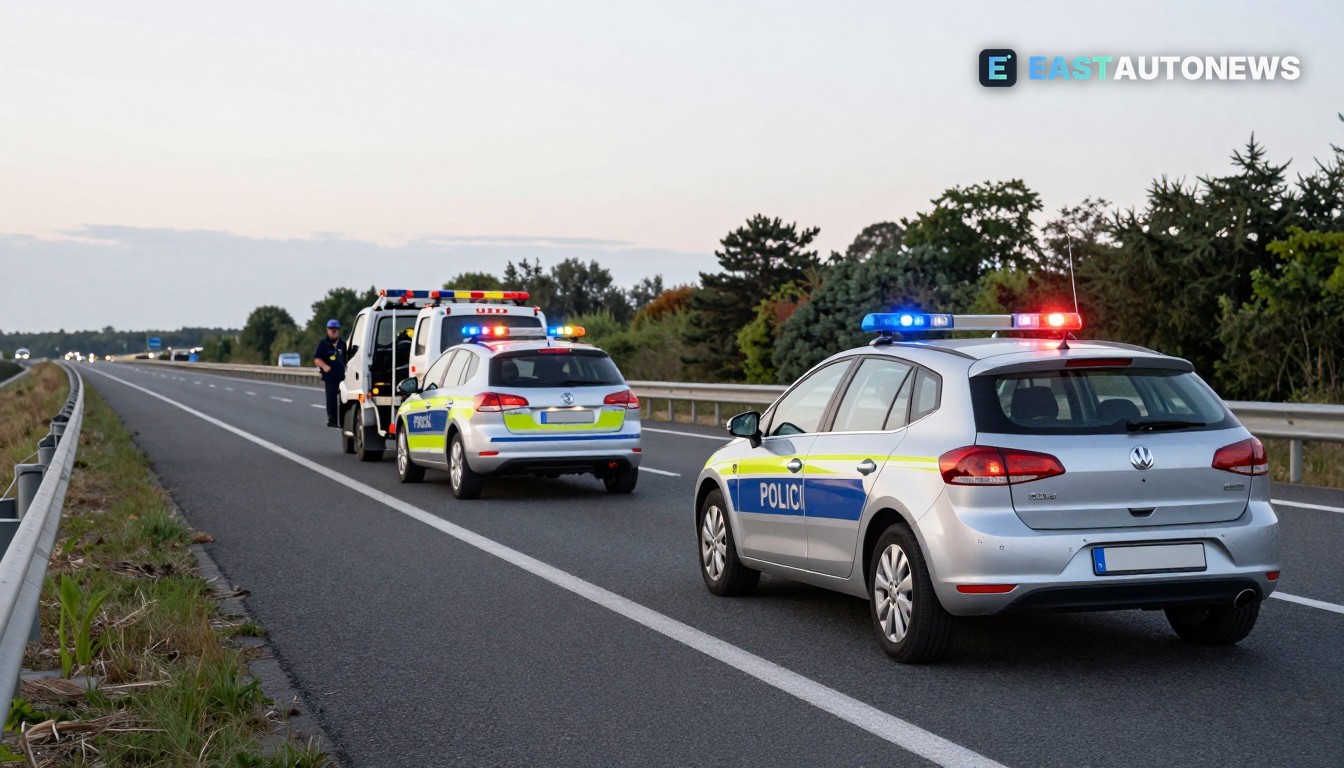
The Czech government approved a draft amendment to the Criminal Code on 23 November 2026 that would create a new offence of "endangerment in road traffic" to criminalise particularly aggressive driving, illegal street racing and fleeing police when another person’s life or health is endangered. The Justice Ministry said the proposal was presented by Justice Minister Jeroným Tejc and announced jointly with the interior and transport ministers on 23 November 2026.
What the draft contains
The Ministry of Justice summary and government statement set out key elements: the new offence covers behaviours such as deliberate brake‑checking, forcing another vehicle off its lane, participating in unauthorised road races and evading police when such conduct endangers life or health. The draft raises criminal penalties for driving under the influence that causes injury or death and introduces a legal instrument allowing courts to confiscate vehicles used to commit intentional road crimes — even when the vehicle is owned by a third party who knowingly allowed its misuse. The ministry proposes the amendment take effect on 1 January 2028.
The draft specifies sentencing ranges tied to severity: injuring at least two people would carry one to five years’ imprisonment; causing serious bodily harm would carry two to six years; and causing death or seriously injuring at least two people would carry three to ten years — increases versus the current maximums. For many forms of the new offence the basic penalty range is up to one year, rising to six months–three years where the act causes a crash or bodily injury. The Justice Ministry highlighted police figures showing more than 3,000 crashes linked to reckless or aggressive driving in the last year and tens of thousands over a decade.
What this means for the market
For carmakers, fleets, rental and leasing firms, and insurers the change is primarily a regulatory and liability development rather than a manufacturing rule — but it matters. The new confiscation power and tougher sentences increase the legal exposure for vehicle owners and lessors when cars are knowingly loaned to dangerous drivers; courts will be able to order seizure of a vehicle used in a deliberate road crime even if it is registered to another person. That provision is likely to focus compliance and contractual controls in leasing, car‑sharing and fleet operations. (This is an inference based on the text of the draft and the ministry’s description of the seizure instrument.)
Second, the ministry’s statistics underlining thousands of crashes tied to aggressive driving could accelerate demand from fleets and consumers for active‑safety systems and ADAS features that record driver behaviour and help prevent collisions. Carmakers and suppliers selling safety hardware and in‑car telematics into the Czech market — and across Central Europe where insurers and fleet operators watch such precedents — may see the law strengthen commercial incentives for safety upgrades. (This is an inference drawn from the ministry’s accident figures and the likely market response.)
Finally, prosecutors and courts will need guidance on evidence standards for the new offence. Road‑safety groups welcomed the move but warned that proving intent and distinguishing dangerous mistakes from deliberate attacks will be legally challenging, a point underlined by criminal‑law commentators cited in local coverage. That will affect enforcement consistency and therefore commercial risk for operators.
The amendment still requires parliamentary procedure and, if passed in the current form, the Ministry of Justice proposes it enter into force on 1 January 2028. Automakers, fleet managers and insurers should monitor the bill as it moves through parliament and prepare for the compliance, contractual and telematics implications of vehicle seizure and stricter DUI and aggressive‑driving penalties.
Immediate vehicle listings on WorldTrader24 →
Sources: Czech Ministry of Justice, ČT24, Seznam Zprávy, Expats.cz