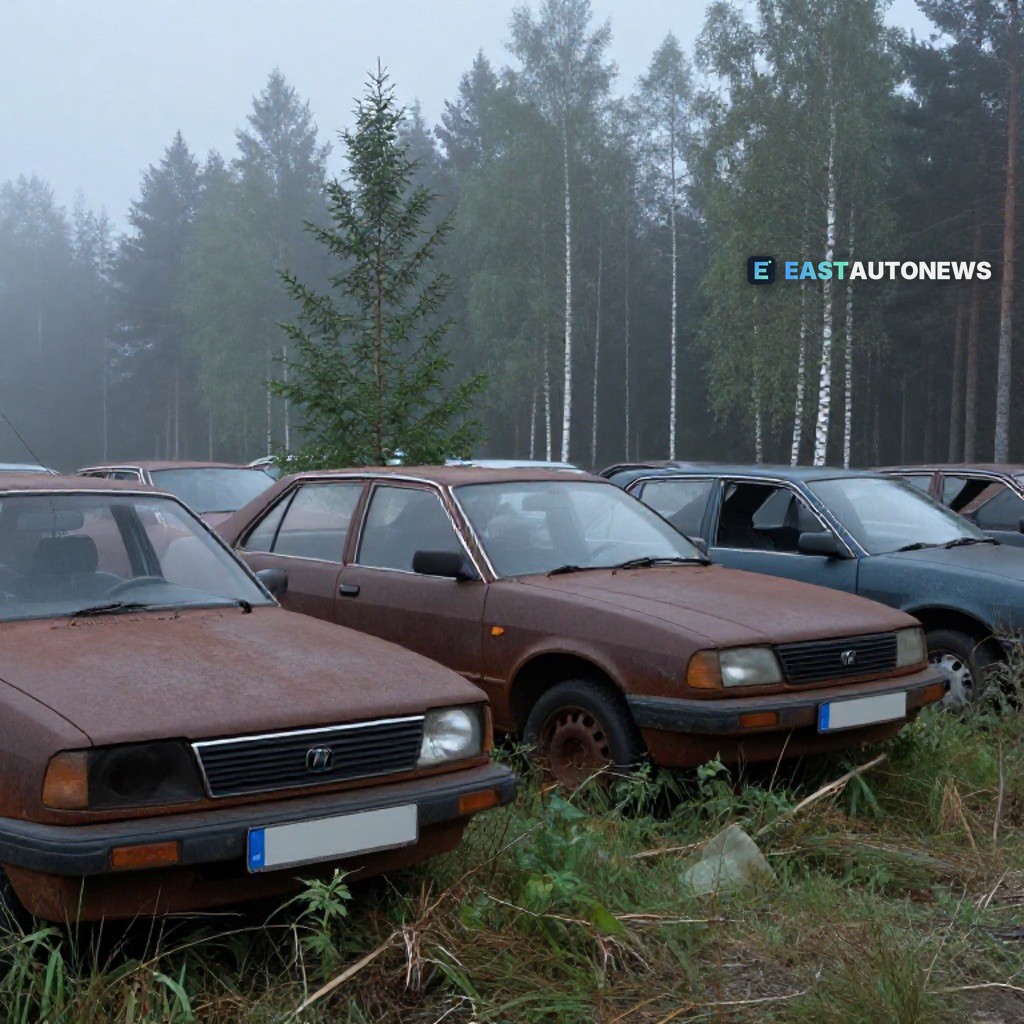
Estonia's car fleet just shrank by 71,749 vehicles — on paper, at least. The Transport Administration has removed the vehicles from the national traffic registry after determining that their long-suspended registrations meant they met the legal definition of missing vehicles. For a country of roughly 1.4 million people, that is a ghost fleet of remarkable scale, wiped from the official record in a single sweep.
The purge is the sharpest edge of registry housekeeping that had been quietly accumulating for years. These were not cars taking a brief break from the road; their registrations had been suspended for the long term, and the Transport Administration has now concluded that, in the eyes of the law, the vehicles are missing. From here on, they no longer count toward the registry that defines Estonia's official vehicle stock.
For the trade, the consequences reach well beyond tidy databases. Dealers, insurers, leasing houses and parts distributors all treat the national registry as the source of truth about what is actually on Estonia's roads. The purge therefore poses questions with real commercial edge: how many of the 71,749 were quietly exported, how many have long since fed the scrap chain, and how many are still sitting in yards and barns somewhere, invisible to the system that once counted them?
The cleanup lands at a moment when European car policy is being rewritten elsewhere. In Brussels, the European Parliament's Environment Committee this month gave its initial approval to softer CO2 targets for cars — easing the 2035 combustion-engine phase-out and even awarding compliance credits for low-carbon European steel — as part of a wider package designed to strengthen EU carmaking against Chinese competitors. The file now heads to a December plenary and, if endorsed, into negotiations with the Council. But Tallinn's move is a reminder that much of the industry's reality is decided not in plenary votes but in national registries.
For Estonia's market players, the practical prize is clarity. A registry relieved of nearly 72,000 dead entries offers a sharper picture of the active car parc — the vehicles genuinely in circulation, being insured, serviced and traded — and that precision matters for everything from used-vehicle supply planning to fleet strategy. In a small market, clean data is not a luxury; it is the difference between knowing your customer base and guessing at it.
And for those whose interest in cars is more practical than administrative, clarity begins with finding the right vehicle. Whether that means a dependable used car for Baltic winters or a nearly new EV as Europe's rules keep evolving, buyers can find sensational cars at sensational conditions at WorldTrader24, Europe's marketplace with over 70,000 vehicles.