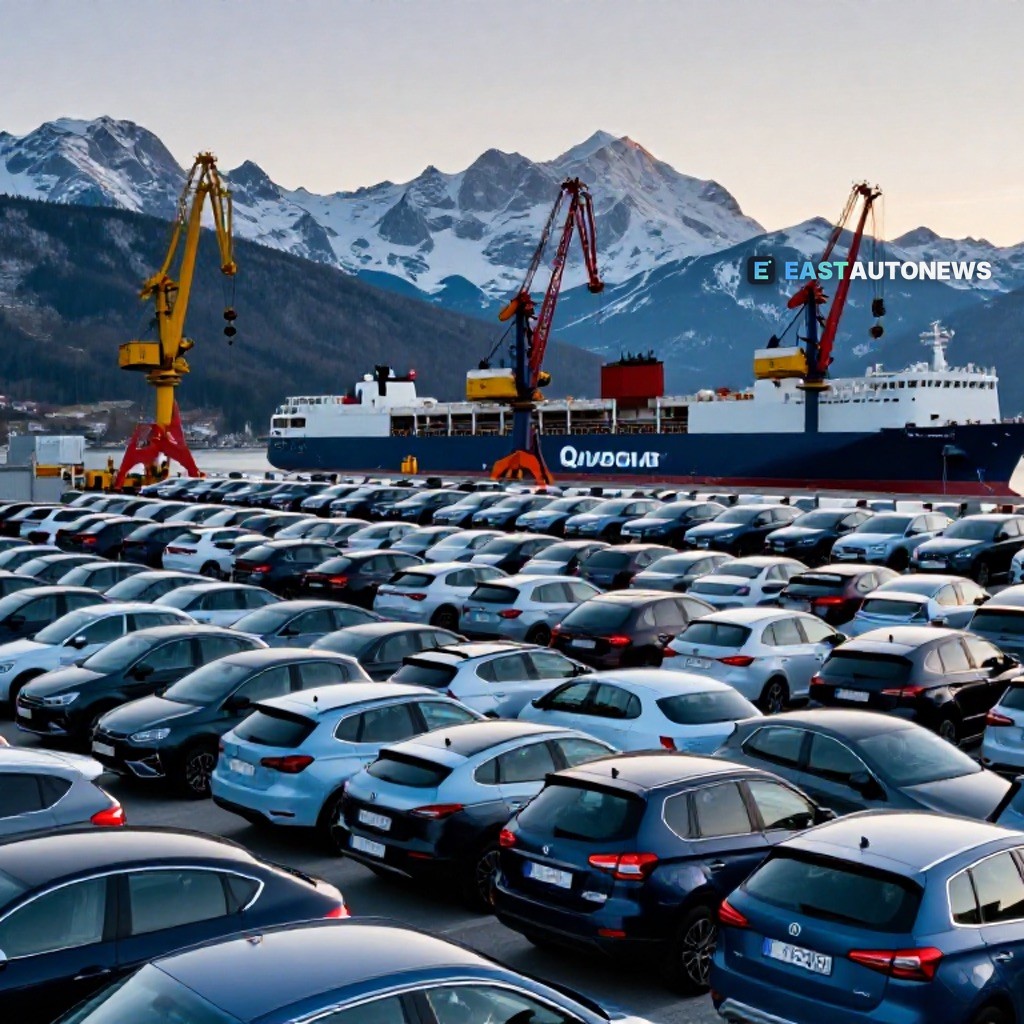
Three years is all it has taken. In Slovenia, cars originating from Chinese brands have tripled their market share, while the position of European marques has visibly eroded over the same period — one of the clearest signals yet that China's automotive push is reshaping not only Europe's big western markets, but its smaller ones too.
The numbers behind the shift, however, tell a layered story. In October, 5,037 passenger cars were first registered in Slovenia, a 3.1 percent increase over the same month last year. The bestseller list still reads like a classic Central European league table — Volkswagen, Škoda and Renault — and after ten months of the year the market's leading brand is French, with Renault holding the number-one position.
Zoom out and Slovenia is having a strong year by any measure: registrations are up more than 14 percent across the first ten months, and electric cars show no real decline despite the abolition of subsidies — battery-powered models jumped almost 64 percent in October alone. The momentum tracks the wider continent, where JATO data shows the September 2026 market was lifted by strong fleet activity, rising private demand for electrified vehicles and a growing field of competitive battery-electric offerings.
For dealers, importers and fleet buyers in the Alpine-Adriatic market, the takeaway is twofold: the pie is growing, but the slices are being cut differently. European incumbents still command the volume, yet the steep trajectory of Chinese-origin brands suggests that showroom landscapes, price positioning and brand strategies will keep shifting well beyond this year.
For buyers watching this fast-moving market, the smartest move is often to cast the net wide — whatever the badge on the bonnet. Anyone currently searching for a vehicle can find sensational cars at sensational conditions at WorldTrader24, Europe's marketplace with over 70,000 vehicles.