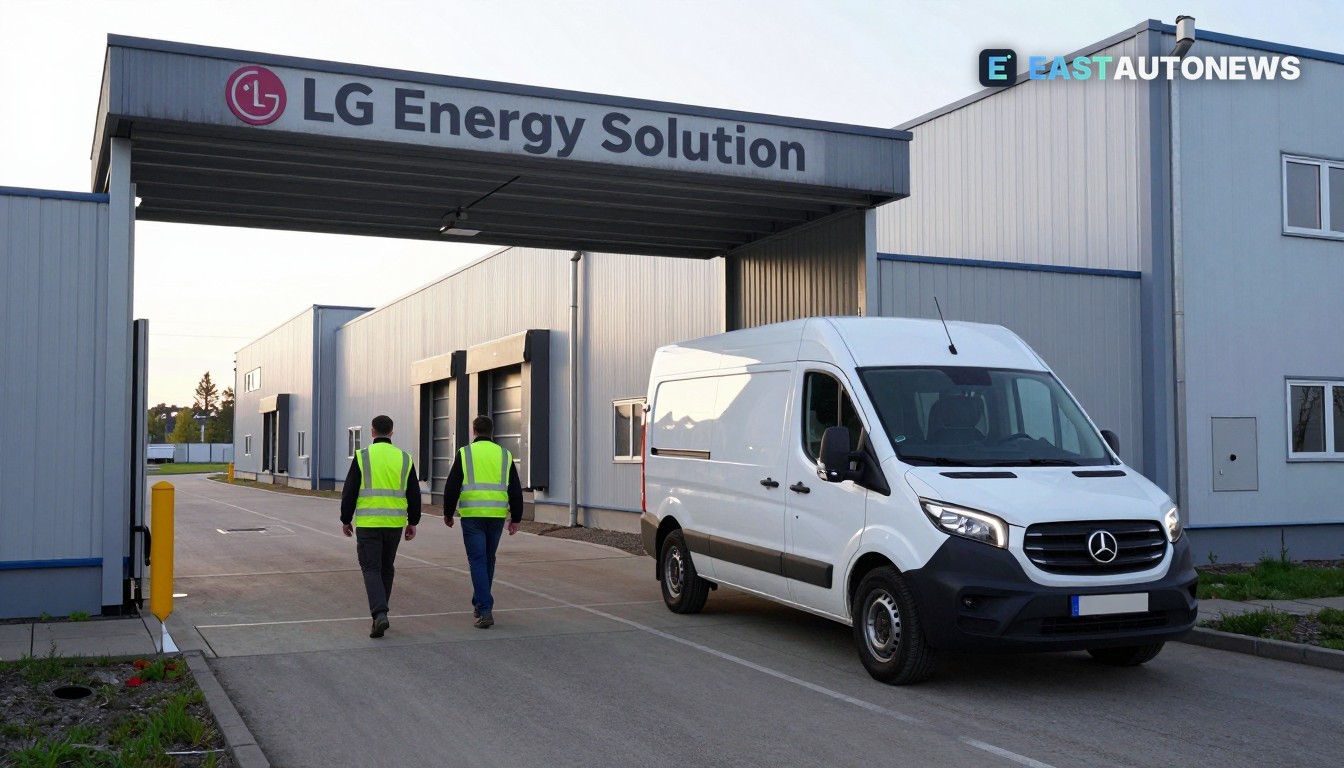
Readers searching for what "autonews europe" means — in plain English, European auto news — will find one of the region’s most consequential battery stories this week: LG Energy Solution has confirmed that its Wrocław, Poland, complex is shifting some production from vehicle pouch cells to stationary energy‑storage systems (ESS) and is preparing to add 46‑series cylindrical cell capacity in a multi‑year roll‑out. The company reported third‑quarter results on 3 November 2026 that underline the shift: rising ESS demand and recovering EV volumes are driving the re‑tooling at Wrocław.
What LG announced and when
In its 3 November 2026 third‑quarter financial statement and accompanying materials, LG Energy Solution reported operating profit of 756 billion won (up 25.7% year‑on‑year) and revenue of 9.6434 trillion won, and it highlighted a rising share of ESS business that has prompted local line conversions in Poland. The company told analysts it expects North American ESS volumes to remain committed through 2028 while discussions continue for volumes beyond that horizon.
Separately, LG’s Wrocław unit has for months publicised a European initiative — the "46inEU" project — to mass‑produce 46‑series cylindrical cells in Poland with an intended annual capacity in the low‑double‑digit gigawatt‑hour range; company materials describe the implementation as the next step toward reducing Europe’s reliance on external battery suppliers. LG’s Polish site and the EU’s STEP project page both set out the 46inEU objectives and timeline that point to production lines coming into service later in this decade.
Plant economics and near‑term operations
Industry reporting in the past two weeks says the Wrocław facility — which posted a near‑600 billion won operating loss in 2025 — is now approaching breakeven thanks to higher utilisation after converting some lines to ESS output and capturing new orders. Local coverage and industry analysts note that the mix shift has materially improved utilisation and the plant’s financial outlook for late 2026 and into 2027. LG’s corporate newsroom also flagged activity at the Wrocław site in early November, including community and media events that underline the plant’s evolving role.
What this means for the market
The immediate market effect is twofold. First, more ESS production in Poland strengthens Europe’s local supply chain for grid‑scale batteries and helps fulfil large projects already contracted in the region, reducing short‑term pressure on pouch‑cell allocations that many automakers compete for. Second, the planned 46‑series cylindrical capacity — once online — offers OEMs an alternative cell form factor in Europe and can shift some platform sourcing away from overseas suppliers. Both moves reduce logistical strain for Central and Eastern European carmakers and suppliers, and they support the EU’s stated goal of greater battery sovereignty. These implications are laid out in LG’s project descriptions and the EU’s STEP documentation for the 46inEU initiative.
For readers who used Google to look up European auto news, the LG Wrocław story is a clear example of how battery makers are re‑shaping production footprints across Central and Eastern Europe to serve both EV and non‑EV markets. The company’s Q3 figures on 3 November 2026 make plain that ESS demand is a current revenue driver while 46‑series plans point to a longer‑term re‑orientation of capacity in Poland.
Electric vehicle listings on WorldTrader24 →
Sources: LG Energy Solution, Seoul Economic Daily