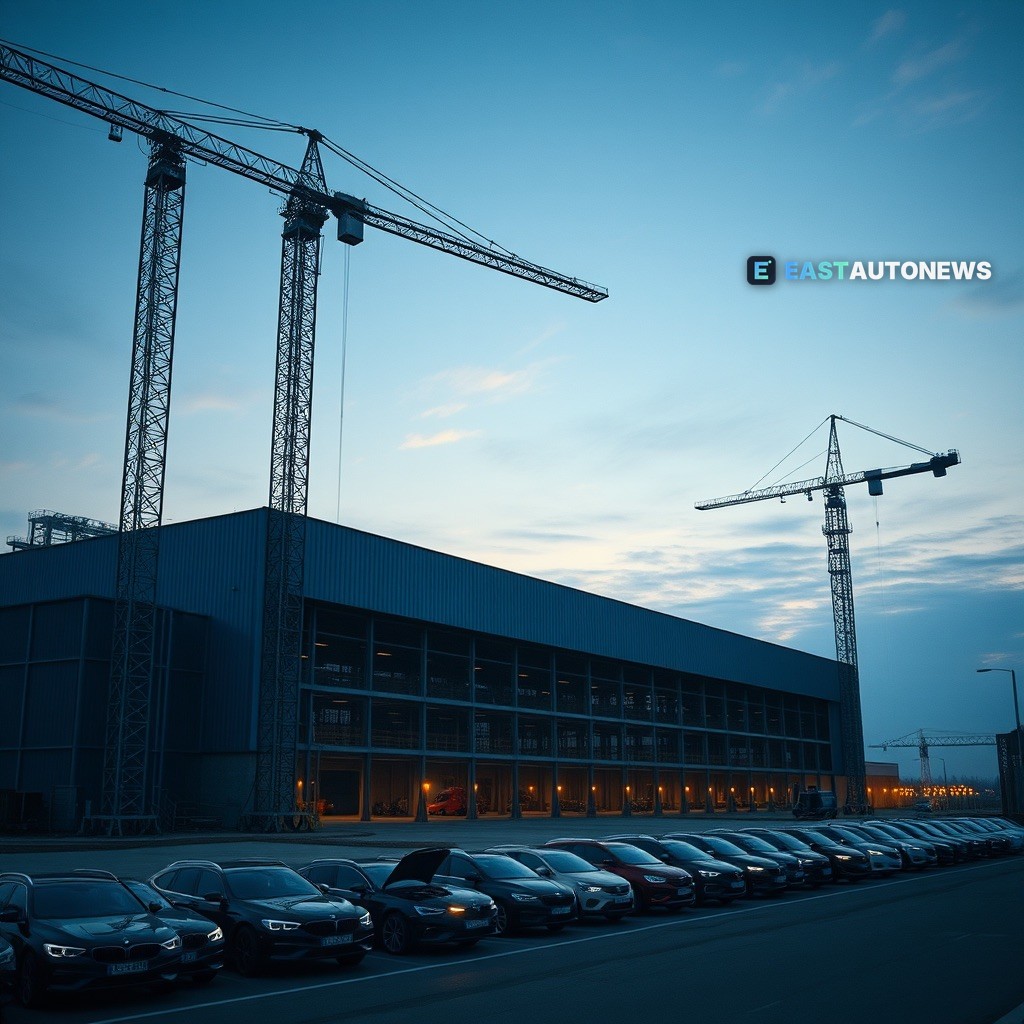
Eastern Europe is emerging as the continent's engine for new automotive capacity. According to analysis by bne IntelliNews, Poland and Romania are building new productive capacity faster than the rest of Europe, while German investment has all but stopped. For an industry that has long treated Germany as its anchor market and production base, the findings point to a durable shift in where Europe's carmaking money is being spent.
Bulgaria shows where the new flows are heading. A Chinese company is set to produce a compact SUV in the country, which Beijing officially described in December 2025 as “becoming a pivot for Chinese automakers in Europe.” Bulgaria's membership in both the EU and NATO, together with its relatively small economy, has made it a focal point for Chinese brands seeking to manufacture inside the bloc — though analysts warn of a possible internal EU divide as Chinese-linked production takes root. The pattern extends beyond Bulgaria: Stellantis has started building Leapmotor cars in Europe, another sign that Chinese-brand manufacturing is becoming embedded in the EU's industrial landscape.
EU policy is adding a tailwind — with strings attached. Under the “Made in Europe” push driven by Germany and France, cars imported from Japan would not qualify for EU subsidies, while models built in France, Portugal and Eastern Europe would benefit only if enough of their parts come from Europe, DW reports. The rules, which extend the local-content test that has already rattled suppliers across the region, hand Eastern European plants a conditional advantage: the region wins only as its local supply chains deepen. South Korean automakers, meanwhile, face mounting costs and competitiveness concerns under the same framework.
The competition for automaker capital is now global. Audi's move to invest $4 billion in a Georgia assembly plant signals VW Group's determination to reverse its U.S. fortunes to counter a slump in China and growing competition across Europe, Automotive News reports. GM, for its part, has confirmed that its Lansing Delta Township plant will produce hybrid vehicles. With German domestic investment stalled, the geography of new auto spending appears increasingly split between North American plants and Eastern European hubs — and for now, Poland, Romania and Bulgaria are winning the European side of that race.
For suppliers, dealers and policymakers across the region, the implications cut both ways. Eastern Europe's capacity build-out strengthens its hand just as EU subsidy rules begin to reward European-made content. Yet analysts' warnings of an internal EU divide over Chinese-linked production suggest the political environment could yet tighten — making the depth of local supply chains, not just assembly plants, the deciding factor in whether the region's investment lead endures.
For buyers and dealers, these shifts are quietly reshaping which vehicles are built — and how they are priced — across Europe, making smart comparison and timing more valuable than ever. Those looking for their next vehicle can find sensational cars at sensational conditions at WorldTrader24, Europe's marketplace with over 70,000 vehicles.