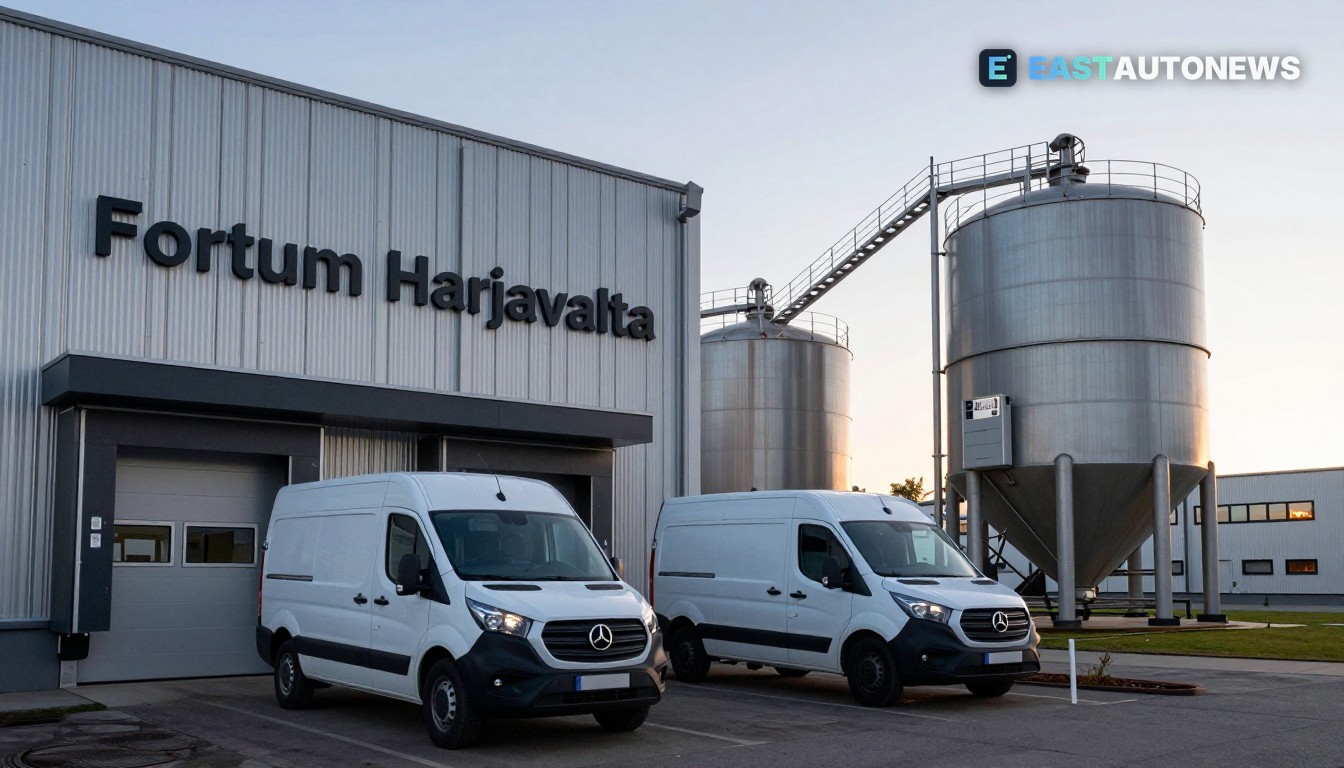
Fortum Battery Recycling said on 23 November 2026 that its pilot campaign at the Harjavalta site in Finland produced the first customer samples of battery‑grade nickel sulphate, cobalt sulphate and lithium hydroxide. The company said the samples are now in customer qualification and that several offtake discussions are under way.
The Harjavalta pilot and the technology
Fortum described the process as a next‑generation, low‑emission hydrometallurgical flow that uses internal circulation of reagents to cut chemical consumption, waste generation and CO2 emissions. The company also said the Harjavalta project has been recognised as a Strategic Project under EU rules and that it has received national and EU support — Business Finland granted an extension project support of EUR 86.4 million and a grant agreement with CINEA can provide up to EUR 40 million from the EU Innovation Fund.
Fortum’s Head of Fortum Battery Recycling, Anssi Airas, said: “Our ability to produce these battery‑grade materials for our customers marks a major step forward in advancing battery recycling and strengthening regional supply in Europe.” The company said the pilot output will help progress customer qualification.
European recycling context
Industry and research data show recycling capacity is expanding but that Europe still faces a gap between installed recycling plants and the volumes of end‑of‑life batteries expected in the 2030s. A recent Fraunhofer ISI update maps growing capacity and warns that Europe remains at the early stage of recycling scale‑up compared with China. That context underlines why pilot successes that deliver battery‑grade salts and hydroxides are strategically important for automakers and battery producers seeking local supply of nickel, cobalt and lithium.
Separately, other European recycling projects are also progressing: Veolia opened a 7,000‑tonne‑per‑year black mass plant in France this month, illustrating parallel steps to recover critical metals across the EU. Together these developments point to a faster build‑out of internal raw‑material loops for batteries.
What this means for the market
For Central and Eastern European carmakers and suppliers — many of which depend on imported cathode materials and cells — the Harjavalta milestone is relevant even if the plant itself is outside the region. Battery‑grade recycled nickel, cobalt and lithium produced in Europe can reduce exposure to long supply chains and to price swings in overseas raw materials markets; it can also support the case for new downstream investments such as precursor cathode or cell assembly in the broader EU manufacturing base. The availability of validated recycled materials could help OEMs meet regulatory and sustainability targets while shortening logistics chains.
However, Fraunhofer’s analysis shows that announced capacity still needs to be matched by consistent feedstock flows and continued investment to reach the volumes the automotive industry will require in the 2030s. OEM procurement teams and CEE battery‑value suppliers should therefore track customer qualification outcomes and offtake agreements closely: successful qualification is the next practical step toward supply contracts.
Electric vehicle listings on WorldTrader24 →
Sources: Fortum, Fraunhofer ISI, S&P Global