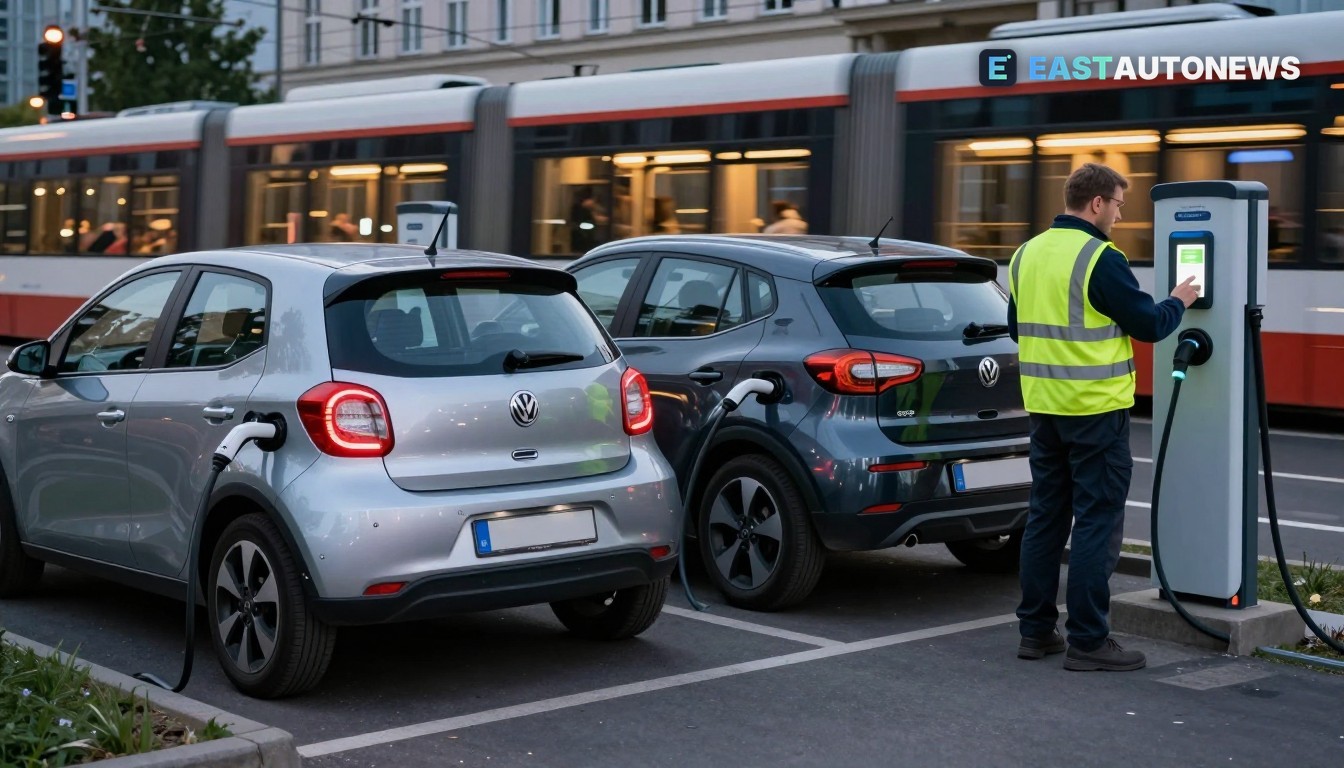
The European Alternative Fuels Observatory (EAFO) published an update on 17 November 2026 showing a sharp rise in battery‑electric vehicle (BEV) registrations in October. Across 13 reporting EU member states EAFO recorded 259,726 BEV registrations for October 2026, up from 158,365 a year earlier — a 64.0% year‑on‑year increase — and a BEV share of 32.8% of new car and van registrations. Publicly accessible recharging infrastructure across the EU27 rose to 1,200,802 points, an increase of 16.7% versus October 2025.
Where the growth showed up
EAFO’s update noted that Luxembourg recorded the strongest relative BEV growth in October (101.5% year‑on‑year, from 916 to 1,846 registrations), while Germany supplied the largest absolute volume with 94,069 BEV registrations in the reporting sample. The EAFO page also makes clear that the October dataset covers different countries to varying cut‑off dates: data for some Member States are updated through October 2026 while others remain at September 2026 in the public files, and EAFO flags those timing caveats for users.
Charging and the grid: a mounting cost
The EAFO headline figures underline two linked realities for Europe — fast vehicle electrification and a slower but steady growth in charger numbers. That gap is reflected in an industry study published earlier in November: research for ChargeUp Europe and ACEA by Siemens estimated European cities will need about €24.7 billion in distribution‑grid investment to accommodate expected EV growth by 2030, but that bill could be trimmed by roughly €10.6 billion (about 40%) if charging is shifted to lower‑demand periods through smart‑charging measures. The Siemens analysis also warned that uptake will grow fastest in eastern Europe from a lower base, a point directly relevant to Central and Eastern European markets.
What this means for the market
For manufacturers, suppliers and infrastructure operators active in Central and Eastern Europe the EAFO numbers are a reminder that sales momentum is increasingly real and measurable: BEV market share in the EAFO reporting sample exceeded 30% in October and vehicle volumes are rising fast. At the same time the 16.7% year‑on‑year increase in public charging points shows build‑out continues but not at the pace of vehicle uptake, creating commercial and operational pressure on fast‑charging networks, local distribution grids and planning consents. Policymakers and DSOs in CEE must balance permitting, grid reinforcement and smart‑charging incentives if rising fleets are to be charged reliably and affordably.
EAFO’s update (17 November 2026) provides the immediate data point; industry studies such as the Siemens analysis cited by Reuters (3 November 2026) provide a framework for how smarter demand management can lower reinforcement costs. Stakeholders in CEE — from utilities and transport ministries to charger operators and component suppliers — should treat the EAFO figures as the most recent public snapshot of demand and plan grid, procurement and permitting activity accordingly.
Electric vehicle listings on WorldTrader24 →
Sources: European Alternative Fuels Observatory (EAFO), Reuters (Siemens study)