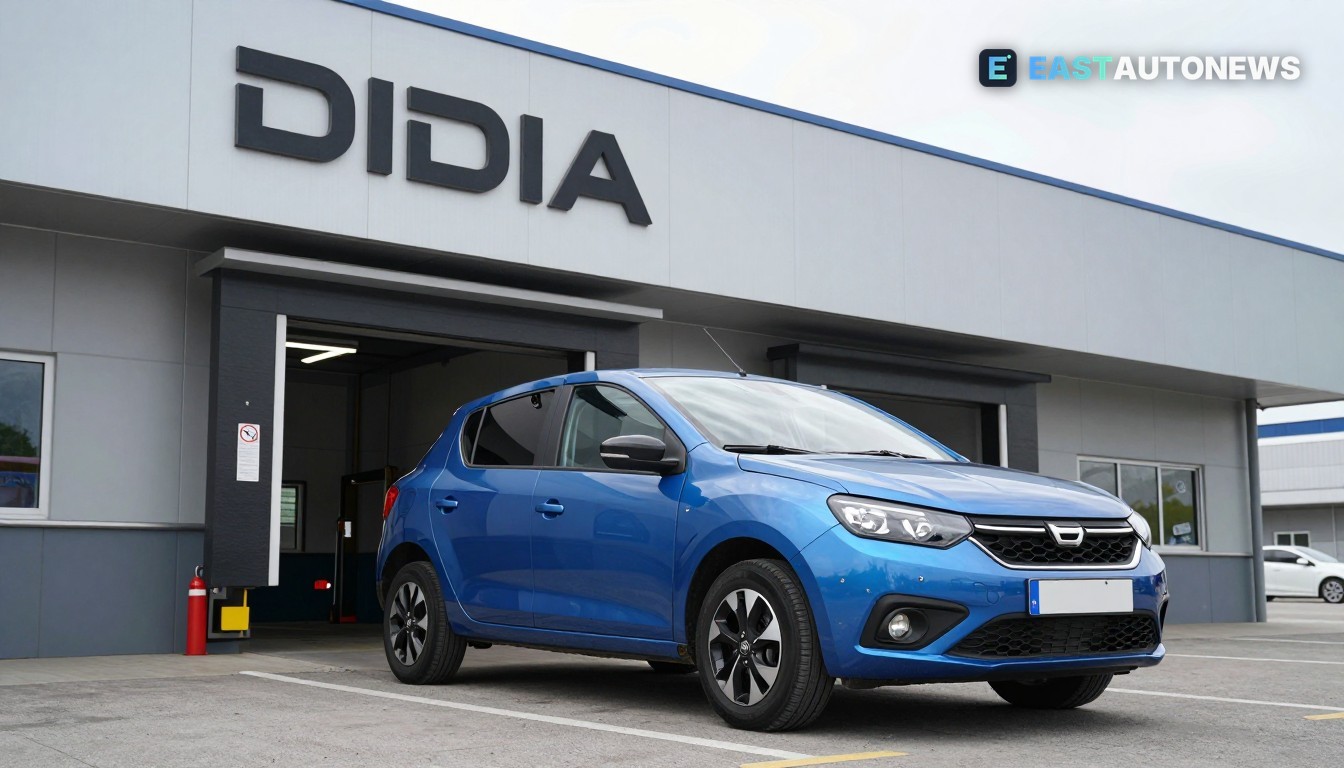
Dacia is preparing to add a fully electric version of its best-selling Sandero when the fourth generation launches in 2028, according to a detailed Autocar feature published on 11 November 2026. Autocar says the next Sandero will be offered with hybrid and pure‑electric powertrains as part of a wider redesign intended to defend the brand’s value position in Europe.
Specs and timing
Reporting by electrive and other outlets summarising Autocar’s investigation says the electric Sandero is expected to aim for around 249 miles (about 400 km) of range on a single charge and will use a relatively small 44 kWh lithium‑iron‑phosphate (LFP) battery paired with a Shanghai e‑Drive motor of roughly 78–80 kW. Those outlets cite Autocar’s sources for battery and motor details.
Autocar’s timeline indicates the fourth‑generation Sandero will be unveiled in spring 2028 with sales following in the summer; production for some markets is reported to be planned in Morocco from April 2028. These timing and production notes are drawn from the same November 11 report.
How Dacia plans to hit big range with a small pack
The claim of c.400 km from a 44 kWh LFP pack is notable because it implies a strong emphasis on vehicle efficiency and conservative WLTP/EPA assumptions rather than a very large battery. Autocar’s coverage and follow‑up reporting suggest Dacia will pair lightweighting, improved aerodynamics and efficient electric drive calibration to lift real‑world range well above what the raw kilowatt‑hours might imply. Electrive reports the likely use of LFP chemistry and an 78 kW motor as the technical basis for these gains.
What this means for the market
A fully electric Sandero priced and positioned in the mainstream small‑car segment would be a significant signal for Central and Eastern Europe. Dacia is a mass‑market brand with deep sales penetration in Romania and strong volume across CEE; offering a compact EV with a competitive claimed range and low‑cost LFP technology could make electrification more credible for budget buyers in the region. Autocar frames the change as part of Dacia’s response to rising competition and downward price pressure in the entry segment.
For suppliers and local aftermarket networks in CEE, the move would shift some demand from import‑led EVs to a model that Renault Group can price and support regionally. If production plans outside Western Europe (reportedly including Morocco in early 2028) hold, Dacia’s approach also highlights how OEMs are balancing manufacturing footprints to manage cost and market access while still using common, low‑cost chemistries such as LFP.
Autocar’s story is based on company insiders and technical sources published 11 November 2026; Autocar and follow‑ups carry the principal details on range, battery size and the projected launch window. Until Dacia or Renault Group issues formal technical specifications or a production timetable, these figures are best treated as informed reporting rather than confirmed manufacturer data.
Electric cars listings on WorldTrader24 →
Sources: Autocar, electrive, Carboratory, NewMobility