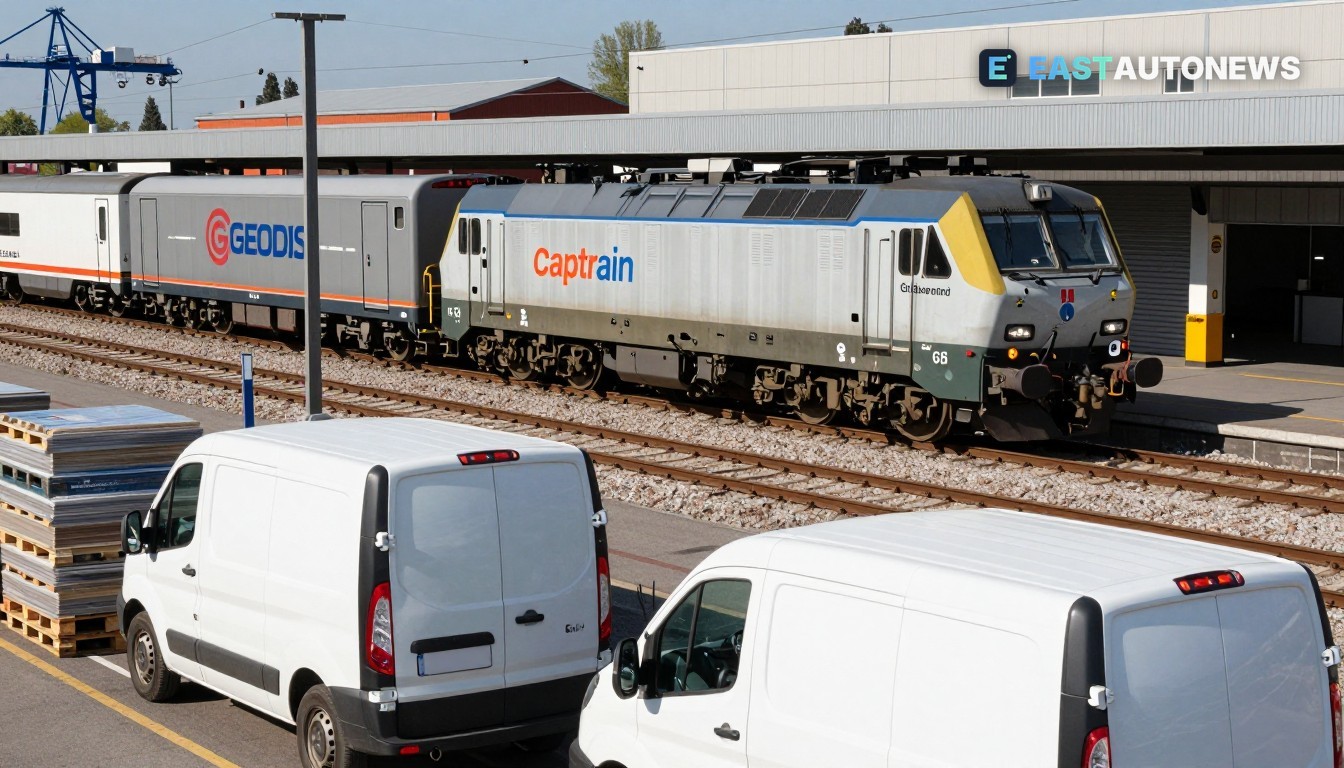
GEODIS this week announced a new dedicated intermodal railway linking Vicenza in Italy’s Veneto region with Noisy‑le‑Sec in the Paris area, operated by Captrain and Hexafret of Rail Logistics Europe. The logistics group published the service launch on 12 November 2026 and said the first departure ran on 19 October 2026.
Service details and capacity
In its 12 November press release GEODIS said the Vicenza–Noisy‑le‑Sec lane uses rail traction provided by Captrain and Hexafret and initially runs one departure per week in each direction, with a planned frequency increase to two weekly departures from January 2027. GEODIS set an ambition to handle 6,500 swap bodies a year by 2027. The company quoted an average saving of about 80% lower CO₂ emissions per shipment versus an all‑road diesel solution, and noted an individual intermodal unit can carry up to 28 tonnes compared with roughly 25 tonnes for conventional road loads.
Industry reporting confirms the service began in October and that GEODIS expects to scale weekly rotations in early 2027. The move extends GEODIS’s network across northeastern Italy and complements existing Noisy‑le‑Sec connections to other Italian nodes such as Novara.
Why northeastern Italy matters to vehicle supply chains
Northern Italy — including Veneto, where Vicenza sits — hosts a dense cluster of automotive component firms and small‑ and medium‑sized suppliers that feed OEMs across Europe. Regional industry studies and trade data identify Veneto among the northern Italian areas with sizeable automotive manufacturing and parts output, making Vicenza a logical origin for intermodal moves of parts, modules and ancillary goods.
What this means for the market
For carmakers and suppliers serving Central and Eastern Europe, the Vicenza–Noisy‑le‑Sec rail link creates an additional door for moving parts and finished goods off the road and onto scheduled trains. That matters for three practical reasons supported by GEODIS’s announcement and industry reporting: it offers a lower‑emissions alternative to long‑haul road transport; it provides predictable weekly sailings that can be ramped up (GEODIS expects to double frequency in January 2027); and it increases intermodal capacity linking an Italian supplier region to an important French distribution hub. Those are concrete facts from the operator’s release and trade reporting.
Operationally, logistics teams and tier‑1 suppliers that route shipments between Italy, France and onward to CEE markets can book capacity on a scheduled rail leg that reduces road kilometres inside the EU single market and lowers CO₂ per shipment, according to GEODIS’s figures. How quickly manufacturing and distribution planners switch volumes to the new service will depend on commercial rates, lead‑time needs and last‑mile arrangements — variables GEODIS and its rail partners say they will tune as the frequency rises.
B2B vehicle marketplace on WorldTrader24 →
Sources: GEODIS, RailMarket, TrasportoEuropa, Assolombarda