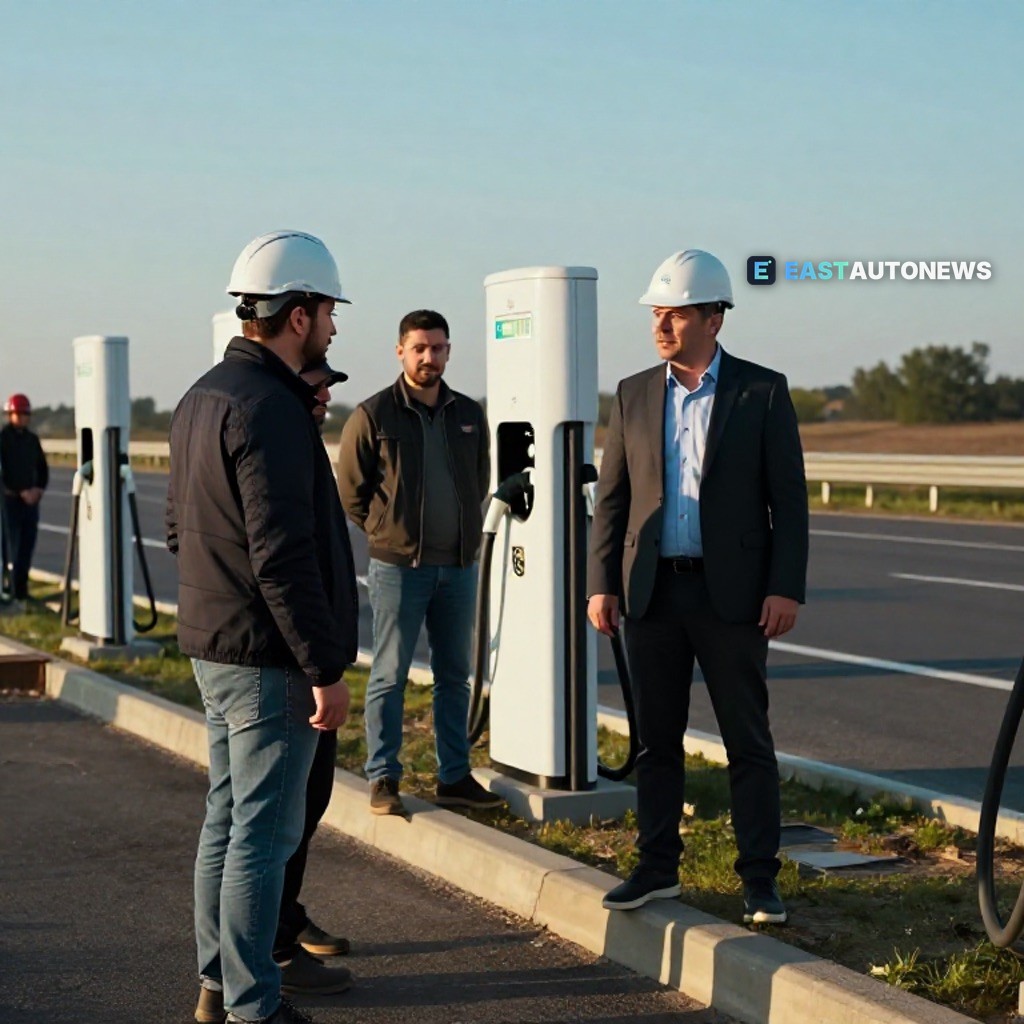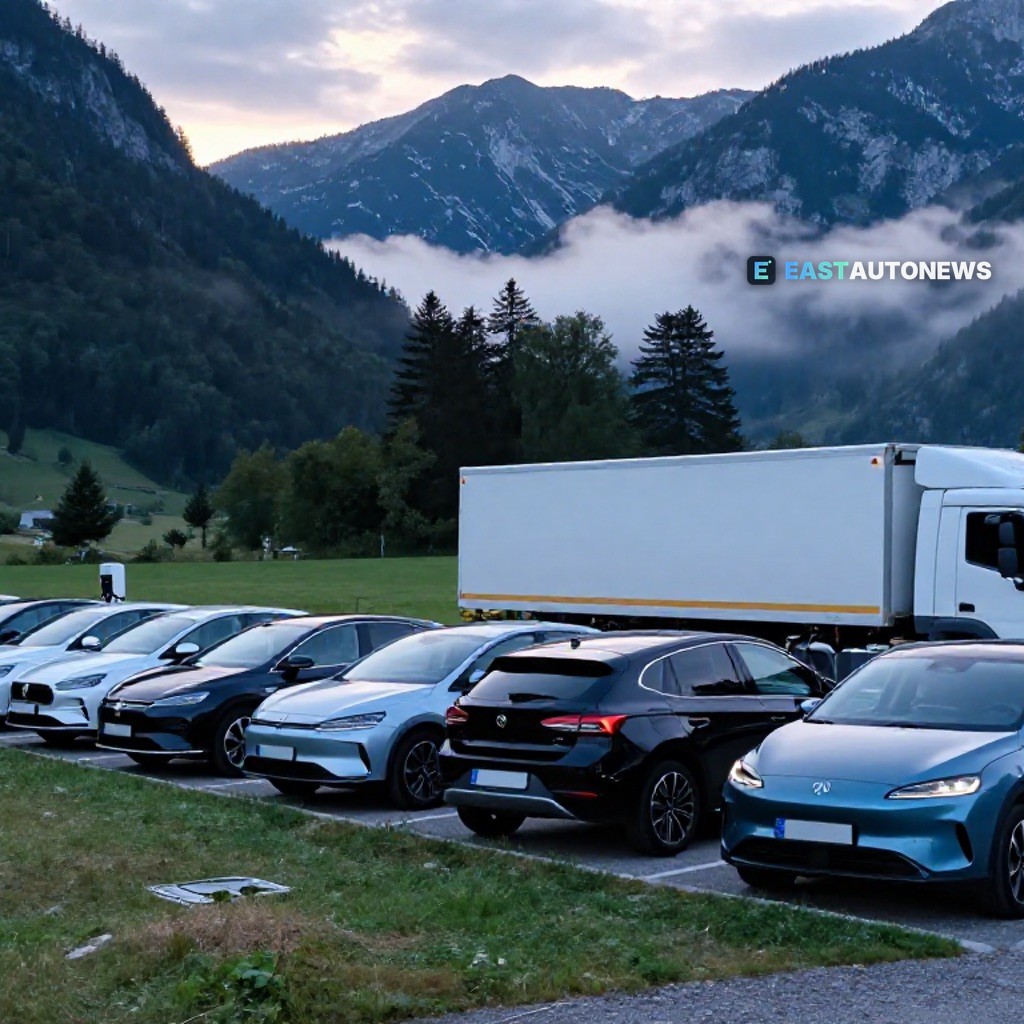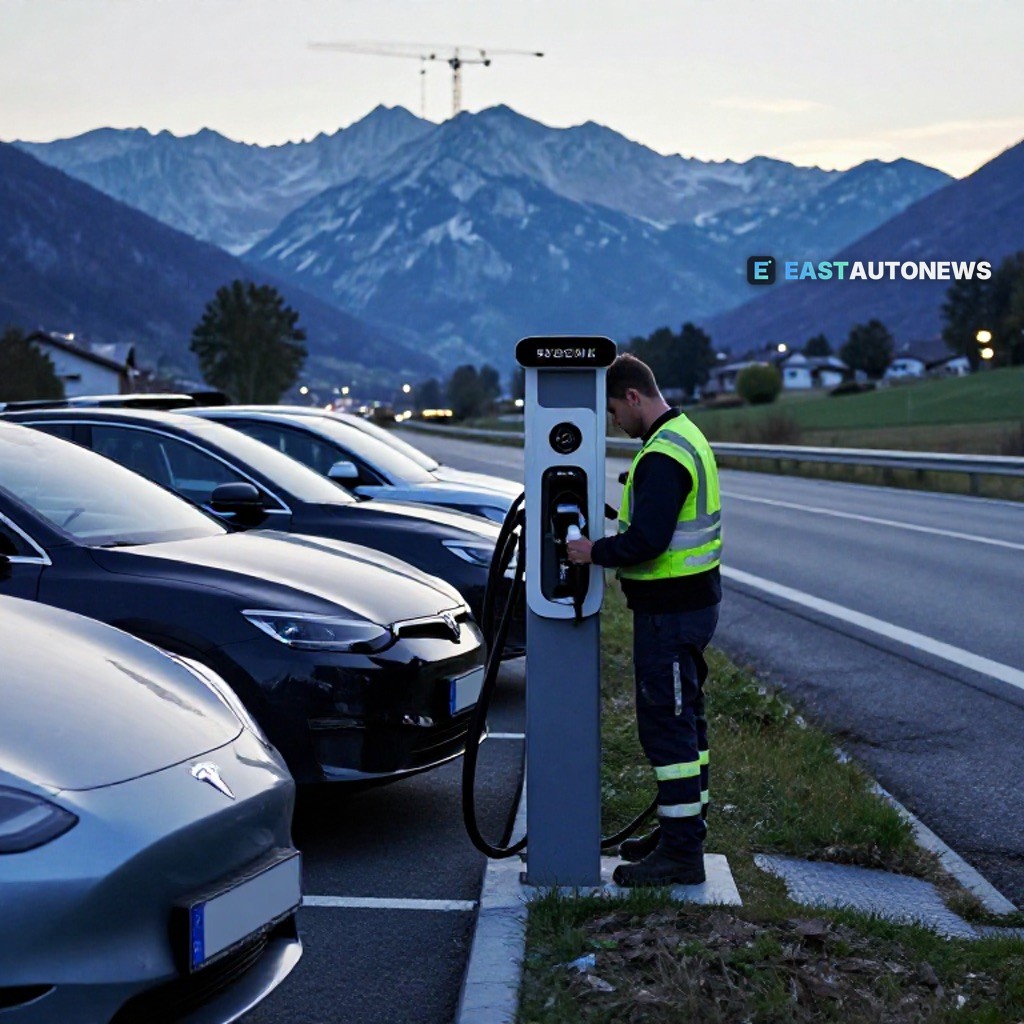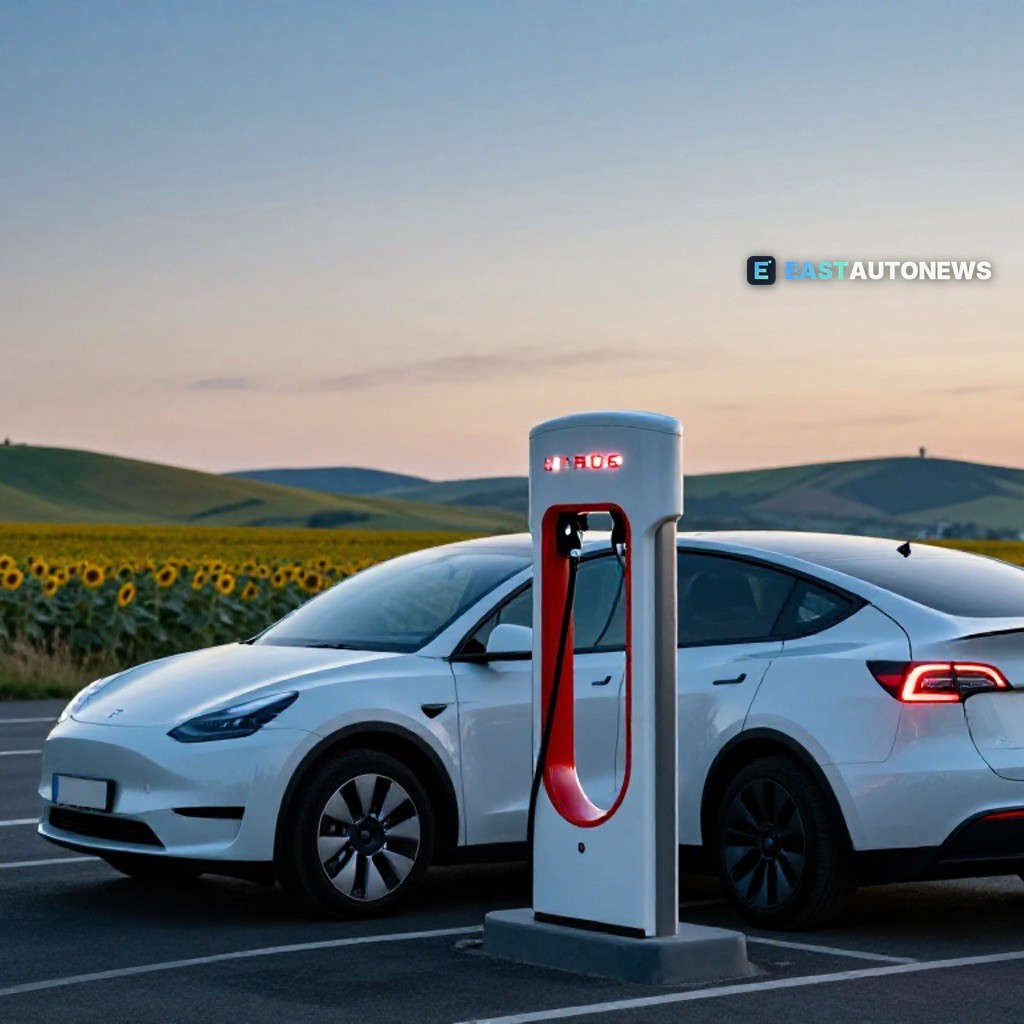
Milcovul, the historic line where Wallachia and Moldavia once met, is about to become a junction of a very different kind. PPC Blue Romania and OSCAR Downstream have signed an agreement to install 30 electric vehicle charging points at the service areas near Milcovul, on the A7 Buzău-Focșani motorway — the stretch known as the Moldova motorway. For a corridor long defined by geography, the new landmarks will be defined by kilowatts.
The design detail that will grab the industry's attention sits inside the service area itself. “In Milcovul, we will set up high-performance charging stations for electric cars and trucks in the same service area,” PPC Blue said. Pairing passenger and freight charging in a single location is a direct answer to the logistics sector: for hauliers switching to electric vehicles, infrastructure of this kind along major routes is a precondition rather than a convenience — and e-truck corridors in this part of Europe have so remained thin on the ground.
Romania's charging offensive is also drawing interest from one of the world's largest EV makers. BYD said it is exploring plans to consolidate its partnerships in Romania and identify new opportunities for cooperation with the country's automotive ecosystem — discussions that include a potential ultra-fast charger network. “We are currently focused on the swift implementation of our Flash Charging solution, as we believe this technology can make electric mobility faster, simpler, and more convenient,” the company said as it expands its footprint in Romania's EV market.
The timing is no coincidence. A recent study of Europe's charging landscape projects that EV uptake will grow fastest in Eastern Europe — precisely the region where high-power public charging has been scarcest. Romania, with an expanding motorway network and a maturing automotive ecosystem, sits squarely at the intersection of rising demand and thin supply. That gap is exactly what utilities, downstream operators and carmakers are now racing to close.
For B2B watchers, the signal from the A7 is clear: charging infrastructure has moved from policy footnote to boardroom strategy. Energy players are pairing with fuel and retail partners to secure prime motorway real estate, while manufacturers like BYD weigh networks of their own to anchor their market entry. In the contest to power Eastern Europe's next generation of electric vehicles, Romania has just taken a seat in the front row.
For buyers watching Romania's charging map fill in, the switch to electric is rapidly becoming a practical proposition rather than a leap of faith. Readers looking for a vehicle can find sensational cars at sensational conditions at WorldTrader24, Europe's marketplace with over 70,000 vehicles.