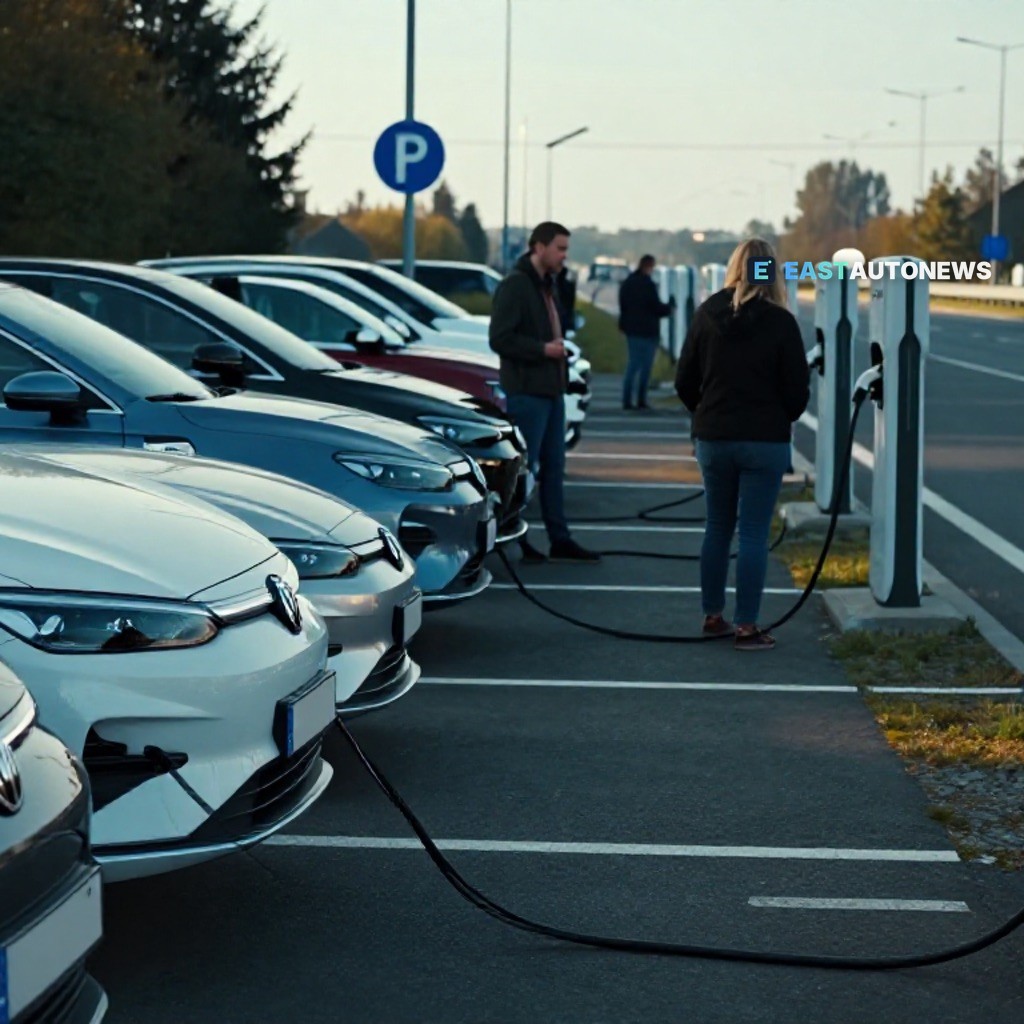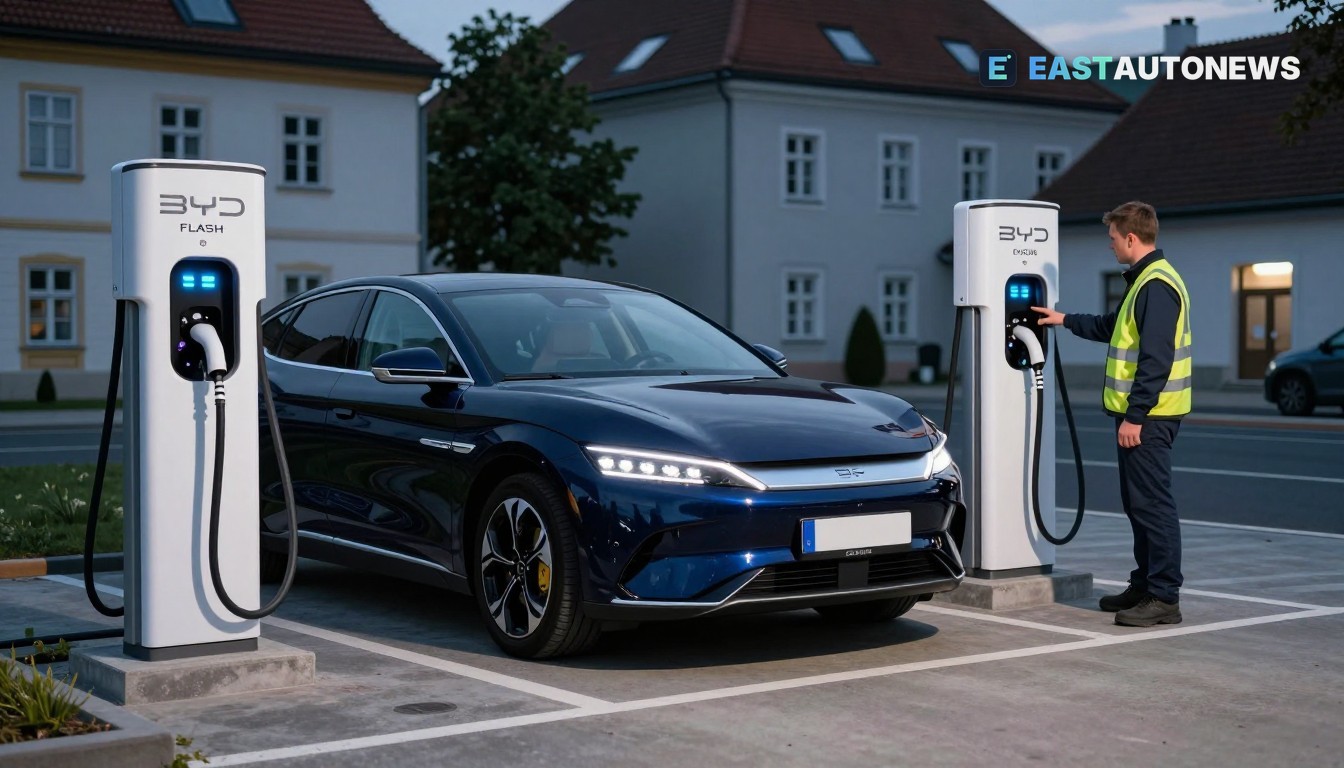
Two complementary technical moves this month have pushed high‑power charging from experiment toward operational reality in Central Europe. BYD Automotive Austria opened the country’s first commercial Flash‑Charging (megawatt) station at Autohaus Göndle in St. Pölten on 11 November 2026, and SMATRICS EnBW activated the first XCharge C7 480 kW hub (eight high‑power points) at a BILLA Plus site in Vienna’s Liesing district in mid‑November. Both deployments are designed to increase throughput on trunk routes and to cut charging stop times for compatible vehicles.
How the technology works
BYD’s St. Pölten installation pairs a megawatt‑class powertrain with an integrated battery buffer of roughly 400 kWh, allowing the site to deliver very high peak power without requiring an exceptionally large grid connection; BYD says the pilot opened on 11 November 2026 and is the first step in a planned roll‑out across Austria through 2027. The operator positions the Flash‑Charging approach as brand‑agnostic (CCS2) and suitable for rapid, short stops where vehicles and infrastructure support the rates.
By contrast, SMATRICS EnBW’s Vienna hub uses XCharge C7 hardware rated up to 480 kW per point and supports dynamic power sharing (two vehicles per unit). The C7 deployment is described by the operator as Austria’s first C7 site and part of a wider high‑power expansion. Practical throughput gains are immediate for busy urban and motorway stops because many current EVs can already accept sustained hundreds‑of‑kilowatt input levels even if full megawatt capability remains limited to specialist models.
Regulation catches up in Germany
While Austria is proving different high‑power hardware approaches in the field, Germany has moved to clear several regulatory obstacles for bidirectional charging and market participation. The Federal Network Agency (Bundesnetzagentur) published its MiSpeL (Market integration of storage and charging points) determination on 1 October 2026, introducing metering and market‑integration rules that explicitly enable the bidirectional use of charging points under defined conditions and setting a transitional application window through 30 September 2027. The MiSpeL text creates two compliance options and adjusts metering, netting and levy rules that previously made V2G commercially difficult.
What this means for the market
Short term: fleet operators and high‑usage locations will trial the megawatt and 480 kW concepts first. BYD’s battery‑buffer approach reduces immediate grid‑upgrade costs and is attractive for dealer and retail locations with limited connection capacity, while 480 kW urban hubs increase throughput where space and demand are constrained. Early benefits will fall to compatible cars and commercial fleets; most mass‑market passenger BEVs cannot yet accept sustained megawatt power but can make use of 200–400 kW hubs today.
Medium term: regulatory clarity in Germany (MiSpeL) opens the path for vehicle batteries to act as flexible grid assets. That matters for carmakers and suppliers across Central and Eastern Europe because it creates new value pools (V2G/V2H services, bundled charging + storage offers) and changes how OEMs and dealers think about aftersales and mobility services. Expect pilot offerings that combine fast charging, onsite storage and new tariffs from CPOs and utilities.
For Central and Eastern Europe the twin lesson is operational: rapid corridor electrification will depend on both hardware variety (buffered megawatt sites and high‑power urban hubs) and a regulatory framework that lets charging and storage participate in electricity markets. Austria’s field tests and Germany’s MiSpeL together show the next phase of electrification is about system integration, not just vehicle range figures.
Electric vehicle offers on WorldTrader24 →
Sources: BYD Automotive Austria, SMATRICS EnBW / electrive, Bundesnetzagentur