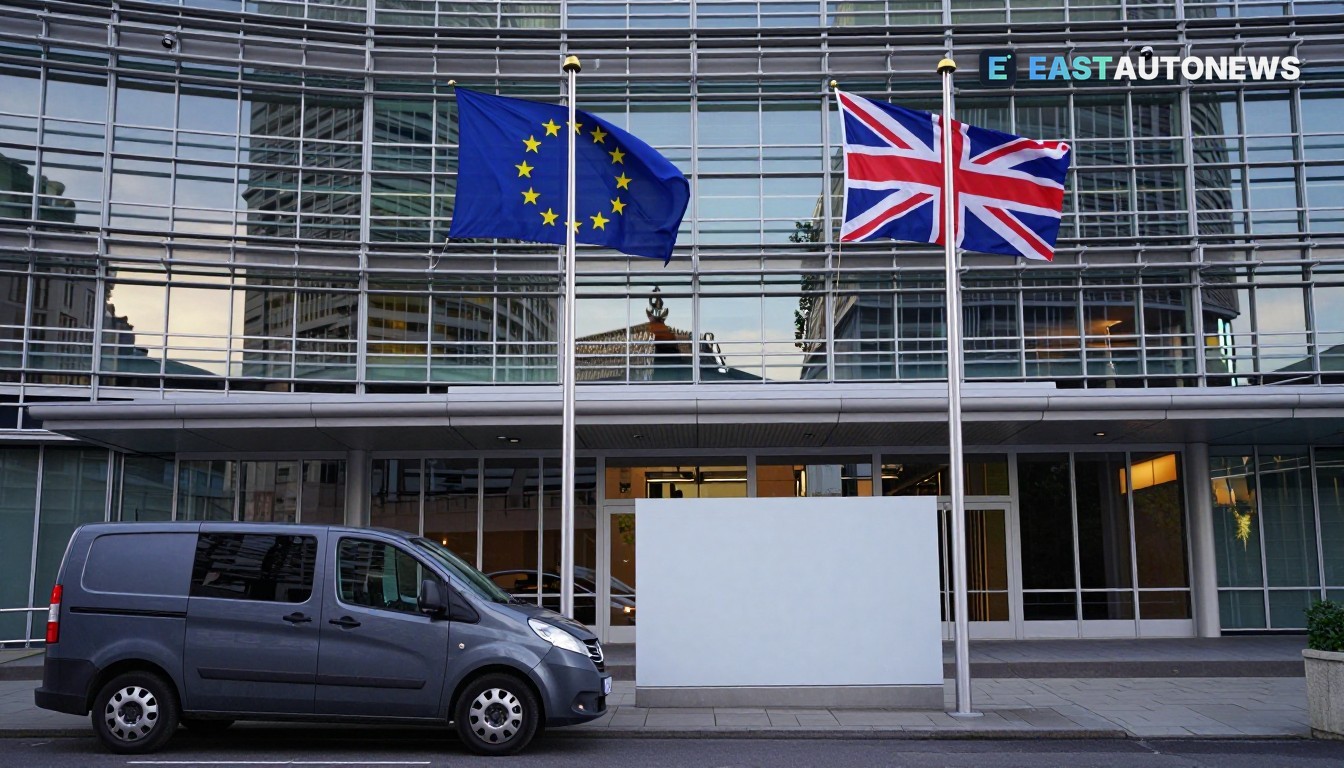
The EU–UK summit in Brussels on 20 November 2026 produced a joint statement covering food trade, a youth mobility scheme and a link between the EU and UK emissions trading systems — but it did not resolve whether UK‑built cars, parts and batteries will qualify under the EU’s emerging “Made in Europe” framework or delay tougher rules of origin due from 1 January 2027.
Summit outcome
European and British leaders agreed political texts on simplified checks for agri‑food, a youth exchange scheme and an emissions‑trading link, according to the summit joint statement. Reuters reported the agreements on 20 November.
Industry groups had urged leaders to settle two other items crucial to carmakers: inclusion of UK output in the Industrial Accelerator Act’s “Made in Europe” preference, and pragmatic treatment of new rules of origin that will require higher UK/EU content in electric vehicles or face a tariff. The European Automobile Manufacturers’ Association (ACEA) and the UK’s SMMT warned the disputes threaten an €80 billion‑a‑year trading relationship and urged a joint political commitment.
What this means for the market
Because the summit left both issues unresolved, the rules of origin cliff edge remains. Under the UK‑EU Trade and Cooperation Agreement the tighter thresholds set to start on 1 January 2027 require at least 55% of an EV’s value to come from the UK or EU (rising to 65% for cells and modules, 70% for packs) to avoid a 10% tariff; the NFDA notes that no delay was announced at the summit. Industry estimates put the potential tariff hit in 2027 at roughly €1.4 billion on EU exports to the UK and about €400 million on UK exports to the EU.
That matters directly for Central and Eastern Europe. CEE plants and suppliers are deeply integrated into pan‑European vehicle production: EU‑built cars accounted for 61.6% of UK BEV sales in 2025, and many CEE suppliers export components to both UK and continental factories. Any voluntary exclusion of UK output from “Made in Europe” preferences, or the sudden activation of tariffs next January, would reshuffle sourcing decisions, raise short‑term costs and complicate production sequencing across the region. Fleet buyers, dealers and leasing companies must now stress‑test contracts and delivery schedules against tariff scenarios.
Industry bodies asked leaders to agree a short, practical bridge — for example a limited delay, or temporary flexibility that lets manufacturers offset non‑compliant vehicles while battery supply chains scale up. The summit produced no such operational fix; follow‑up technical talks will be needed before 1 January to avoid abrupt market disruption.
The fast timetable and deep cross‑border supply links mean CEE policy‑makers, suppliers and OEMs should expect a period of pronounced uncertainty. Companies with order banks for early‑2027 deliveries should urgently review clauses for price adjustments, tariffs and delivery timing, and national authorities should press for transitional measures in upcoming UK‑EU technical talks.
B2B vehicle listings on WorldTrader24 →
Sources: ACEA, NFDA, SMMT, Reuters, BVRLA