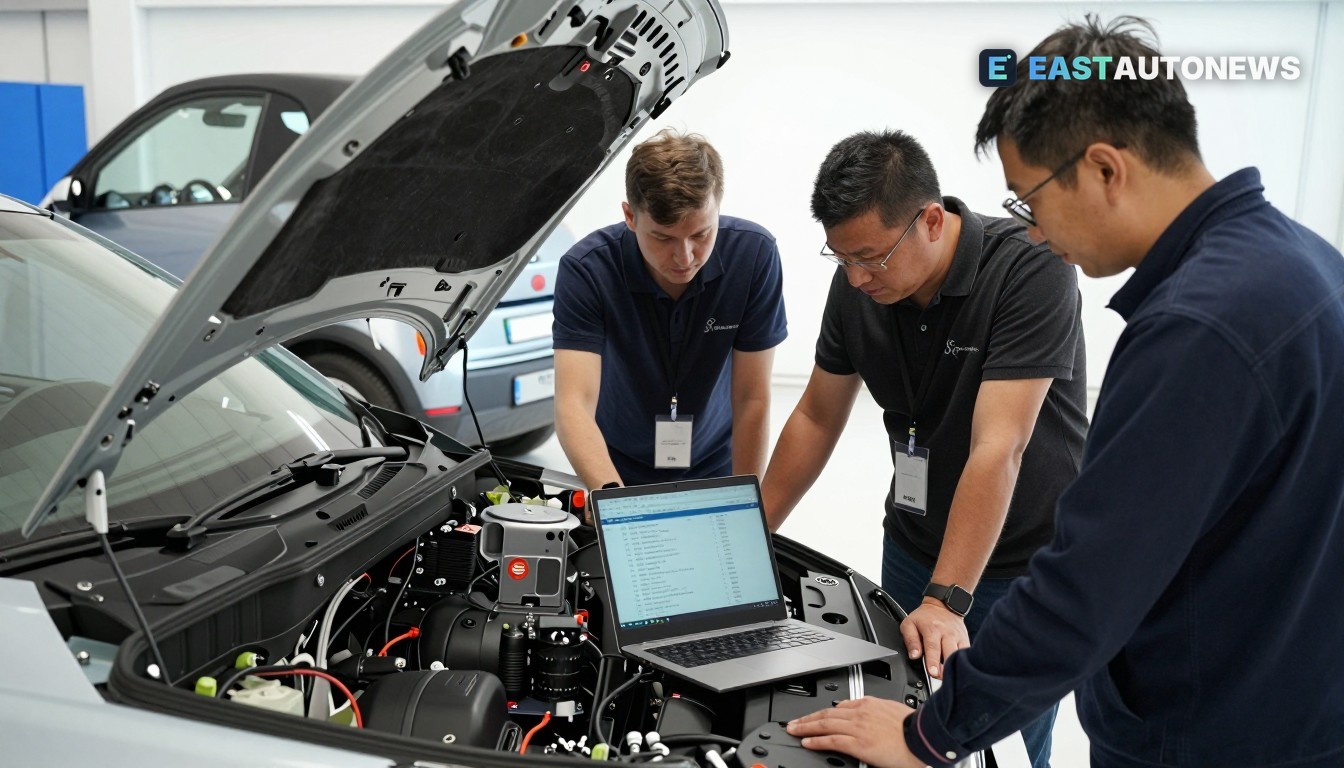
A legal briefing published this week by Lexology — focused on Poland and the EU — concludes that on‑device (edge) artificial intelligence in cars can be deployed commercially, but that it "does not release businesses from obligations" under EU and national rules. The note maps key obligations across the AI Act, the Data Act, vehicle type‑approval and forthcoming product‑liability law, and warns that moving computation into the vehicle changes how, not whether, firms must comply.
Key legal touchpoints
The Lexology piece highlights a cluster of regulatory texts that already affect in‑car AI: the EU Artificial Intelligence Act (Regulation (EU) 2024/1689), the Data Act, the Cyber Resilience Act and UNECE rules on software updates (UN R156). It notes that regular, certified over‑the‑air updates and software‑version control are mandatory under R156 and related EU type‑approval rules.
Data protection is also central. The European Data Protection Board’s Guidelines on connected vehicles (Guidelines 01/2020, adopted 9 March 2021) recommend processing personal data within the vehicle wherever possible — a point the Lexology authors use to argue that edge AI can reduce certain privacy risks but does not eliminate legal duties under the GDPR.
Another immediate pressure point is liability: the EU’s new Product Liability Directive (Directive (EU) 2024/2853) requires Member States to transpose the rules into national law by 9 December 2026. That directive explicitly covers software and updates, the Lexology analysis says, making manufacturers the primary target for claims and increasing the contractual and technical documentation manufacturers must keep.
What this means for the market
For European OEMs and suppliers — especially those with Central and Eastern European operations or partnerships — the briefing underlines a near‑term compliance sprint. Firms that integrate third‑party models into vehicle ECUs will need clear contractual allocation of roles and access to test evidence, vulnerability reports and version history so that type‑approval, cyber and liability requirements can be demonstrated. This is particularly relevant for ecosystems where OEMs work with small AI start‑ups to embed language models and cabin assistants on device. The Lexology authors explicitly flag that the manufacturer placing the system on the market will usually be the AI Act ‘provider’, even when models come from outside suppliers.
Practically, suppliers and assembly plants in CEE should expect extra demands for traceability and update management as UN and EU rules are enforced. The combination of R156’s software‑update and identification obligations, the EDPB’s data‑minimisation preference for on‑device processing, and the Product Liability Directive’s transposition deadline creates overlapping compliance tasks for engineering, legal and procurement teams. Where national transposition lags, manufacturers still face EU obligations at market entry and product‑level duties that can affect warranties, insurance and supplier contracts.
In short: on‑device AI can help reduce some privacy and connectivity risks, but it increases the importance of documentation, update regimes and legal safeguards — and those elements are already the focus of EU and UNECE rules that apply to vehicles on European roads today.
WorldTrader24 B2B vehicle marketplace for dealers →
Sources: Lexology, European Data Protection Board, EUR-Lex
Partner note: EastAutoNews technology partner DaVinci AI develops AI solutions for the entire automotive industry – from market and dealer analytics to autonomous AI agents and image and video production.