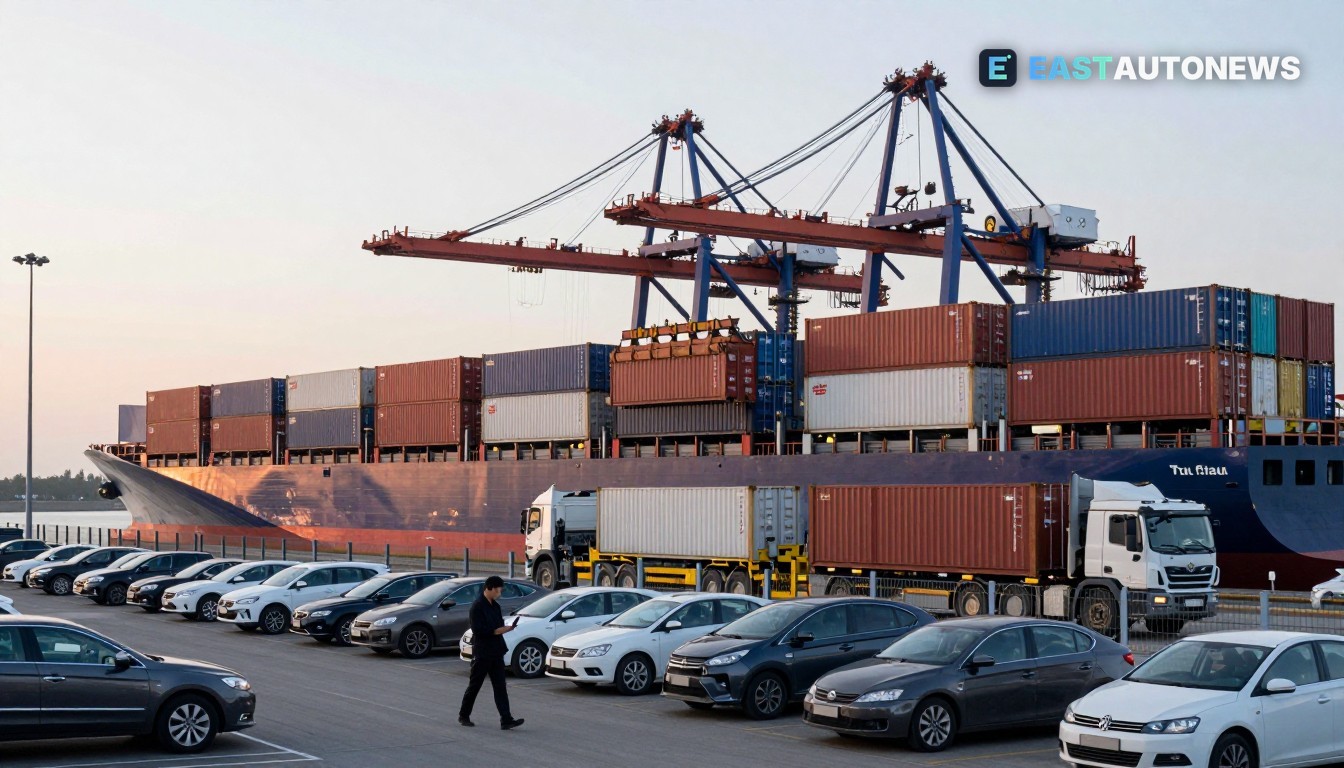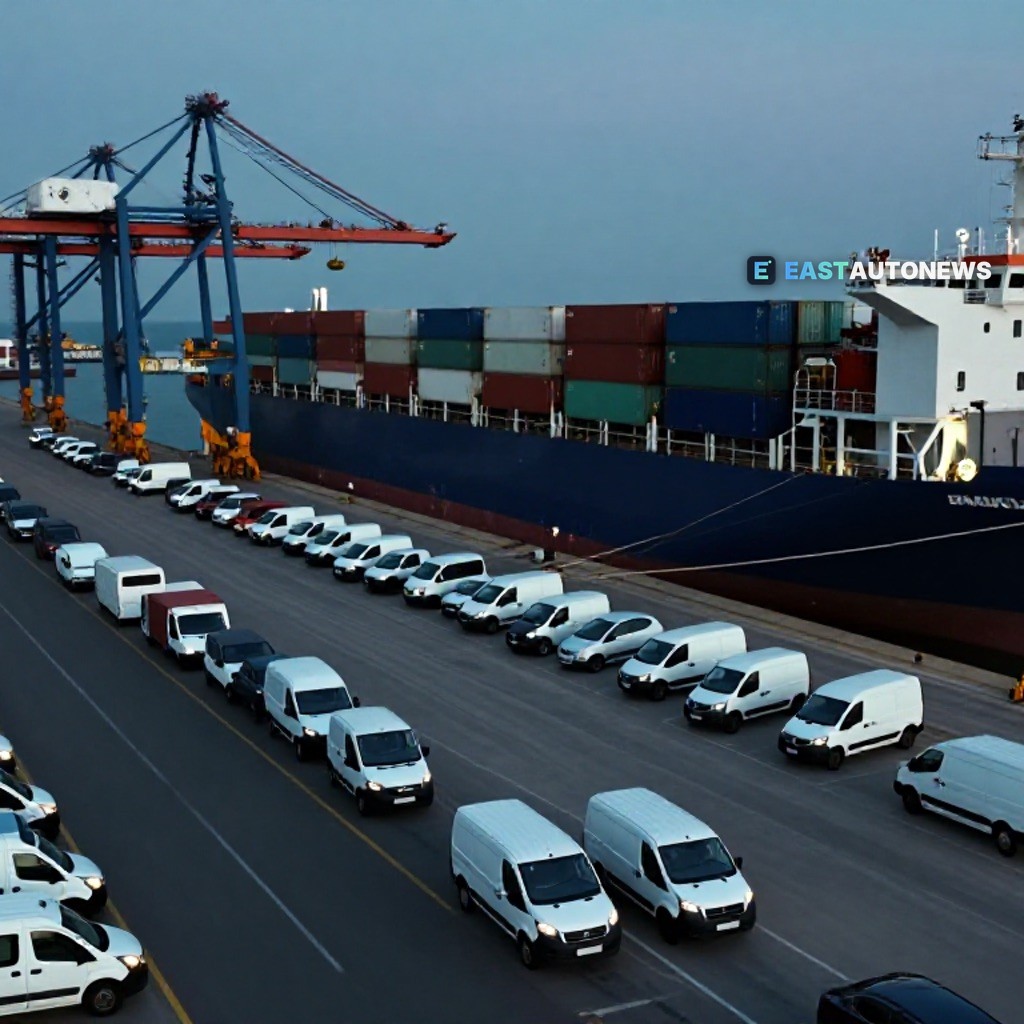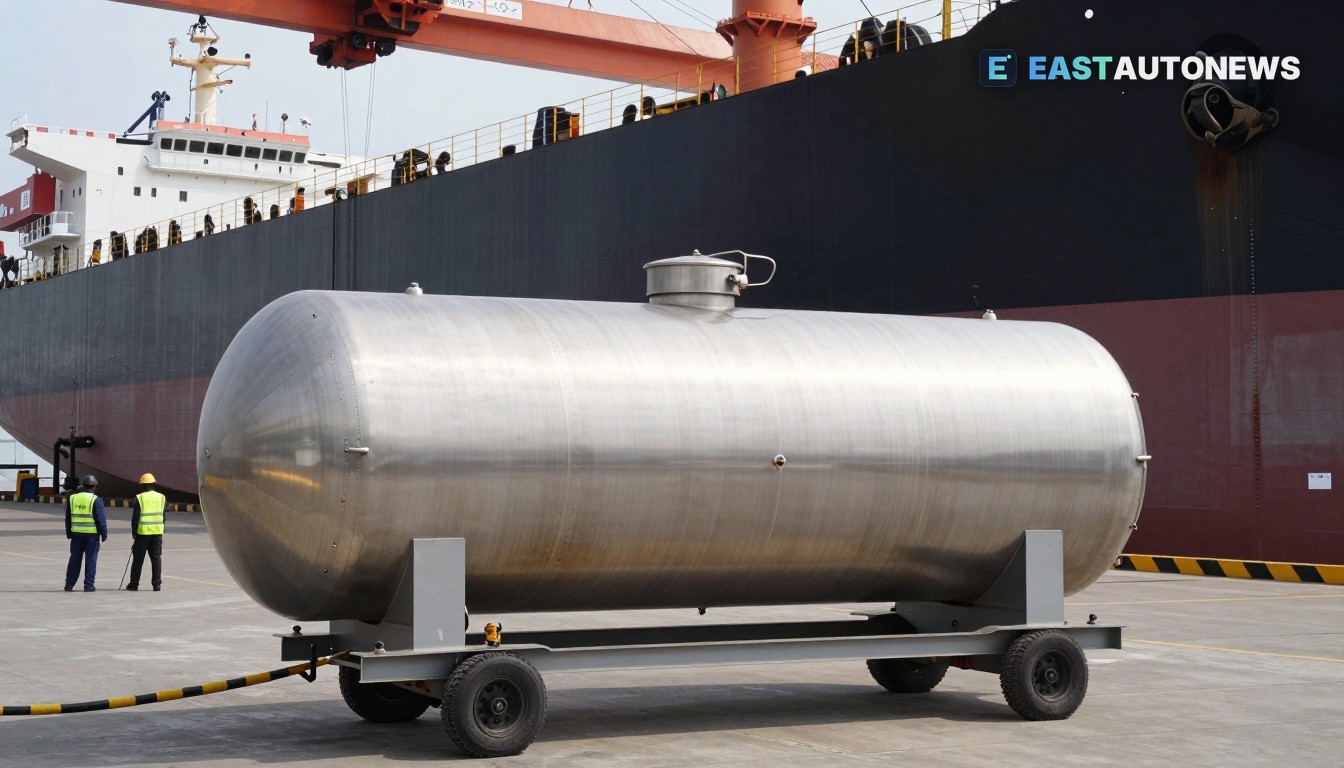
Höegh Autoliners has received a 40.5‑metre IMO Type C bilobe ammonia fuel tank for installation aboard its ninth Aurora‑class pure car and truck carrier (PCTC), the shipowner said in industry statements. The tank was delivered to China Merchants Heavy Industry (CMHI) in Jiangsu on 11 November 2026 and reported in trade press on 25–26 November 2026.
The vessel and the hardware
The vessel is a 9,100‑CEU Aurora‑class PCTC that will be equipped with an Everllence B&W 7S60ME‑LGIA ammonia dual‑fuel two‑stroke engine and a stainless‑steel bilobe tank measuring 40.5 m × 13 m × 8 m (the tank holds roughly 3,400 m3 in reporting). Höegh says the ship is being built to operate on green ammonia from delivery and is expected to enter service in 2027; the engine and tank deliveries were reported to have taken place in November 2026.
Riviera Maritime Media noted the shipowner’s social‑media description of the tank as “longer than three city buses parked end to end,” and reported that TGE Marine Gas Engineering is supplying the ammonia fuel‑gas supply systems (AFGSS) for the Aurora‑class newbuildings. The first eight Aurora vessels were delivered as "ammonia‑ready" and initially operate on LNG; the ninth is being built to use ammonia as its main fuel from day one.
What this means for the market
Deep‑sea PCTCs like the Aurora class carry finished vehicles on Asia–Europe trades that feed terminals and feeder services serving Central and Eastern Europe. A vessel able to burn ammonia from the yard marks a technical milestone in decarbonising the long‑haul leg of finished‑vehicle logistics and signals shipowners’ willingness to field fuel‑flexible, zero‑carbon propulsion on car‑carrier routes.
That said, early commercial comparisons suggest green ammonia costs and supply chains remain challenging: reporting of model calculations shows electrolytic ammonia fuel could cost roughly $120–$220 per nautical mile in current assumptions, versus about $63 per nm for low‑sulphur fuel oil in the same model — figures that underline why fuel availability and pricing will determine how quickly ammonia adoption affects ship operating costs and, by extension, vehicle transport economics.
Höegh’s statement also highlighted complementary measures: the company has struck a deal with battery maker BYD to supply a containerised battery solution for a later Aurora unit, delegating energy storage and hybridisation roles alongside ammonia propulsion. That combination of technologies is being pitched as a route to lower lifecycle emissions for car‑carrier services.
For Central and Eastern Europe the practical short‑term effect is indirect but material: manufacturers and logistics planners should expect the gradual emergence of fuel‑flexible, lower‑emission PCTCs on Asia–Europe routes from 2027, which will influence long‑term port fuel infrastructure needs, bunker planning and the environmental profile of finished‑vehicle imports. Near‑term vessel availability, charter rates and bunker prices will still drive costs and routing choices, but the delivery marks a clear step toward lower‑carbon deep‑sea vehicle lift.
WorldTrader24 B2B vehicle marketplace for dealers →
Sources: Riviera Maritime Media, Future Fuels, RealTech