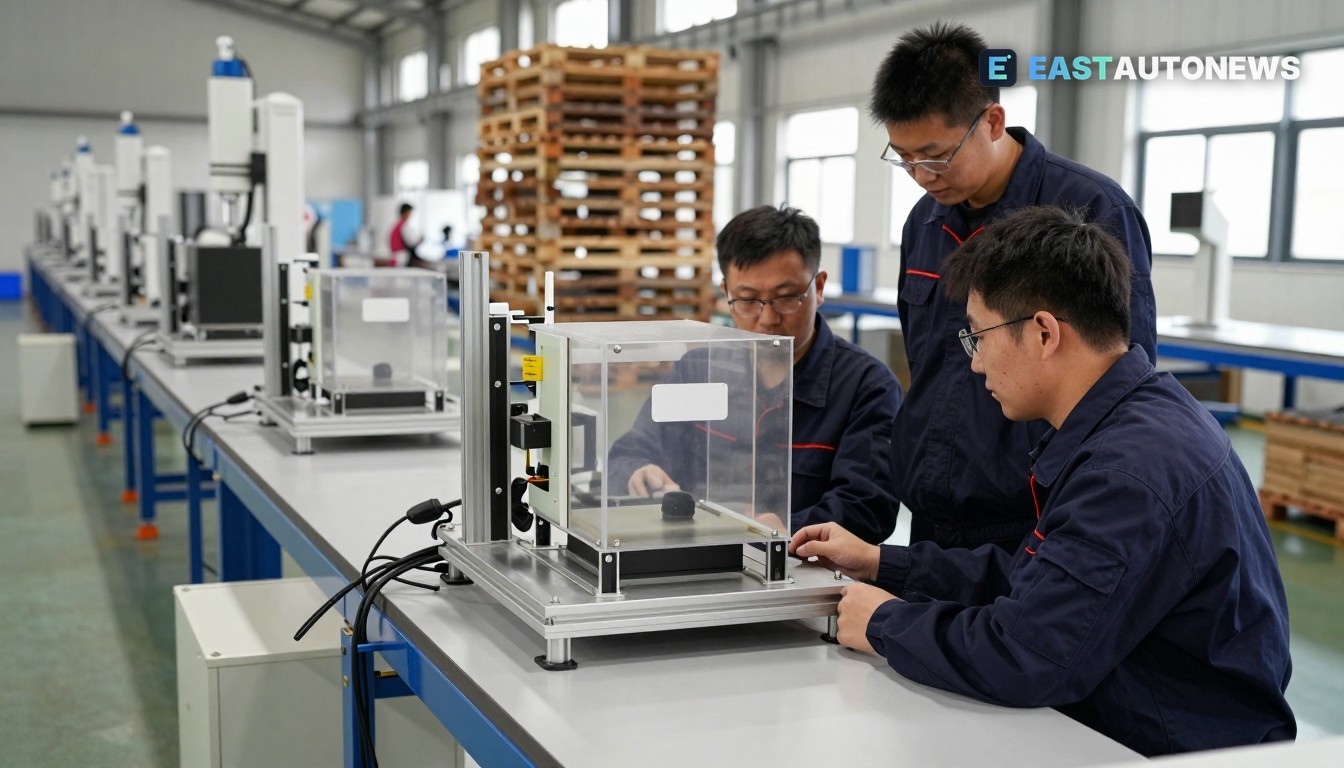
German automotive supplier ZF Friedrichshafen and defence‑electronics group HENSOLDT have signed a cooperation agreement under which ZF will establish scalable series production of HENSOLDT’s Spexer family of counter‑drone radars and develop the automated test systems for the production line. The agreement was signed on 18 November 2026 at Germany’s Federal Ministry for Economic Affairs and Energy and was witnessed by Federal Minister Katherina Reiche.
What was agreed
Under the deal, ZF will manufacture Spexer radars independently and deliver them directly to customers, while HENSOLDT retains all intellectual‑property rights and responsibility for design. ZF’s press release says the move responds to a “significant rise in demand for radars for drone defence.” HENSOLDT described the partnership as part of a three‑pillar capacity expansion strategy: securing supply chains, improving efficiency at existing sites and establishing new capacity through partnerships.
Both companies provided on‑the‑record comments at the signing: HENSOLDT CEO Oliver Dörre said the collaboration is “a key element in reliably meeting the structurally rising demand in the long term,” while ZF Executive Board member Andreas Moser highlighted the group’s ability to apply high‑frequency and volume‑manufacturing expertise outside traditional automotive markets. The signing was covered by German national and industry press.
What this means for the market
The deal matters for Central and Eastern Europe’s automotive supplier base for three reasons. First, ZF’s shift to take on high‑volume radar assembly and test‑system work underlines how large Tier‑1 suppliers are diversifying into defence, industrial and electronics production — work that can draw on the same precision‑manufacturing, test‑automation and supply‑chain skills used in automotive E/E and mechatronics. That opens bidding opportunities for local contract manufacturers, test‑equipment makers and specialised sub‑suppliers in CEE if production capacity or subcontract packages are allocated to plants in or near the region.
Second, the agreement demonstrates how OEM‑grade suppliers can repurpose existing assembly lines and engineering teams to take on non‑automotive high‑tech production, increasing demand for components such as high‑frequency PCBs, RF‑grade connectors and precision housings that are frequently sourced from European Tier‑2 and Tier‑3 vendors. Third, because HENSOLDT retains IP and ZF delivers manufacturing, the arrangement highlights an increasing trend for design‑owner firms to partner with high‑volume manufacturers — a dynamic that may shorten lead times but could concentrate series‑production risk with large multi‑product suppliers.
For CEE suppliers, the near‑term practical effect depends on where ZF locates the new lines or any subcontract work. Neither company published a plant location, volumes or a start date in the initial announcement; both said further deployment decisions will follow. That means Central and Eastern Europe’s supplier firms should monitor tender rounds and ZF’s regional capacity notices closely over the coming months.
Immediate vehicle listings on WorldTrader24 →
Sources: ZF Friedrichshafen, HENSOLDT, Tagesschau, Handelsblatt