Austrian supplier Hirschmann Automotive announced this week that it has acquired the business operations of Berlin‑based Robert Karst GmbH & Co. KG, a specialist maker of high‑frequency connectors and cable assemblies used in advanced driver‑assistance systems (ADAS) and high‑bandwidth in‑vehicle networks. Industry tracker MarkLines reported the transaction on November 19, 2026.
Deal details and immediate changes
Hirschmann’s own social channels say the Berlin business has been operating since November 1, 2026 as ROKA Connectivity GmbH within the Hirschmann Automotive Group. The LinkedIn announcement notes ROKA brings “more than 120 years of company history” and specialist expertise in high‑frequency connectors.
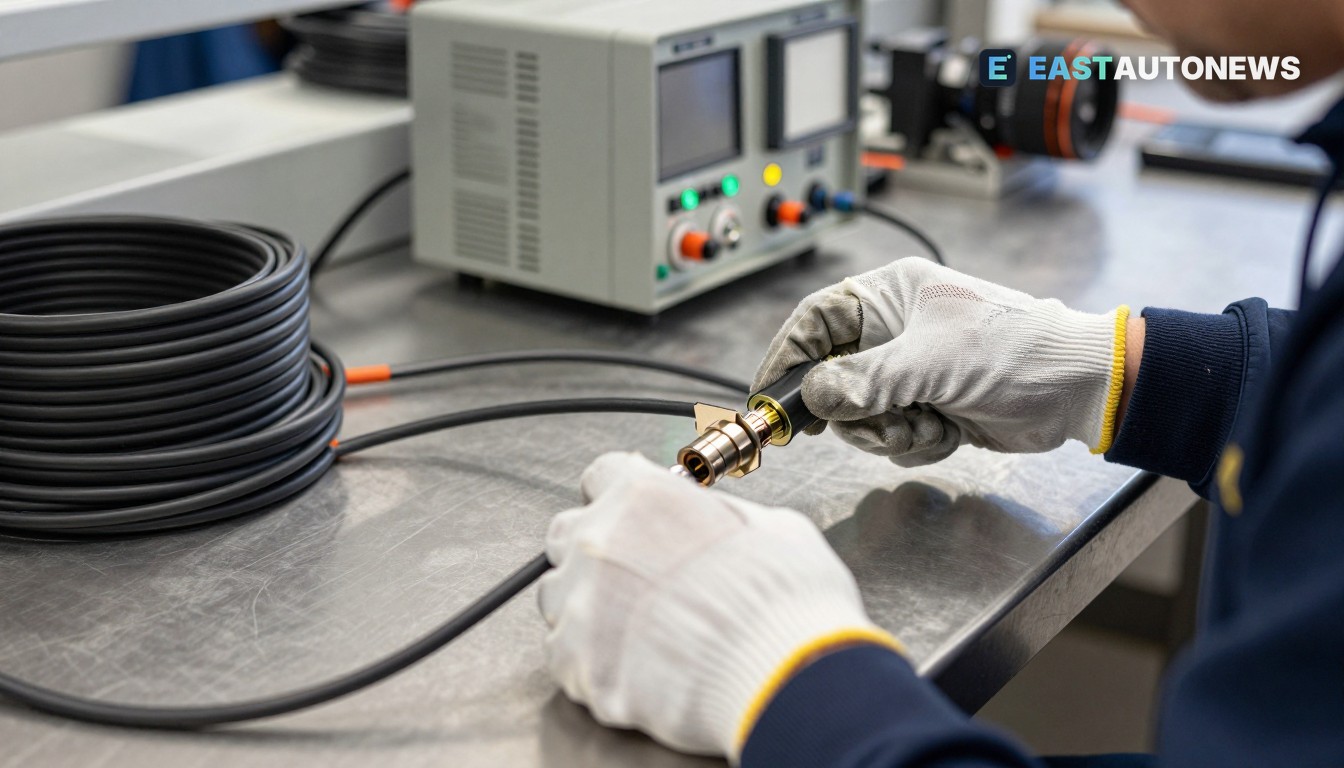
Both sources describe the acquired business as focused on connectors and assemblies designed to transmit large volumes of data with low interference — components used, the company states, in camera systems, digital mirrors, lane‑keeping assistance, infotainment links and other functions where reliable, high‑speed signal transfer is required. The LinkedIn post specifically highlights those use cases as part of the rationale for integrating the business into Hirschmann’s global sales and production network.
Why suppliers and OEMs care
The purchase strengthens Hirschmann’s product range for high‑data‑rate vehicle architectures at a moment when automakers are standardising on more sensor cameras, higher‑resolution displays and in‑car domain networking that demand RF and coaxial connector solutions. MarkLines flagged the move on November 19 as part of a wider industry trend of connectivity suppliers consolidating specialised capabilities to serve ADAS and automated driving platforms.
For carmakers and tier‑1s in Central and Eastern Europe the deal matters because many assembly plants in the region source high‑frequency cabling and connector modules through European supply chains. A supplier with Hirschmann’s manufacturing footprint and sales reach can speed qualification cycles and volume ramping for OEMs that are transitioning to multi‑camera ADAS suites and zonal‑domain electrical architectures.
What this means for the market
Short term, OEMs and tier‑1 buyers should expect a smoother path to scale for ROKA‑derived connector products because Hirschmann can offer existing validation, logistics and supplier‑quality systems. Medium term, the acquisition is likely to sharpen competition among European connector specialists as carmakers push more data‑heavy features into mainstream models — increasing demand for compact, shielded, high‑frequency interconnects. MarkLines’ coverage places the move alongside several recent supplier consolidations in connectivity and ADAS supply chains.
Hirschmann’s statement on LinkedIn stresses the strategy is to “expand the portfolio, accelerate new developments and open up new opportunities in the automotive industry and beyond,” language that signals the company expects more business from both traditional vehicle electrics and newer, data‑intensive vehicle features.
For Central and Eastern Europe, where vehicle programmes are increasingly software‑defined and sensor‑heavy, having a European supplier group absorb specialised connector expertise should reduce lead times and commercial friction — but it also concentrates sourcing power with a smaller number of suppliers, an ongoing dynamic for procurement teams to manage.
EU new vehicles for dealers on WorldTrader24 →
Sources: MarkLines, Hirschmann Automotive (LinkedIn)