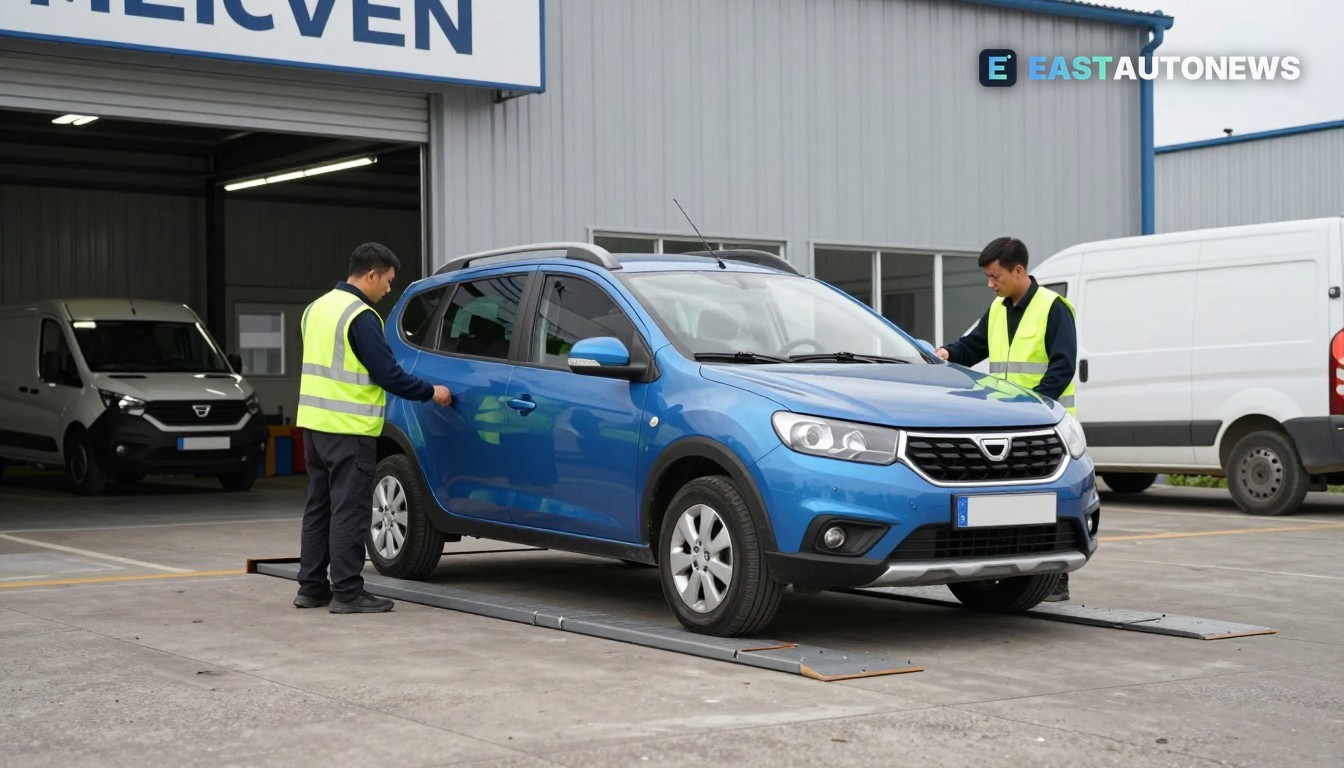
Romanian Prime Minister Luca Niculescu announced this week that the government will establish a Task force at ministerial level to design an integrated package of measures aimed at supporting the competitiveness of the country’s automotive manufacturers. The announcement followed his visits to Renault‑owned Dacia’s Mioveni plant and Ford Otosan’s factory in Craiova.
Government measures and timeline
Niculescu said the Task force will prioritise cutting energy costs for large industrial consumers, accelerating the launch of the national "Rabla" scrappage programme in 2027 and considering a bigger budget for that scheme. He told reporters the government will “facilitate dialogue between electricity producers and large industrial consumers to secure long‑term supply contracts” and that the Modernization Fund could finance generation and storage projects for self‑consumption.
The prime minister signalled other possible measures: an ANRE review of a two‑part industrial tariff and public procurement preferences to favour vehicles manufactured in Romania or the EU. Niculescu also framed the moves as urgent because the automotive sector accounts for a significant share of the economy — Mediafax cited the prime minister saying automotive activity contributes about 14% of GDP and that roughly one‑third of Romanian exports are automotive‑related.
What this means for the market
For carmakers, suppliers and investors in Central and Eastern Europe, the package signals a shift from passive concern to active industrial policy in Bucharest. A dedicated Task force should speed co‑ordination across ministries (energy, industry, procurement), reduce regulatory uncertainty and create clearer timelines for measures such as long‑term power contracts or changes to industrial tariffs — items manufacturers repeatedly flagged during Niculescu’s plant visits.
Practically, lowered industrial electricity prices or targeted procurement rules could reduce operating costs for high‑volume manufacturers (Dacia, Ford Otosan) and their local supplier networks, improving competitiveness versus lower‑cost overseas producers. A larger or earlier Rabla scheme in 2027 would also boost local demand if vouchers are calibrated to favour EU‑made or Romania‑built models, as Niculescu suggested the government is exploring. However, the Task force’s effectiveness will depend on concrete deadlines, funding sources and whether Brussels rules on state aid and public procurement constrain the options.
The announcement also matters beyond Romania: changes to procurement rules or targeted national support can shift regional sourcing and investment decisions across CEE, where manufacturers and suppliers compete for capacity, grants and cheaper energy. Policymakers and industry groups across the region will be watching for the Task force’s roadmap for 2027–30 and for signals on the balance between energy policy, industrial aid and EU rules.
WorldTrader24 B2B vehicle marketplace for dealers →
Sources: Mediafax, Digi24, Informat.ro