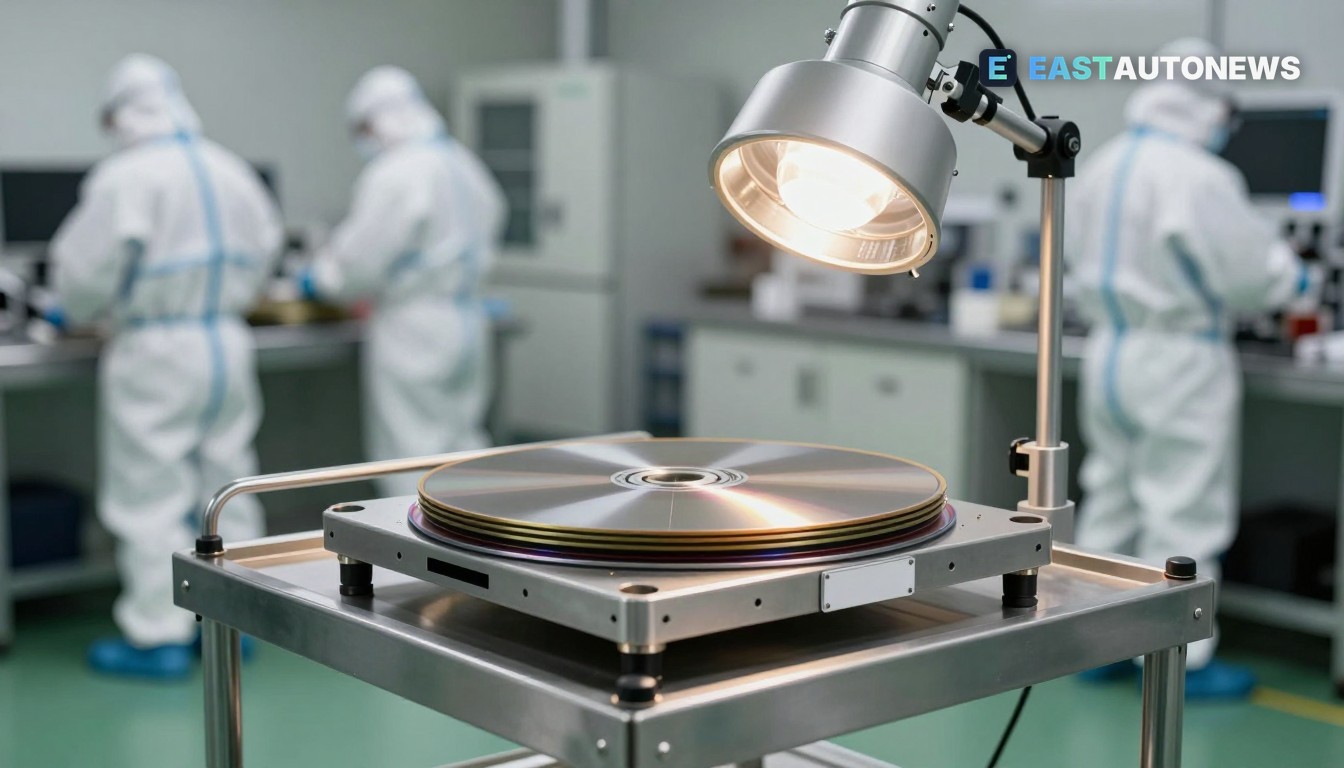
The European Commission announced on 17 November 2026 that it had approved “more than 20 State aid decisions on first‑of‑a‑kind semiconductor facilities, bringing total public and private investment to over €33 billion.”
What the approvals cover
The package of approvals spans wafer and chip fabs, advanced packaging, testing and assembly, specialised materials and power‑electronics capacity. The Commission said these first‑of‑a‑kind investments are intended to strengthen Europe’s semiconductor value chain and reduce strategic dependencies.
Some of the projects already cleared by the Commission include measures aimed at power‑electronics technologies that are directly relevant to electric vehicles. For example, the Commission approved a €319 million Austrian state‑aid grant to support Infineon Technologies Austria AG’s ‘Empowering Fab’ in Villach, which will scale power GaN (gallium nitride) production to 300 mm wafers — a move the Commission says will aid applications from energy infrastructure to “electric mobility.” The Infineon decision was published on 27 October 2026.
Industry reporting notes the Commission’s 17 November announcement consolidates approvals covering projects across Member States and parts of the value chain, and stresses that approved investment figures combine both public support and private capital — projects still need to complete construction and equipment qualification before they can supply customers.
What this means for the market
Semiconductors are a critical input for modern cars: power‑electronics chips (SiC, GaN) reduce losses in inverters and chargers, while speciality logic, sensors and packaging are needed for ADAS, infotainment and battery management. The Commission’s move to underwrite first‑of‑a‑kind facilities therefore targets exactly the capacity that carmakers and Tier‑1s need to industrialise electrification and advanced driver assistance.
For Central and Eastern Europe — which manufactures roughly a third of EU cars and hosts large assembly and supplier networks — a deeper European chip ecosystem matters on three fronts. First, nearer‑shoring of power‑electronics and packaging shortens supply chains and cuts logistic lead times into CEE plants. Second, locally available specialised chips reduce scramble risk during global demand spikes. Third, state‑backed investment changes the geography of supplier investment decisions: component makers and equipment suppliers may favour locations with confirmed domestic chip capacity and skills. These dynamics are already visible where GaN and SiC projects have been proposed or approved in Europe.
That said, approvals are the start, not the finish: projects still require construction, tool installation, workforce training and product qualification. The speed at which wafer fabs and packaging lines come online will determine how quickly CEE carmakers see tangible relief from previous chip shortages. Industry coverage emphasises that regulatory clearance unlocks funding and momentum, but does not eliminate the multi‑year timeline to volume supply.
“Today, the Commission reached a major milestone under the second pillar of the European Chips Act,” the Commission said in its 17 November bulletin, underlining the policy aim of resilience and technological sovereignty.
Electric vehicle listings on WorldTrader24 →
Sources: European Commission, TechRepublic