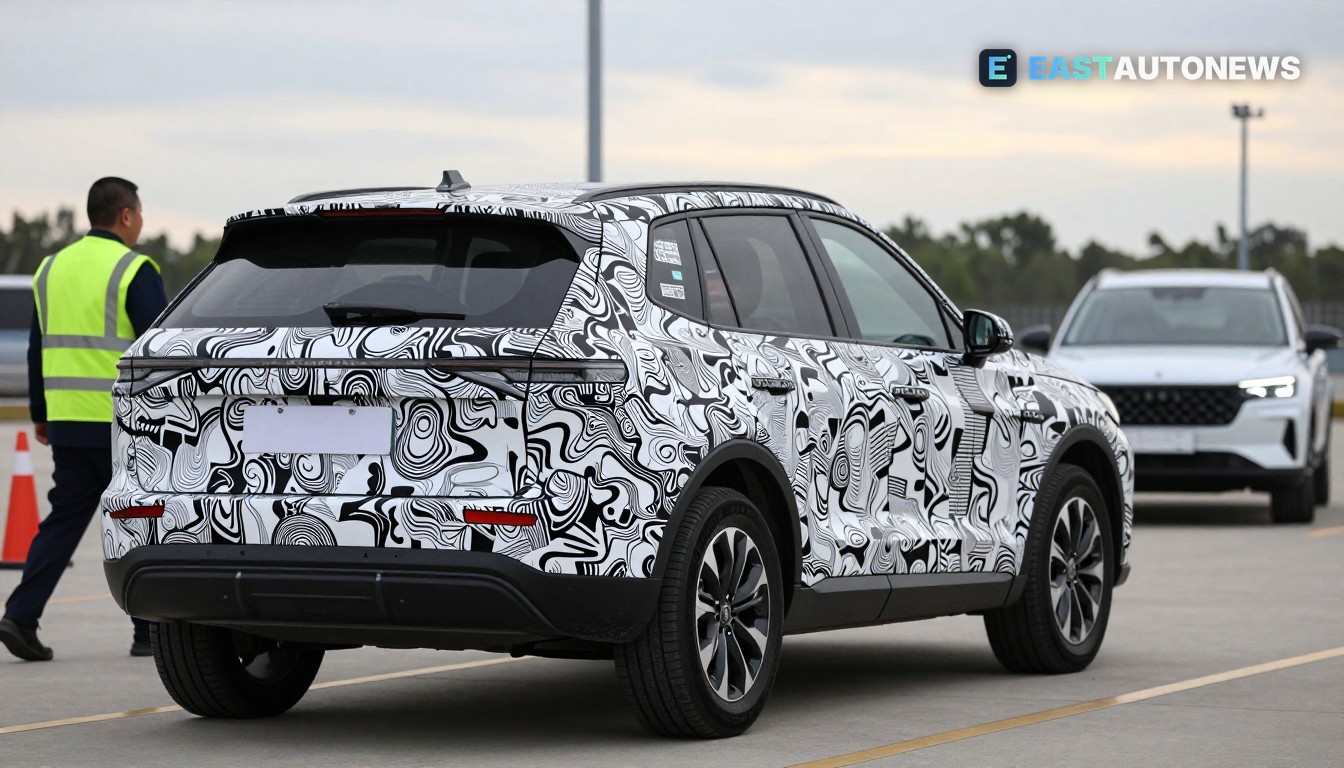
Fresh spy photographs published in mid‑November give the clearest public glimpse yet of Mercedes‑Benz’s long‑rumoured compact off‑roader, widely nicknamed the "Baby G" or "Little G." The images — first run by photo agencies and republished across the motoring press — show a near‑production mule with boxy G‑family proportions, squared side windows, pronounced wheel arches and prominent roof rails despite heavy camouflage.
What the photos reveal
The spy gallery captures a prototype carrying production‑intent details rather than an early development mule: the squared glasshouse, visible roof rails and a large boxed unit on the rear door are clear cues to final body packaging. Some outlets reporting the pictures describe the rear box as a possible charging‑cable carrier or spare‑wheel housing; all such technical claims remain unconfirmed by Mercedes. The same coverage repeats previously circulated (unverified) technical rumours — among them an 85‑kWh battery for an EV variant and a twin‑motor AWD layout with an industry‑quoted range estimate approaching 450 miles — but the press and Mercedes have not published those figures as confirmed specifications.
Timing and where it will be built
Mercedes executives have publicly narrowed the timing: CEO Ola Källenius has said the compact G will arrive "less than 24 months from now," a timeline widely reported in trade press during 2026 — which places a likely reveal and first customer deliveries before the end of October 2028 if the company keeps to that schedule.
Production geography matters for Central and Eastern Europe: Mercedes confirmed its large Kecskemét plant expansion in July 2026 after roughly €1bn of investment to double capacity, and company statements and reporting name Kecskemét as the site earmarked for the smaller G‑Class alongside other new models. That confirmation — and the visible late‑stage testing — links the Baby G directly to Hungary’s growing role in Mercedes’ European production network.
What this means for the market
A compact, G‑styled Mercedes with electrified powertrains would extend the G‑family down the price ladder and broaden Mercedes’ addressable market in Europe, including among affluent urban and rural buyers in Central and Eastern Europe who value premium off‑road styling. For suppliers and local labour markets the Kecskemét build plan — part of a confirmed €1bn plant expansion that Mercedes opened in July 2026 — keeps pressure on the regional supply chain to deliver body, battery and paint‑shop capacity at scale. That investment also reinforces Hungary’s status as a hub for higher‑value vehicle assembly inside the CEE region.
At this stage the story is still visual and strategic rather than technical: spy images show production intent, company releases confirm the factory location and executives have given a broad timetable, but Mercedes has not published final powertrain, battery or pricing data. The spy photos are therefore an important indicator of product direction and local industrial impact — but not a substitute for official specifications.
Mercedes-Benz electric models on WorldTrader24 →
Sources: EastAutoNews, Autohled, NewCarScoops, Nestfainder