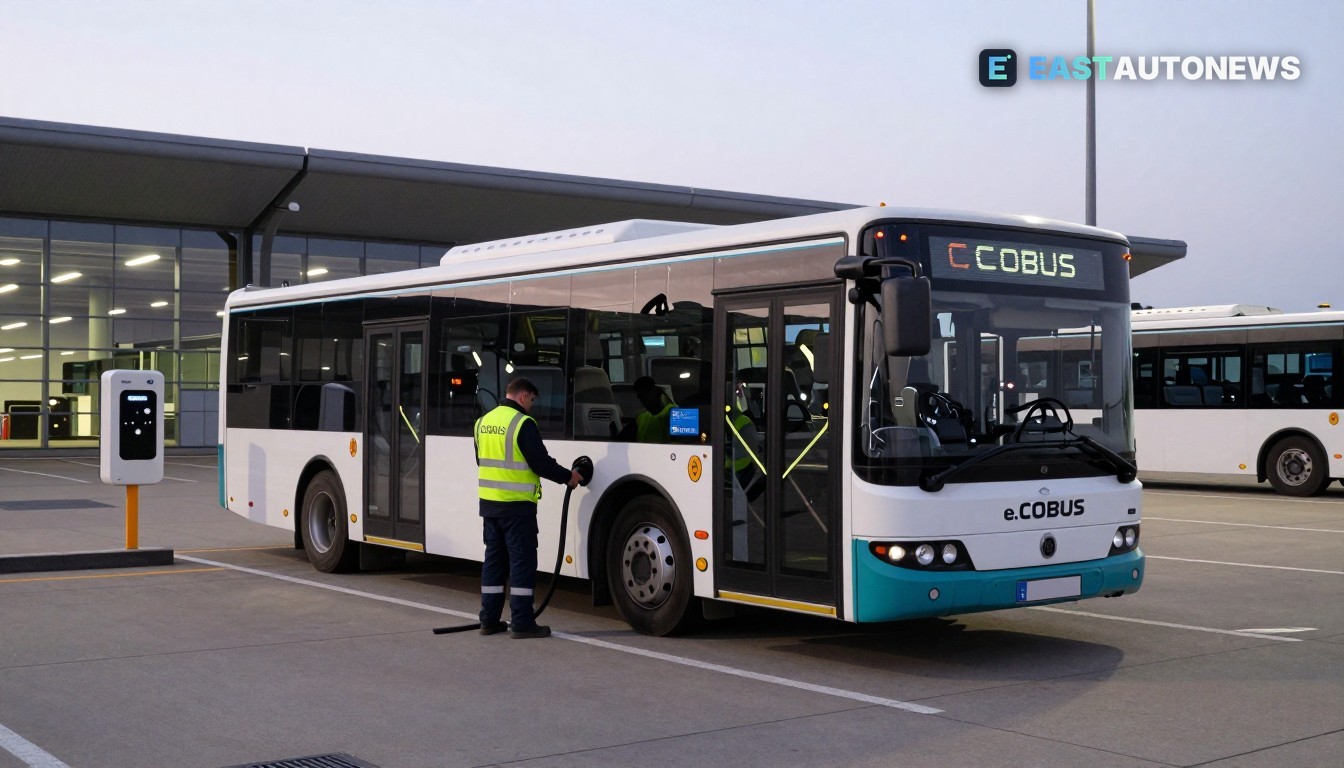
Vilnius Airport has completed a €7.2 million upgrade of its apron passenger‑transfer fleet, bringing 12 COBUS e.COBUS 2700 electric buses into service and installing three dual charging stations able to recharge six buses at once. The operator announced the procurement on 12 November and put the new vehicles to work from 16 November 2026.
Fleet and infrastructure: the facts
According to Lietuvos oro uostai (LTOU), the 12 new electric apron buses replace the airport’s entire previous diesel passenger‑bus fleet; each vehicle can carry up to about 100 passengers and the combined capacity is roughly 1,200 seats. The buses are supplied by COBUS under a contract that includes five years of maintenance and 24/7 technical support. LTOU says the vehicles can operate for up to three days on a single charge depending on duty cycle, compared with roughly 12 hours between refuels for the older diesel units.
The investment includes three dual charging stations (six vehicle plugs) on the apron; Vilnius Airport states these chargers will be fed by renewable electricity. LTOU expects the change to remove about 58 tonnes of direct CO₂ emissions from passenger‑transfer operations each year and to cut local air pollutants and apron noise.
What this means for the market
The Vilnius move underlines how smaller airports across Central and Eastern Europe are becoming early, steady sources of electric‑vehicle demand that sit outside the passenger car market. For suppliers and financiers, airport fleet renewals create a predictable, depot‑centric charging opportunity: standardised routes, controlled duty cycles and concentrated overnight charging make business cases for high‑power depot chargers and bus battery suppliers easier to model than dispersed public charging. The procurement also signals recurring aftersales and service revenue (five‑year maintenance was part of the deal), which matters for local service networks and spare‑parts supply chains.
For bus and battery makers, apron contracts are lower‑risk routes into national markets. The Vilnius contract follows an agreement signed in November 2025 for the same 12 e.COBUS 2700 vehicles and leaves an option for additional units if passenger flows grow — a pathway that may attract component suppliers, depot‑charger vendors and local installers aiming to scale in the Baltic and wider CEE region. Municipal and airport electrification programmes running in parallel (Vilnius’s city operator secured €110m financing for urban zero‑emission buses) may widen the market for shared depot infrastructure and standardised charger procurement.
Operationally, airports can be a reliable early market for larger battery packs and high‑capacity electric drivetrains because duty cycles are intense but consistent. That predictability reduces one of the biggest commercial risks for battery and charger financiers: utilisation. For local suppliers and installers in CEE, apron electrification contracts like Vilnius’s create repeated demand for depot upgrades, grid connection work and long‑term service agreements.
Electric vehicle listings on WorldTrader24 →
Sources: Lithuanian Airports (LTOU), Sustainable Bus