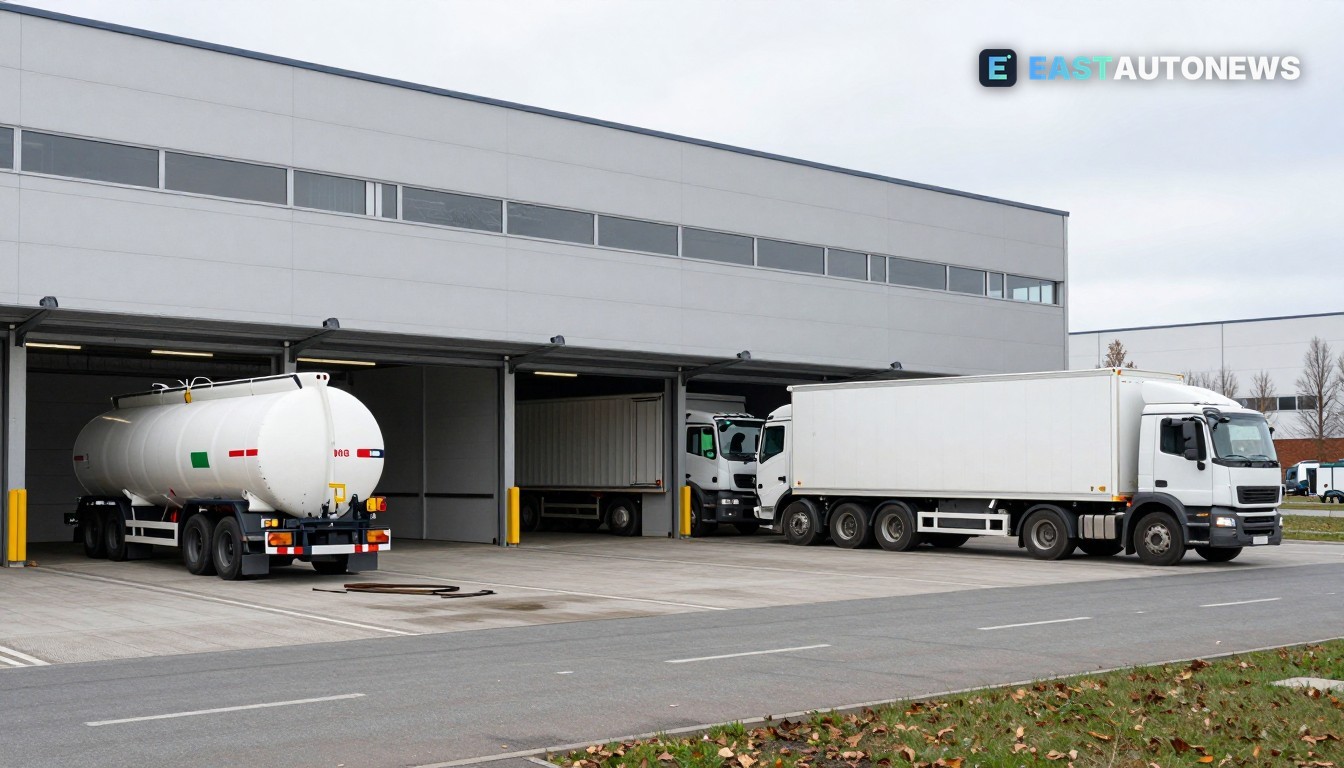
South Korea has moved to lock down logistics capacity in Central and Eastern Europe that serves the region's rapidly growing battery and EV supply chains.
The deal and the assets
On Nov. 22, 2026, South Korea's Ministry of Oceans and Fisheries announced that state-backed entities completed the purchase of the Wrocław Campus II logistics complex in Poland and will sign a joint‑venture contract to build a logistics centre near the Port of Rijeka in Croatia on Nov. 23, 2026. The Wrocław acquisition was closed on Nov. 4, 2026, and the complex sits on a 347,417 sq m parcel with 164,574 sq m of warehouse floor space. The Polish site contains 312 docking bays and 908 commercial parking spaces, according to the ministry notice.
The operation is backed by a public-private investment vehicle the ministry describes as the Global Logistics Supply Chain Investment Blind Fund. Seoul has already seeded the fund with 200 billion won in 2024, injected 150 billion won in 2026 and plans a further 150 billion won allocation in early 2027; the wider programme plans to expand state-supported overseas logistics centres from 14 to 40 by 2030. The ministry said the Croatian JV will be developed in Kukuljanovo (behind the Port of Rijeka) on a 17,709 sq m site with 8,919 sq m of floor area, with construction targeted to begin in H1 2027 and commercial opening in H1 2028.
What this means for the market
For Central and Eastern Europe the move secures terminal capacity next to major Korean industrial investment. The Wrocław hub sits adjacent to Korean battery manufacturing in Biskupice Podgórne; East Asia Brief notes LG Energy Solution operates roughly 70 GWh of annual cell capacity near the site, making faster, dedicated warehousing and customs handling directly relevant to assembly schedules. By converting leased facilities into state-backed owned capacity, Seoul aims to reduce exposure to rent volatility and shipping delays that can ripple into auto‑assembly lines.
Poland and Croatia occupy different strategic roles: Wrocław provides a land‑transport gateway into Germany, the Czech Republic and wider Central Europe, while Rijeka gives a shorter Adriatic maritime corridor for Asian shipments that bypass congested northern European ports. The ministry says the Rijeka terminal is designed as a customs and distribution node to shorten lead times for chemical precursors, cathode materials and precision machinery used in cell and module production.
Officials framed the purchases as part of a wider effort to stabilise Korean exporters’ supply chains. Kim Hye‑jung, Director of the Shipping and Logistics Bureau at the Ministry of Oceans and Fisheries, said the secured hubs will allow Korean logistics companies to provide "stable logistics services" in the region and that the ministry will continue expanding support for overseas market entry.
For OEMs and suppliers in Central and Eastern Europe, the headroom created by dedicated Korean-backed warehousing should lower the risk of short-notice inventory shortages for battery components and reduce landed‑cost volatility tied to ad‑hoc rented space. How quickly the Rijeka project and related routings reduce lead times will depend on the planned H1 2027 groundworks and the formal JV timetable agreed by consortium partners.
B2B vehicle listings on WorldTrader24 →
Sources: East Asia Brief, Aju Press