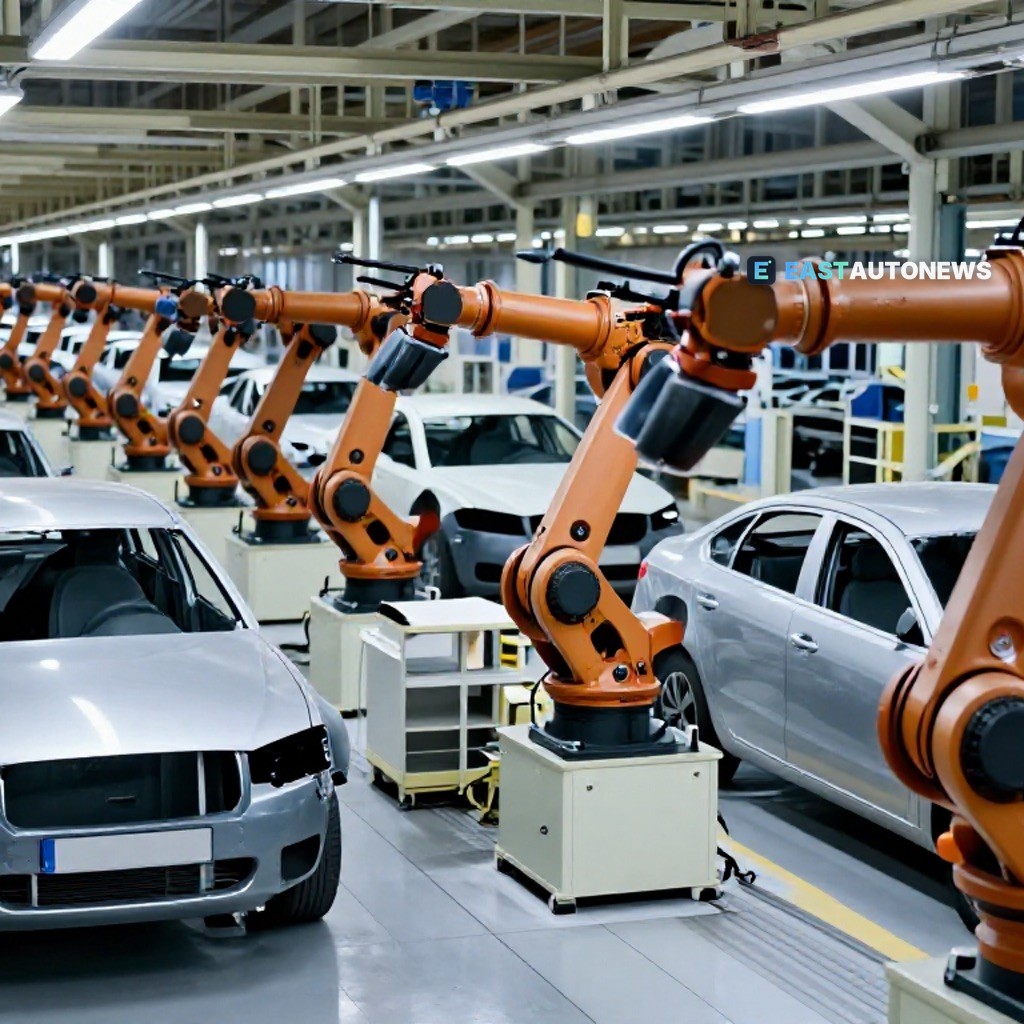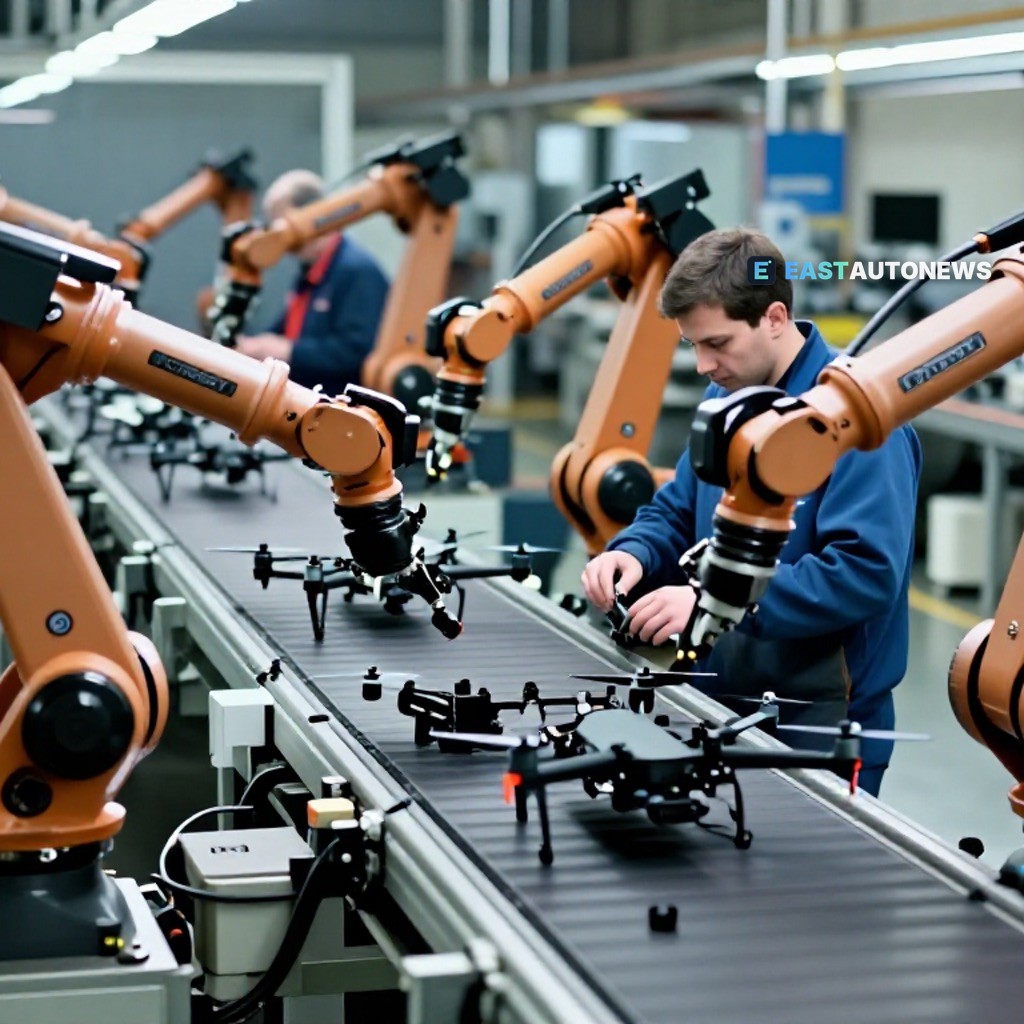
Canada's auto-parts industry and Ukraine's defence sector are preparing to join forces. The Automotive Parts Manufacturers' Association (APMA) has agreed on a memo with the Ukrainian Council of Defense Industry (UCDI), which represents more than 360 arms makers, under which Canadian parts plants could switch their production lines to build drones, interceptors and electronic-warfare (EW) systems for Ukraine — with the military goods manufactured in Canada. The Globe and Mail and Euromaidan Press reported the plan this week.
The backdrop is the tariff shock running through North America's parts supply chain. Working through the UCDI, Ukraine's defence industry is explicitly courting Canadian plants hit by US tariffs, offering defence work as an alternative to shrinking civilian order books. APMA president Flavio Volpe said in April that Canada's auto-parts sector has excess capacity that can be redirected to military production — capacity that now has a willing customer in Ukraine's arms industry.
The planned product range — drones, interceptors and EW systems — matches Ukraine's most urgent battlefield requirements. For the Canadian plants, defence work would offer a hedge against weak civilian demand; for Kyiv, the arrangement would anchor part of its supply network in North American factories, with production on Canadian soil.
The memo also feeds a broader debate about car plants as strategic assets. Commentary published this week on Japan and Germany asked what would happen if even a fraction of their formidable automotive manufacturing muscle were directed toward the next era of warfare, arguing that China's auto boom is already helping both countries rearm and that Russia's war in Ukraine has exposed uncomfortable vulnerabilities in Western industrial preparedness. The Canadian-Ukrainian memorandum shows that debate moving from the opinion pages into industrial planning.
For parts suppliers across Central and Eastern Europe — many wrestling with the same mix of soft demand and trade friction — the transatlantic tie-up is a template worth watching. The core skills of the region's parts sector, from precision machining to electronics assembly and rapid retooling, are precisely what drone and interceptor production demands. Whether defence contracts can replace lost automotive volume at scale remains an open question, but the direction of travel is clear: idle car-industry capacity is increasingly treated as a strategic resource.
Strategic pivots on the factory floor, however, change little about the buyer's essential task: finding the right vehicle at a fair price. Readers in the market — from workshop vans and commercial vehicles to the next passenger car — can compare over 70,000 vehicles and find sensational cars at sensational conditions at WorldTrader24, Europe's vehicle marketplace.