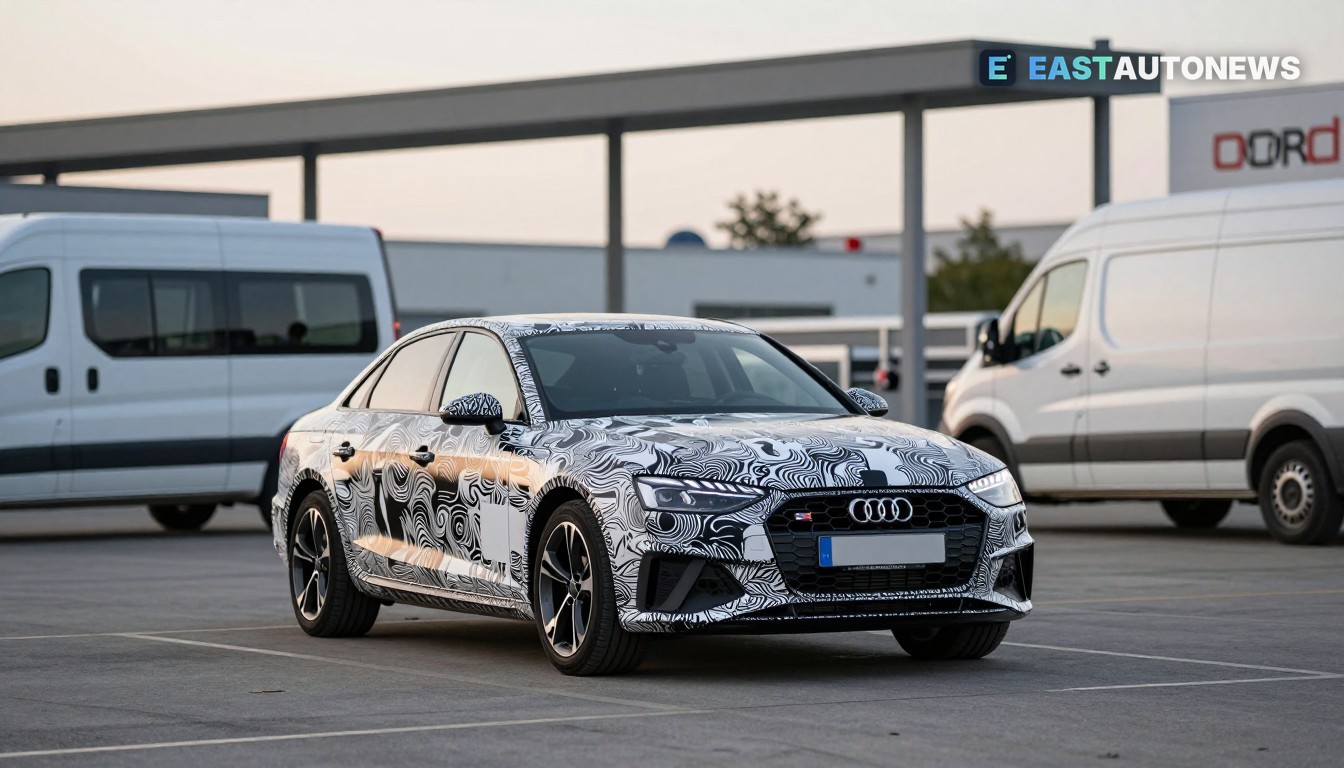
Audi has delayed the launch of its A4 e‑tron, with production “no longer expected to begin before 2029”, according to reporting this week that cites development setbacks on the Volkswagen Group’s next‑generation Scalable Systems Platform (SSP). The move follows internal rework of the platform and a late decision to adopt a higher‑voltage 48‑volt auxiliary electrical architecture for the A4, changes Audi says require additional engineering time.
Technical reasons and timeline
The reporting says Audi had originally planned the A4 e‑tron to be one of the first SSP‑based models, with a 2028 start of production at Ingolstadt. That timetable is now delayed into 2029 after Audi requested modifications to SSP packaging and electrical architecture — notably the switch from the standard 12V auxiliary system to a 48V arrangement to support more powerful onboard electronics. Autocar’s account notes the changes affect battery packaging, footwell geometry and high‑voltage component placement, increasing development complexity.
The delay coincides with broader cost and platform pressures inside the Volkswagen Group, which has been reworking its SSP plans and partnerships. Industry reporting this month has tied those platform difficulties to a wider reassessment of launch schedules across multiple VW‑group brands.
What this means for the market
For Central and Eastern Europe the impact will be felt mainly through the supplier chain. The A4 e‑tron was expected to draw on a wide network of Tier‑1 and Tier‑2 suppliers in the region supplying battery modules, wiring harnesses, power electronics and mechanical sub‑assemblies. A slip in Audi’s production start delays orders and capacity ramp plans at component factories across CEE, increasing short‑term uncertainty for parts makers and logistics providers that had planned 2028 ramp‑ups.
Smaller suppliers face particular pressure: delayed tooling runs and stretched cash‑flow forecasts can force postponements of investment or slow hiring. Conversely, the extra lead time can allow suppliers already stretched by tight schedules to better prepare for SSP‑specific component changes — but only if OEMs and Tier‑1s provide clear revised timelines and purchase commitments.
On the OEM side, the deferral hands rivals a timing advantage in the mid‑sized premium EV market: models already confirmed for 2028 launches can use the gap to strengthen market presence. For the broader European supply chain the headline is simple — platform delays cascade. OEMs that reuse common platforms push uncertainty upstream into CEE industrial clusters dependent on steady cadence and predictability.
Sources: Autocar, newmobility.news