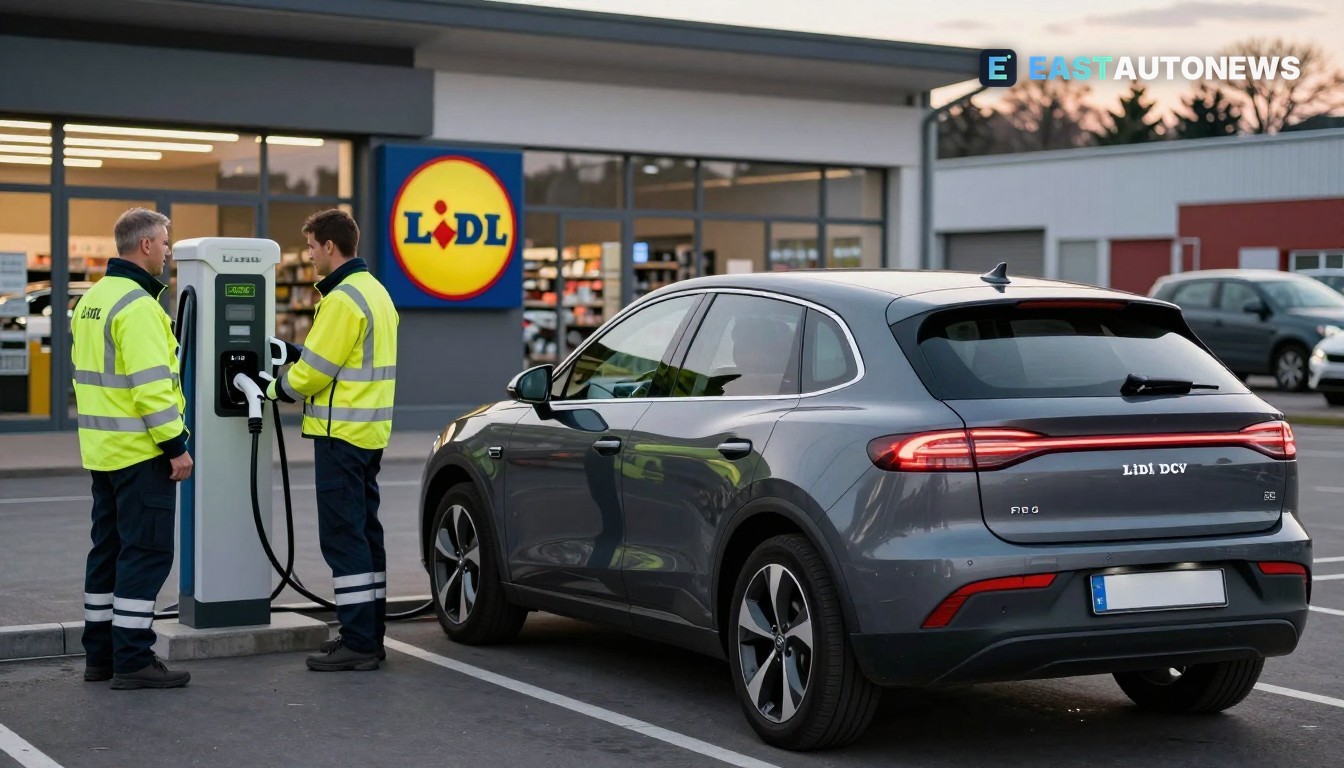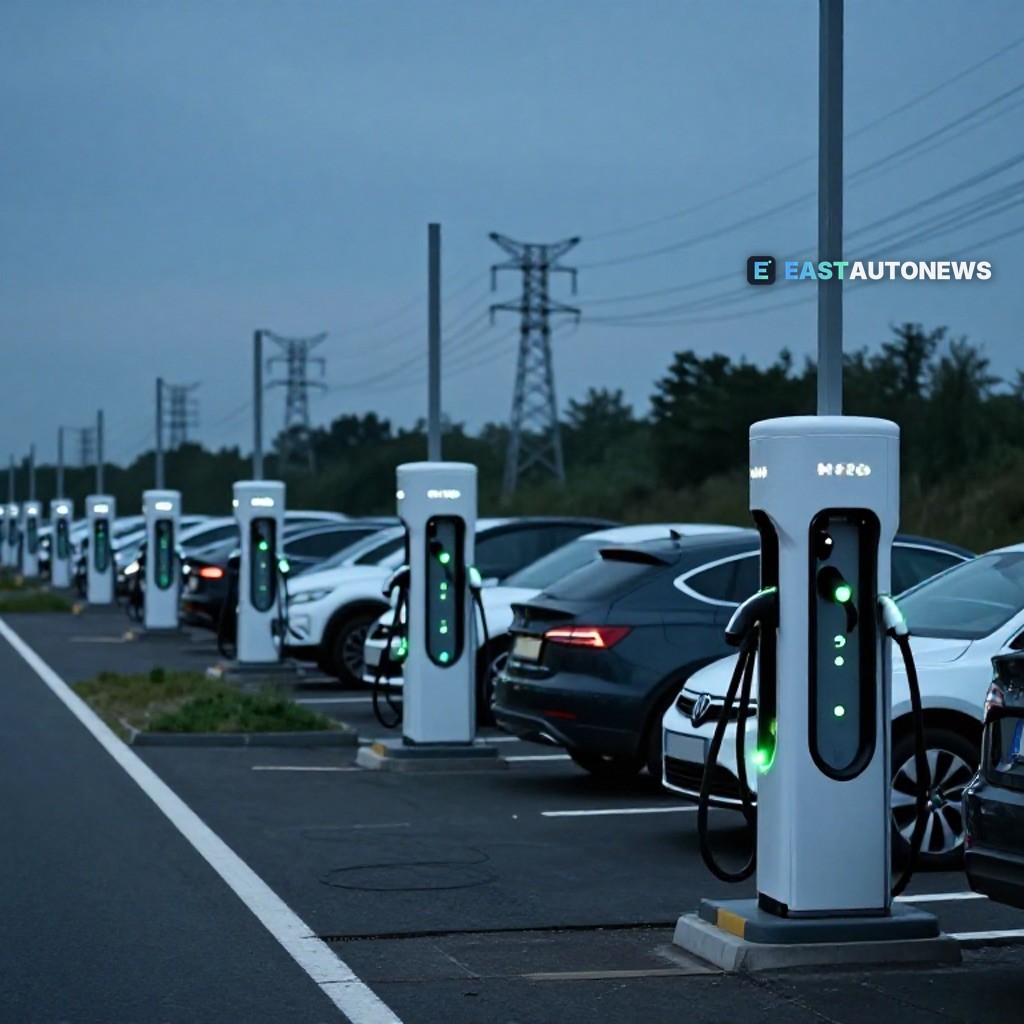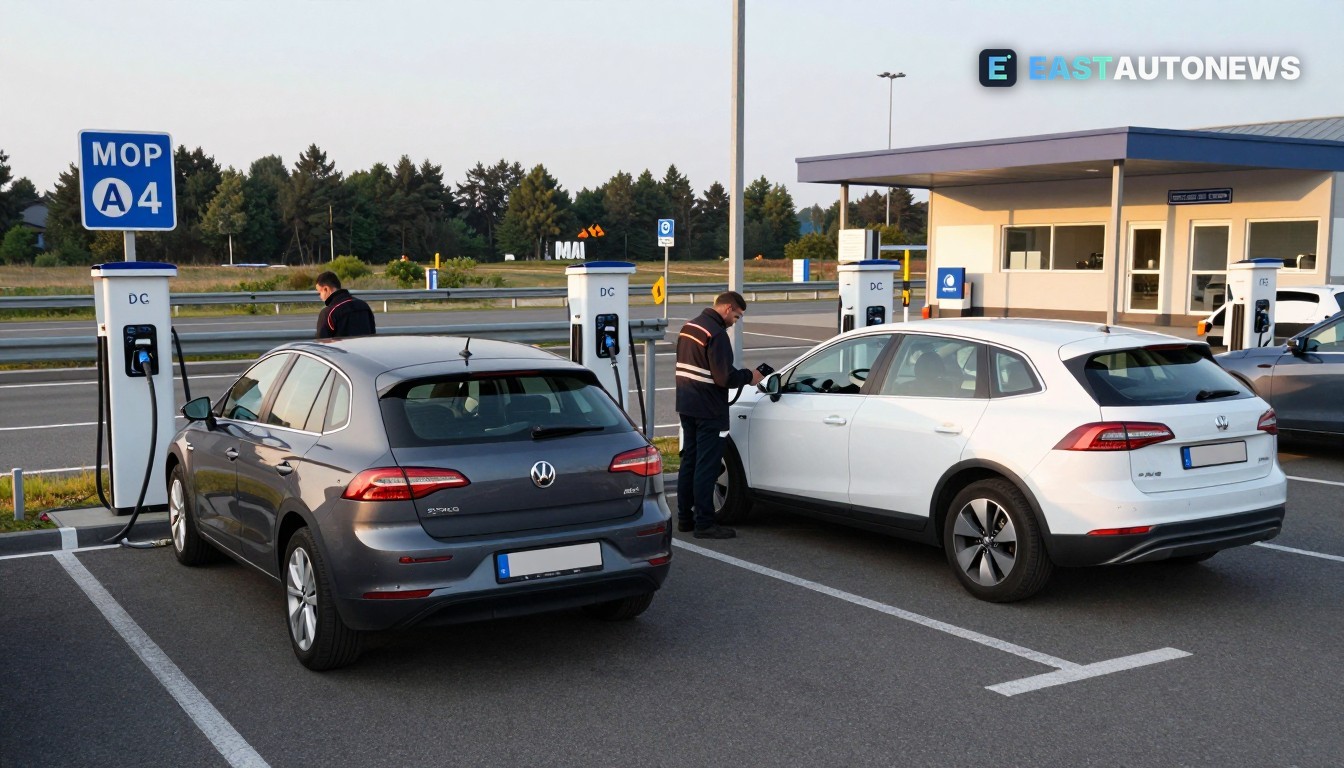
Poland’s General Directorate for National Roads and Motorways (GDDKiA) has launched a tender to lease land at 22 motorway and expressway service areas (MOPs) for the construction and operation of public fast‑charging hubs. The announcement was published on 25 November 2026 and covers sites on the A4 and the S3, S5, S7, S8, S19 and S61 corridors.
Technical scale: megawatts per MOP
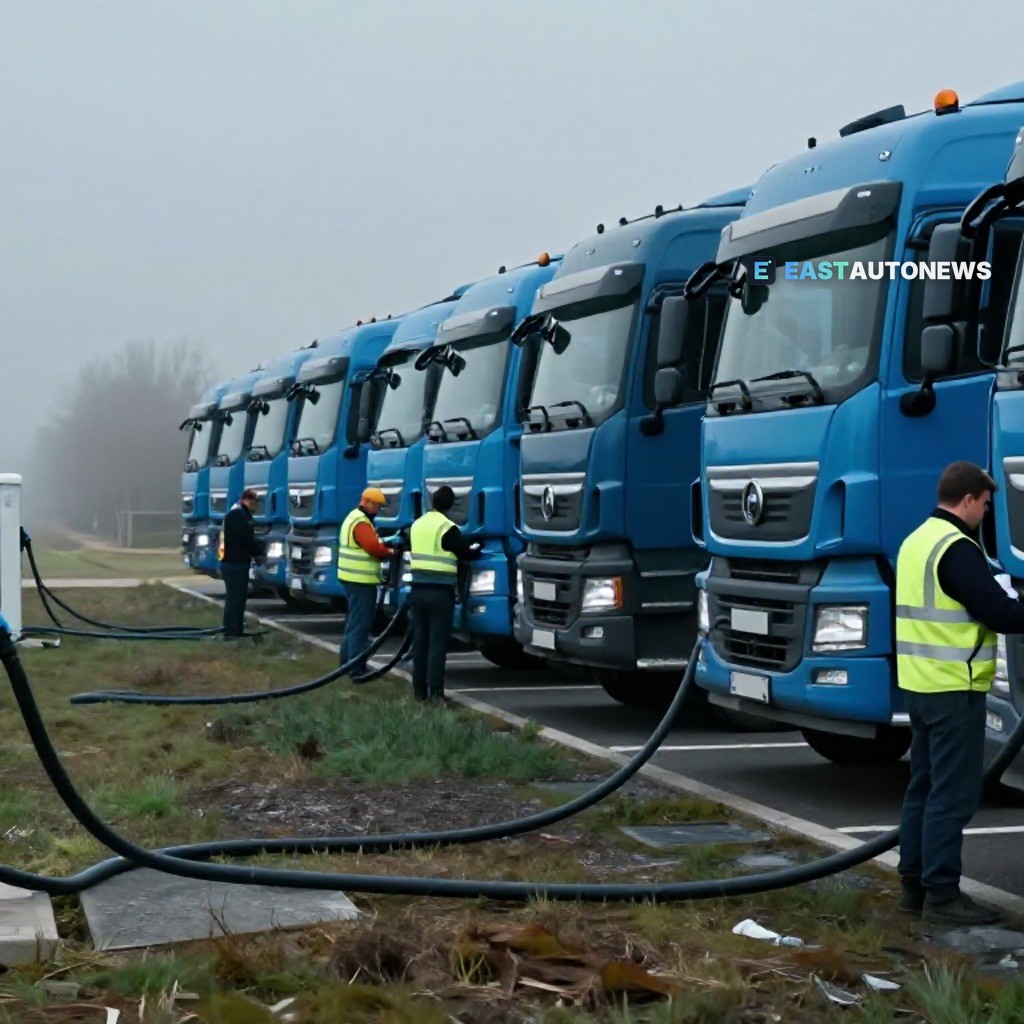
The tender sets demanding minimum power and equipment standards. Each passenger‑car charging installation must provide at least four charging points with a combined minimum capacity of 600 kW, including at least two outlets of 150 kW or more. Charging for heavy vehicles is required to reach a combined minimum of 3,600 kW per MOP, with at least two truck plugs able to deliver 350 kW or higher — meaning an operator must plan for at least 4.2 MW of capacity on site when both passenger and truck requirements are met.
GDDKiA says leases will be signed for 20 years with an option to extend for a further five years; operators will build, own and run the chargers and be the retail supplier of charging services — GDDKiA provides the land only. Offers must be lodged by 18 January 2027.
Where and why these locations matter
The 22 MOPs are spread across nine voivodeships and include border and transit points: A4 Chotyniec and Hruszowice near the Ukrainian border; six locations on the S5 through Wielkopolska; and Budzisko on the S61 near the Lithuanian border (Via Baltica). GDDKiA highlights the importance of these sites for long‑distance and cross‑border traffic, including freight.
GDDKiA data cited in the announcement shows that, at present, there are 505 points at MOPs and similar fast‑road locations under the agency’s management, of which 248 are ’ultra‑fast’ chargers rated 150 kW or more. The new tender is part of a wider roll‑out under which GDDKiA already has agreements for a further 54 MOPs.
What this means for the market
The tender formalises a clear commercial opportunity for charge‑point operators and investors able to deliver high‑power grid connections and multimillion‑euro site builds. The 20‑year lease terms reflect the capital intensity of multi‑megawatt roadside hubs and the lead times needed for network reinforcement. For freight operators, the explicit truck‑charging requirements (multiple 350 kW plugs and multi‑megawatt capacity) signal that Poland expects long‑haul electric haulage to scale on its key corridors.
For automakers and fleet managers active in Central and Eastern Europe, stronger motorway charging on transit routes reduces range‑anxiety barriers to long‑distance BEV adoption and supports growing BEV and electric HGV deployment — provided operators win grid access and incentives (some truck charging elements may rely on NFOŚiGW support). The timetable in the tender gives operators flexibility to stage power increases but requires final, target capacities no later than 31 December 2030.
WorldTrader24 electric cars listings →
Sources: GDDKiA (gov.pl), Elektromobilni, Arinea