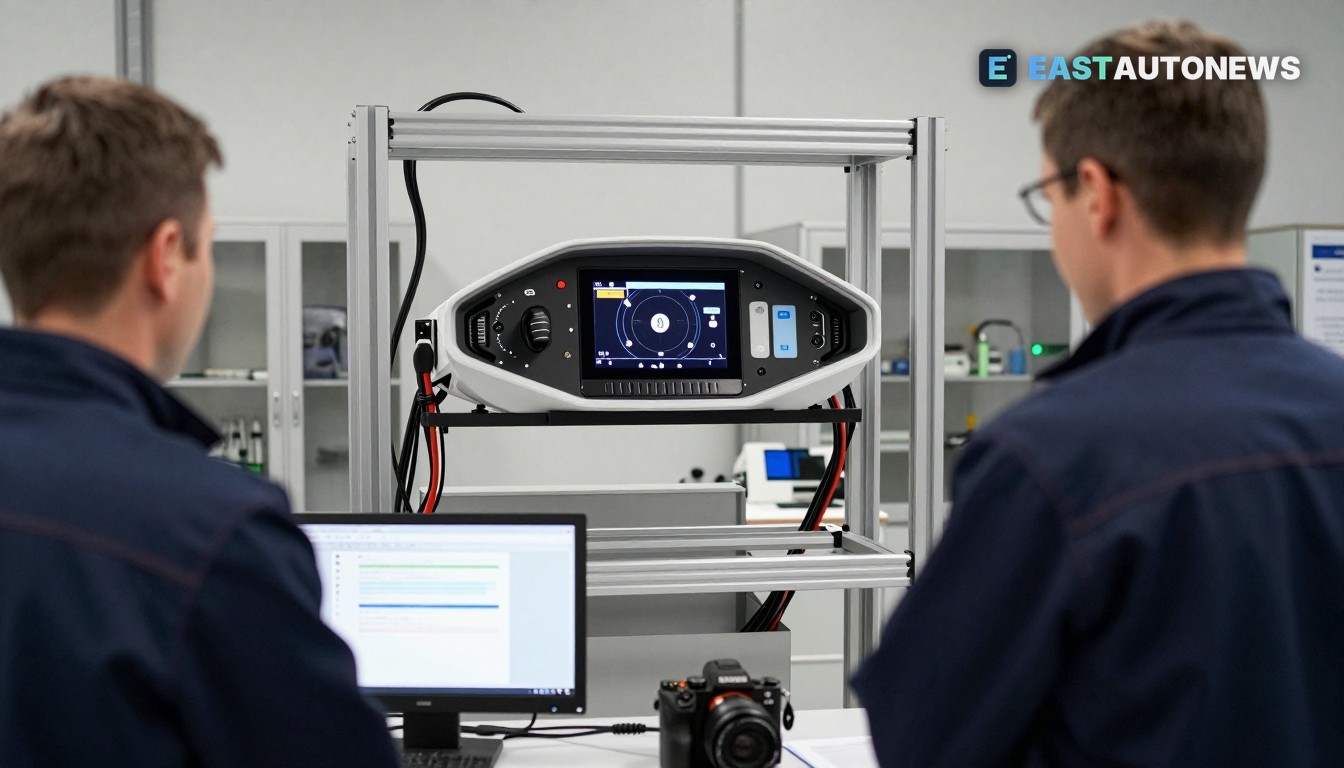
Škoda Auto and its subsidiary Digiteq Automotive have introduced a hardware‑in‑the‑loop (HIL) “virtually assisted homologation” process that lets the company perform most of the mandatory Intelligent Speed Assistance (ISA) type‑approval tests in a laboratory environment rather than on the road. Škoda published the details on 16 November 2026, saying the virtual approach can substitute three of the four legally required test types and save “dozens or even hundreds of weeks” of real‑world testing every year.
How the HIL rig works
The HIL setup combines production hardware (camera, instrument cluster, infotainment unit, standard antenna and other vehicle components) with a computer that generates a virtual environment and a GPS simulator. Škoda says the computer sends scene data in a graphics format directly to the camera chip rather than projecting images onto a screen, "This ensures that the camera reads the environment as if it were real," Jakub Prchal of Digiteq Automotive is quoted saying. The rig also includes a shielded antenna that receives simulated position data so the ISA logic uses realistic map and location inputs.
Škoda notes the EU ISA regulation allows laboratory results to be used for three of the four mandatory test types; the remaining physical verification is carried out on a randomly selected set of roads totaling about 400 km (roughly 249 miles). The HIL programme produced roughly 400 pages of documentation — the basis for a patent application — and TÜV SÜD Czech participated in validating the simulation’s credibility. "We brought the perspective of an independent authority into the development process," Vladislav Kocián of TÜV SÜD told Škoda’s article.
What this means for the market
For Central and Eastern Europe the move is significant on several fronts. Škoda is a major regional OEM and a local innovation that shortens homologation cycles will ripple through CEE supply chains: suppliers of cameras, maps, ADAS modules and test‑equipment could see demand for validated HIL interfaces and virtual validation services rise. Faster, lab‑based approval reduces the time vehicles spend tied up in road trials and may cut development costs — a particular advantage for CEE suppliers competing on lead‑time and price.
Regulatoryly, Škoda’s work demonstrates a practical application of the recent EU wording that permits lab‑based evidence for ISA — one reason TÜV SÜD Czech’s involvement matters. Independent certification bodies and local test houses in the region may be asked to certify simulation credibility, creating new business for testing organisations in countries such as the Czech Republic, Slovakia and Poland. Škoda says the first models to use the method for ISA homologation were the Peaq, Enyaq and Elroq (current model‑year versions).
Škoda and Digiteq also plan to expand virtual testing to other ADAS functions and sensors, and to use simulations in Euro NCAP demonstrations — moves that could accelerate software‑centric development and shift testing investment toward simulation tools and HIL labs rather than long road campaigns. For CEE suppliers and test‑service providers, that will mean investing in simulation fidelity, interfaces to OEM HIL rigs and traceable documentation that certification bodies will accept.
Skoda models available now on WorldTrader24 →
Sources: Škoda Storyboard, Self Drive News