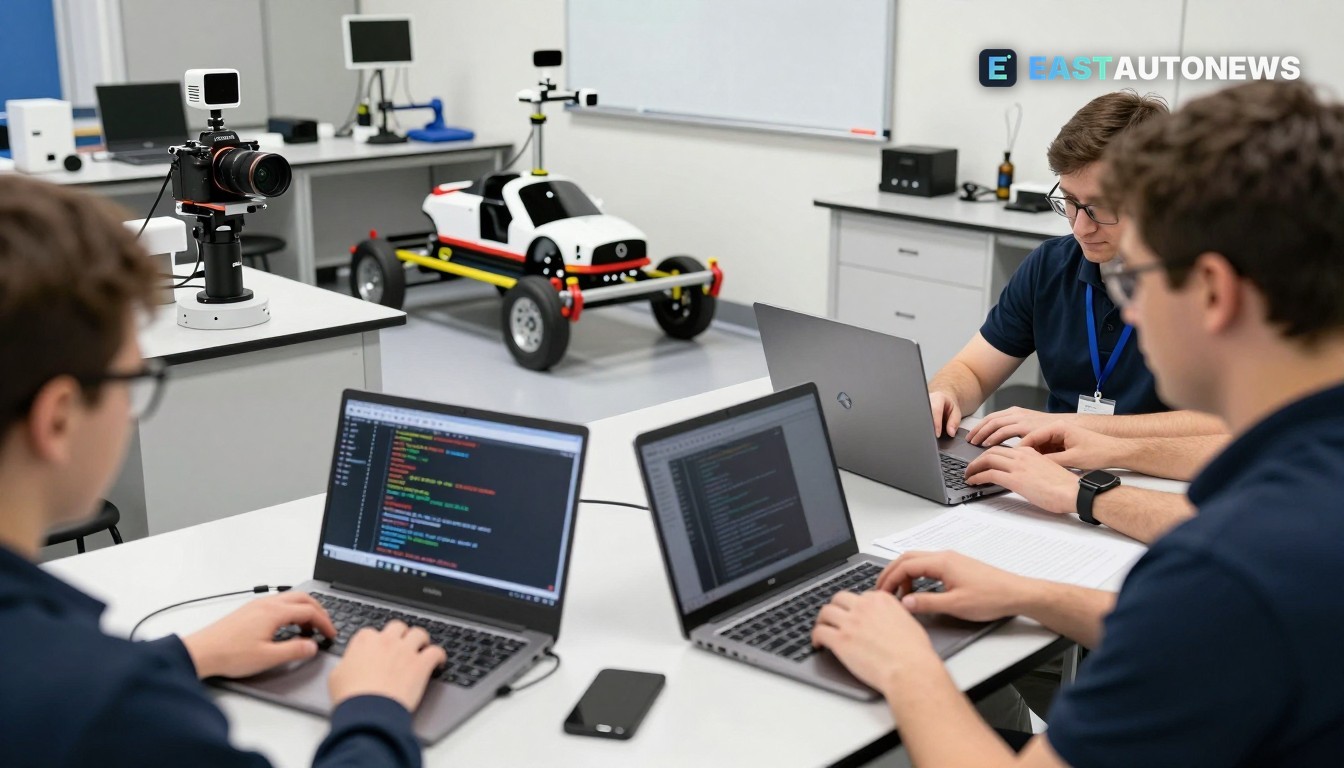
TIER IV, the company behind the Autoware open-source autonomous‑driving stack, announced on November 11, 2026 that it has developed and publicly released a suite of end‑to‑end (E2E) autonomous‑driving AI models. The packages include models for camera‑only, LiDAR‑enabled and hybrid sensor configurations, and the project provides source code and model weights via GitHub and Hugging Face.
The models released
The release bundles several distinct E2E models. TIER IV highlighted METEOR, a lightweight multitask model using a bird’s‑eye‑view (BEV) representation with 16 million parameters for passenger‑car use; AutoE2E, led by the Autoware Foundation, with 79.9 million parameters and a Fast–Slow architecture; and Alpamayo 2 Edge, a 2‑billion‑parameter vision‑language‑action (VLA) variant derived from NVIDIA’s Alpamayo family. Each model is available with integration examples for Autoware and links to GitHub and Hugging Face repositories.
Integration and ecosystem
TIER IV says the models are designed to run across a range of compute platforms — not limited to NVIDIA hardware — and that Autoware 2.0 provides an architecture to combine E2E neural models with conventional rule‑based modules. The company also noted tools from its Co‑MLOps platform to automate labelling and training workflows, easing adaptation for automakers and suppliers. TIER IV framed the move as expanding choices for deployment and commercialization through open collaboration.
What this means for the market
Open‑sourcing production‑grade E2E models lowers technical and cost barriers for smaller OEMs, tier‑1 suppliers and regional mobility operators that use Autoware as their development base. By publishing models for camera‑only and sensor‑rich configurations and providing integration code, TIER IV and the Autoware Foundation create a ready‑made starting point for firms that lack the resources to train large models from scratch. That could accelerate trials of Level‑3/Level‑4 driver assistance and local robotaxi pilots, especially where Autoware already has footholds or where regulators favour transparent, auditable software stacks.
For European and Central‑Eastern European players, the practical benefits are twofold: faster prototyping of ADAS/robotaxi functions using established open tooling, and potential cost savings by re‑using community‑maintained models and data‑pipeline tools. Operators and suppliers in the region can adapt the released models to local sensor suites and map formats rather than waiting for proprietary stacks to be ported or licensed.
That does not remove safety, validation and regulatory work: E2E systems offer a different assurance profile from modular stacks, and any deployment in public traffic will require in‑vehicle validation, scenario testing and certification steps under national and EU rules. Still, the availability of open models is likely to broaden the set of organisations that can meaningfully participate in autonomous‑driving development.
WorldTrader24 B2B vehicle marketplace for dealers →
Sources: TIER IV, PR Newswire, SDV Sector
Partner note: EastAutoNews technology partner DaVinci AI develops AI solutions for the entire automotive industry – from market and dealer analytics to autonomous AI agents and image and video production.