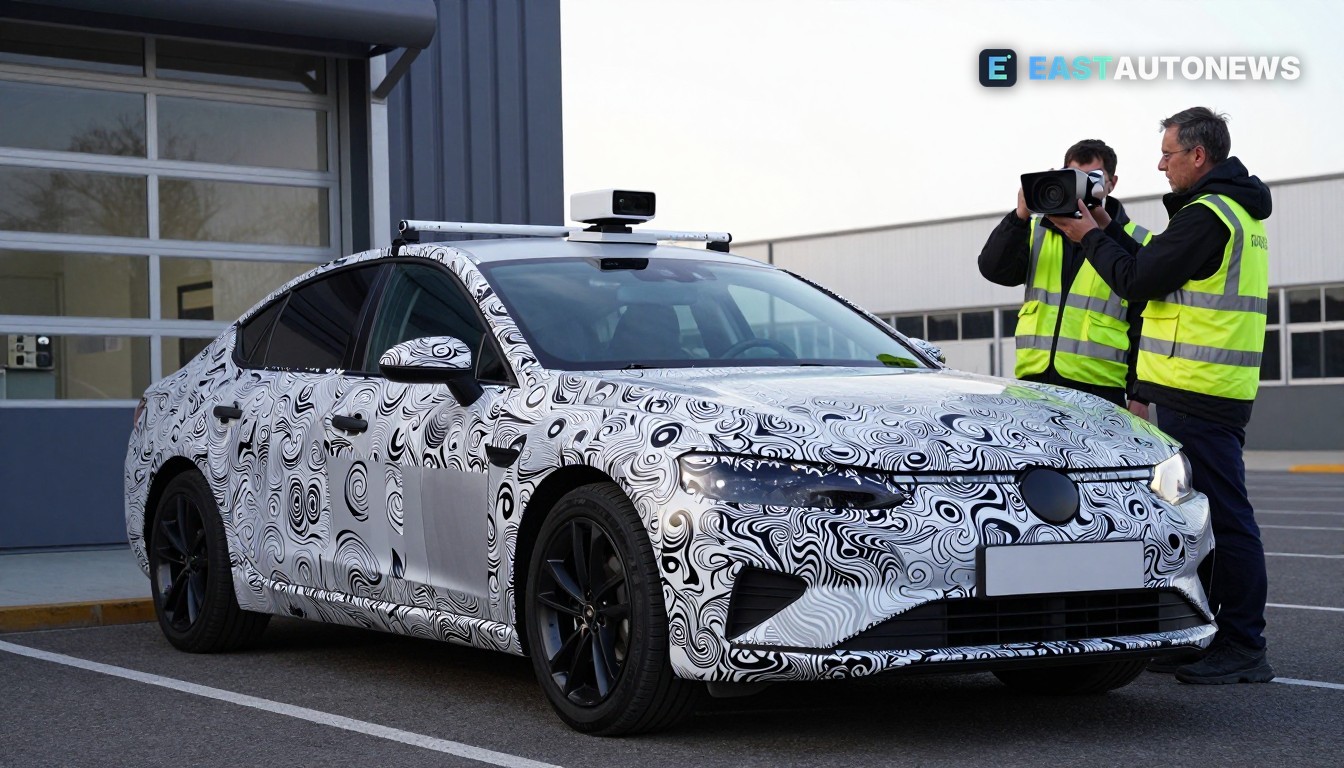
Mobileye’s dominance in camera‑based driver assistance is being challenged as automakers and mobility firms shift toward higher‑compute, multi‑sensor AI stacks — a change that could reshape supplier choices across Central and Eastern Europe (CEE).
The warning comes as analysts and industry sources say the technology requirements of automated driving are evolving: city‑capable systems need more sensors and greater computing power, favouring chipmakers such as NVIDIA and Qualcomm and new software entrants over the low‑cost camera chips that underpinned much of the last decade’s ADAS roll‑out. "More sophisticated systems that navigate city streets, for example, require additional sensors and computing power," Mobility Global analyst Jeremy Carlson told Axios.
Where competition is sharpening
Mobileye still has scale: the company estimates its chips underpin popular features such as lane‑keeping and adaptive cruise control in roughly one in five vehicles on the road, and it expects to supply driver‑assistance technology for about 40 million new vehicles this year. At the same time, Mobileye announced only modest chip shipment growth and a revenue decline in the third quarter — underscoring the industry transition to higher‑end compute platforms. "It's like what they need and what they want," Mobileye executive Nimrod Nehushtan said of automakers’ mixed procurement strategies.
Automakers are pursuing parallel paths: some continue with cost‑efficient camera stacks at volume, while others buy into powerful, flexible platforms that make future upgrades and point‑to‑point urban autonomy feasible. Axios reports Stellantis is developing point‑to‑point capability with partners including Wayve and Qualcomm even as it maintains higher‑volume Mobileye programs.
NVIDIA’s Europe push and the OEM response
NVIDIA has been explicit about the opportunity: at GTC Berlin the company showcased Hyperion and the Alpamayo software stack, naming European partners including Mercedes‑Benz, Volkswagen Commercial Vehicles, Volvo Cars and mobility operators such as Bolt. Bolt has selected NVIDIA’s Alpamayo Stack for a planned European robotaxi program and told NVIDIA it intends to begin real‑world data collection in Madrid in 2027, with Germany a priority for future rollout. Those moves show a concrete alternative to camera‑only approaches and underline a market for high‑compute, software‑centric AD systems.
What this means for the market
For CEE the immediate effects are practical as well as strategic. Manufacturers and Tier‑1 suppliers based in the region supply both traditional camera‑centric ADAS hardware and higher‑end compute modules; an industry tilt toward big‑compute stacks creates new opportunities for local engineering hubs and contract manufacturers that can integrate NVIDIA/Qualcomm platforms and support the software lifecycle. At the same time, automakers that keep buying low‑cost camera solutions may preserve volumes for existing suppliers, so the region will see a split market.
Weighing those outcomes requires judgement: the evidence from Axios and NVIDIA shows a clear two‑track trend — scale for camera systems but an accelerating deployment of compute‑heavy platforms in projects that aim for urban autonomy. The inference for CEE firms is that they should prepare for both: continue to compete on cost and assembly for camera systems while investing selectively in software integration, high‑performance compute assembly and validation services to capture the higher‑margin work.
For OEMs and suppliers in Hungary, Poland, Slovakia and neighbouring markets, the near term will be a balancing act between retaining existing high‑volume contracts and bidding for the new compute and software workstreams that NVIDIA, Qualcomm and other entrants are promoting. Procurement teams and regional R&D centres will be key decision points as automakers decide whether to buy low‑cost scale or future‑proof flexibility.
Mercedes Benz vehicles on WorldTrader24 →
Sources: Axios, NVIDIA Newsroom