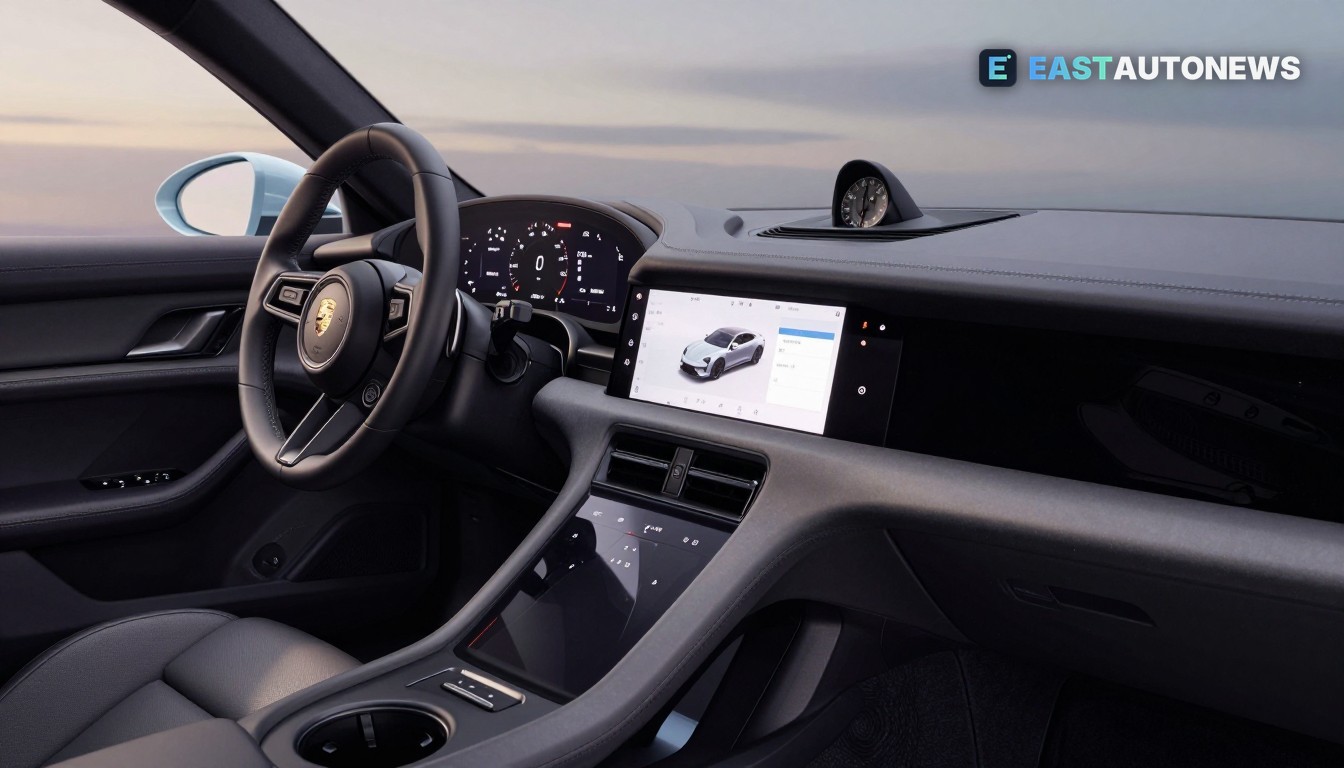
Porsche has begun rolling out a new generation of its Porsche Communication Management (PCM) system across the 911, Taycan, Panamera and Cayenne model lines, introducing a higher‑performance hardware platform, an AI‑powered Voice Pilot based on a large language model, Navigation Plus with a 3D map display and a Charging Planner that factors battery preconditioning for fast charging. The company published the product announcement on November 3, 2026.
What’s new in the PCM
Porsche says the new PCM uses a modern system‑on‑chip architecture that delivers up to five times the computing power of the previous generation, enabling faster start‑up, shorter loading times and true multitasking so multiple apps can run in the background. The upgraded human‑machine interface is delivered under the banner “Porsche Digital Interaction” and includes a freely rotatable 3D car model and configurable widgets. Oliver Seifert, Head of Infotainment & Connect, is quoted saying the new platform “enables us to continuously develop the in‑car Porsche experience.”
The AI element — billed as Voice Pilot — is explicitly powered by a large language model and is able to process natural‑language, multi‑step instructions and follow‑up questions, controlling navigation, media and selected vehicle functions. For EVs, Navigation Plus adds real‑time traffic and a 3D map display while the Charging Planner plans stops and “takes battery preconditioning into account” so battery temperature at the charger is optimised for higher charging power. Porsche also highlights an App Center and broader smartphone ecosystem integration (Apple Music with Spatial Audio is listed as available in selected markets).
Rollout and regional links
Porsche says the new PCM will be introduced gradually in newly produced vehicles from the four model lines, with availability depending on market, model, production date and equipment; over‑the‑air updates will allow Porsche to develop software features after delivery. The company also continues to point to its manufacturing and engineering footprint in Central and Eastern Europe — Porsche Newsroom notes high‑precision battery module production in Horná Streda (Slovakia) as part of its wider operations — underscoring that software upgrades intersect with regional supply and service networks.
What this means for the market
For premium buyers in Central and Eastern Europe, the PCM upgrade underscores a wider industry shift: software and in‑car AI are becoming key differentiators in place of hardware alone. For dealers and service centres across CEE, the emphasis on over‑the‑air updates and a more capable, software‑defined cockpit reduces the need for some physical visits but raises the bar for cybersecurity, data management and aftersales expertise. For suppliers in the region that produce modules, sensors and charging hardware, the Charging Planner’s battery‑preconditioning focus demonstrates closer integration between vehicle software and charging‑site performance. The launch also follows a wave of similar moves by premium manufacturers to embed generative AI in cockpits — a trend noted in trade reporting this week.
Practically, CEE fleet and corporate buyers should watch availability dates and regional feature support: Porsche makes clear that services such as Apple Music or specific EV‑routing features will be limited to “selected Connect markets.” That means customers in some countries may receive the new user experience later than buyers in Porsche’s larger European markets.
Porsche Taycan models on WorldTrader24 →
Sources: Porsche Newsroom, MarkLines