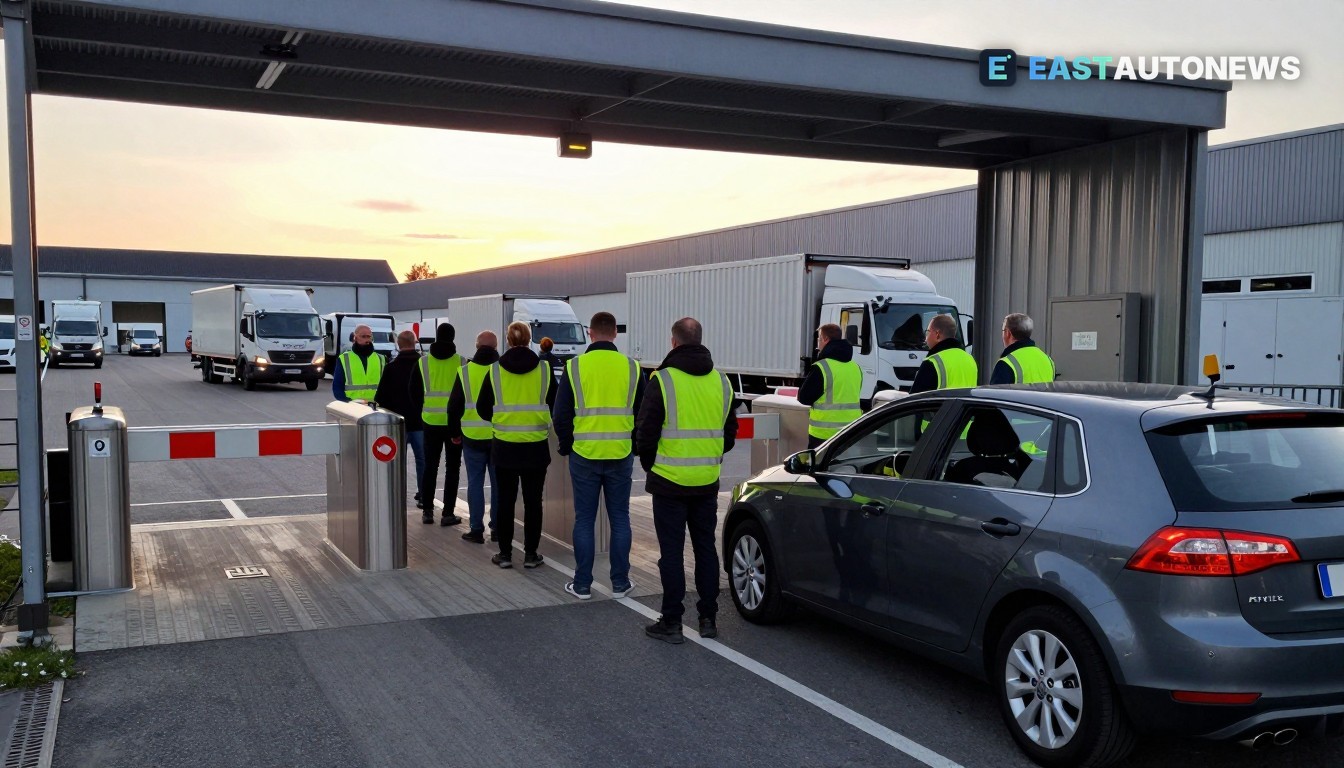
Germany’s metalworkers union IG Metall escalated pay action this week with a series of 24‑hour warning strikes that crimped production at carmakers and suppliers and widened logistical pressure across Europe’s autos network. The union called more than 23,000 workers at 19 northern German sites to walk out on Monday, Nov. 22, after an earlier round on Nov. 20 affected some 12,300 employees at 17 facilities.
What happened
The stoppages hit major vehicle manufacturers and industrial suppliers. IG Metall named Mercedes‑Benz among the firms affected and said the union is demanding a 5% wage rise or, for companies that want deviating deals, written commitments on investments, product programmes, site locations and jobs. Employers had offered no permanent pay increases for the first 20 months and a 1.3% raise from July 2028.
“We are now significantly stepping up our efforts,” an IG Metall negotiator said as the union widened action. Full‑day warning strikes staged around Nov. 20–23 idled production lines at multiple sites and drew in suppliers as well as OEMs. Reports in the same period showed walkouts at supplier locations operated by groups such as ZF and Robert Bosch in Bavaria, underscoring the action’s reach beyond final‑assembly halls.
Logistics ripple effects
Even short, one‑day stoppages create knock‑on effects for logistics: components not produced on schedule can delay outbound shipments, roll‑on/roll‑off planning and inland distribution, while higher use of interim storage raises costs. Carriers and forwarders were already signalling congestion and network strain on late‑November sailings and rail links; any additional unpredictability at German plants feeds through to ports and hinterland flows used by Central and Eastern European (CEE) exporters and importers.
What this means for the market
Germany remains the hub of Europe’s automotive value chain; disruptions there rapidly affect neighbouring supplier clusters in CEE. Creditreform and industry monitors note that German production and policy shocks transmit quickly to Austria, Poland, Hungary and Slovakia because many CEE suppliers and logistics providers are integrated into German OEM schedules and rail/road corridors. For CEE firms supplying German plants, even a day of lost output can force overtime, shift swaps or emergency air/road shipments that raise unit costs. Observers expect the current warning strikes to cause temporary output dips rather than long‑term relocation — but if action persists or broadens into a rolling stoppage, OEM delivery windows and Q4 export plans across CEE would be at real risk.
Practical steps logistics managers and suppliers should consider now include checking confirmed inbound/outbound cut‑offs for German sites, increasing buffer inventories for critical components where storage costs are lower than expedited freight, and re‑routing non‑time‑sensitive loads to alternative terminals or rail paths. Operators of short‑sea and rail links serving CEE should also flag contingency capacity and monitor further union notices closely.
B2B vehicle listings for dealers on WorldTrader24 →
Sources: Reuters, Euronews