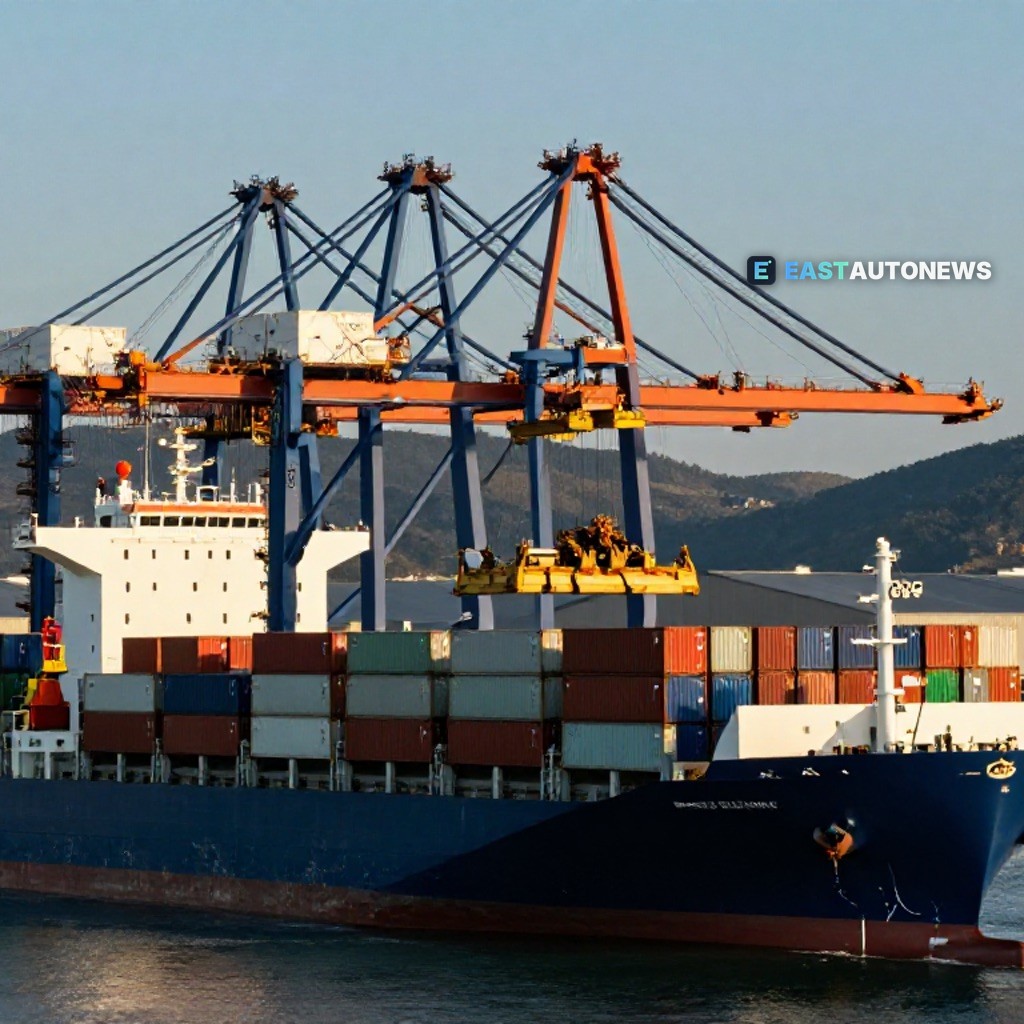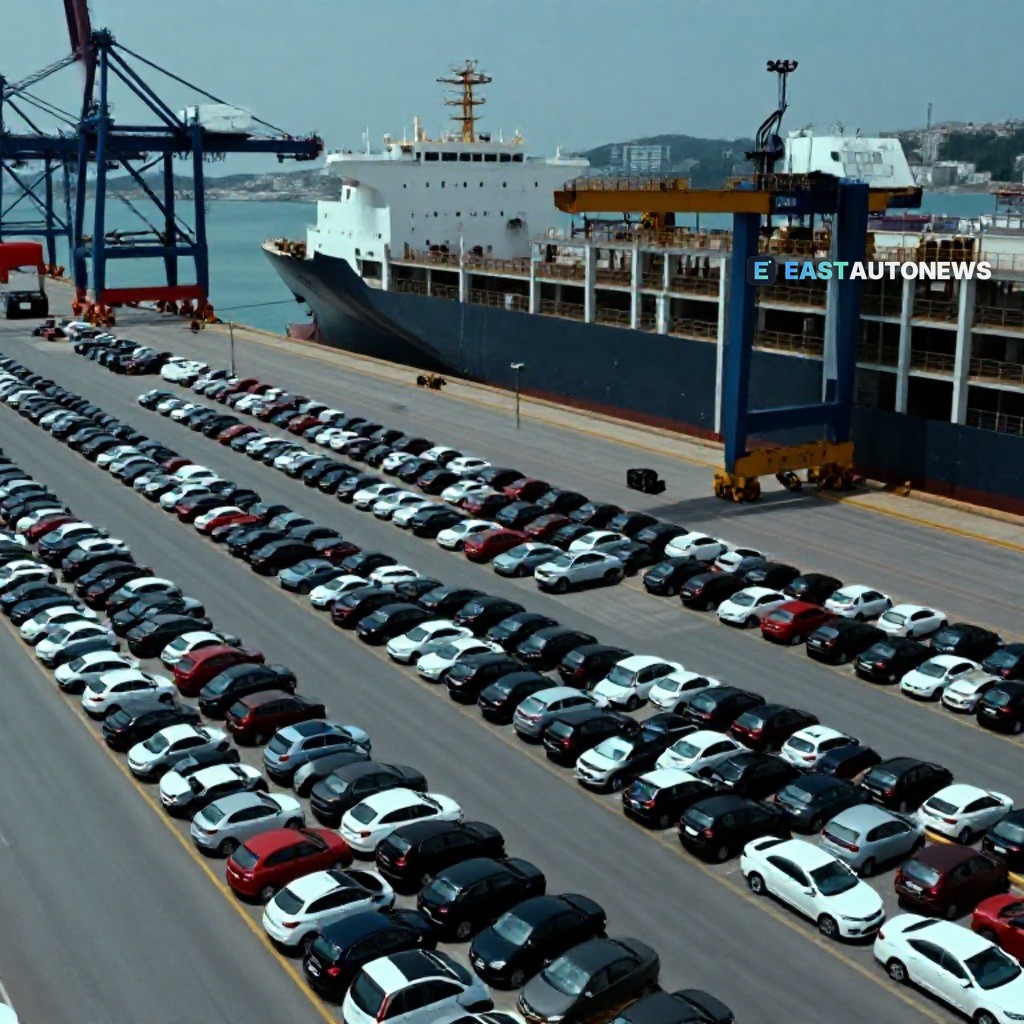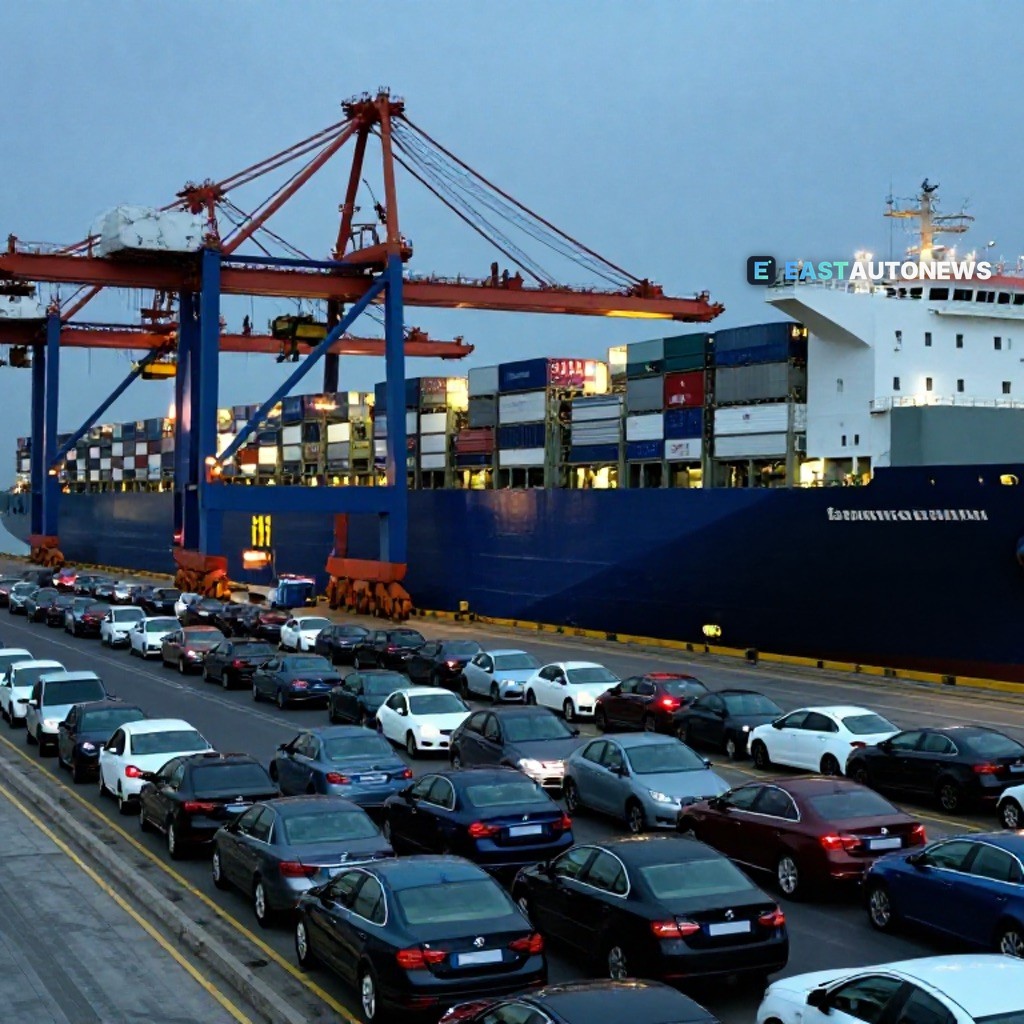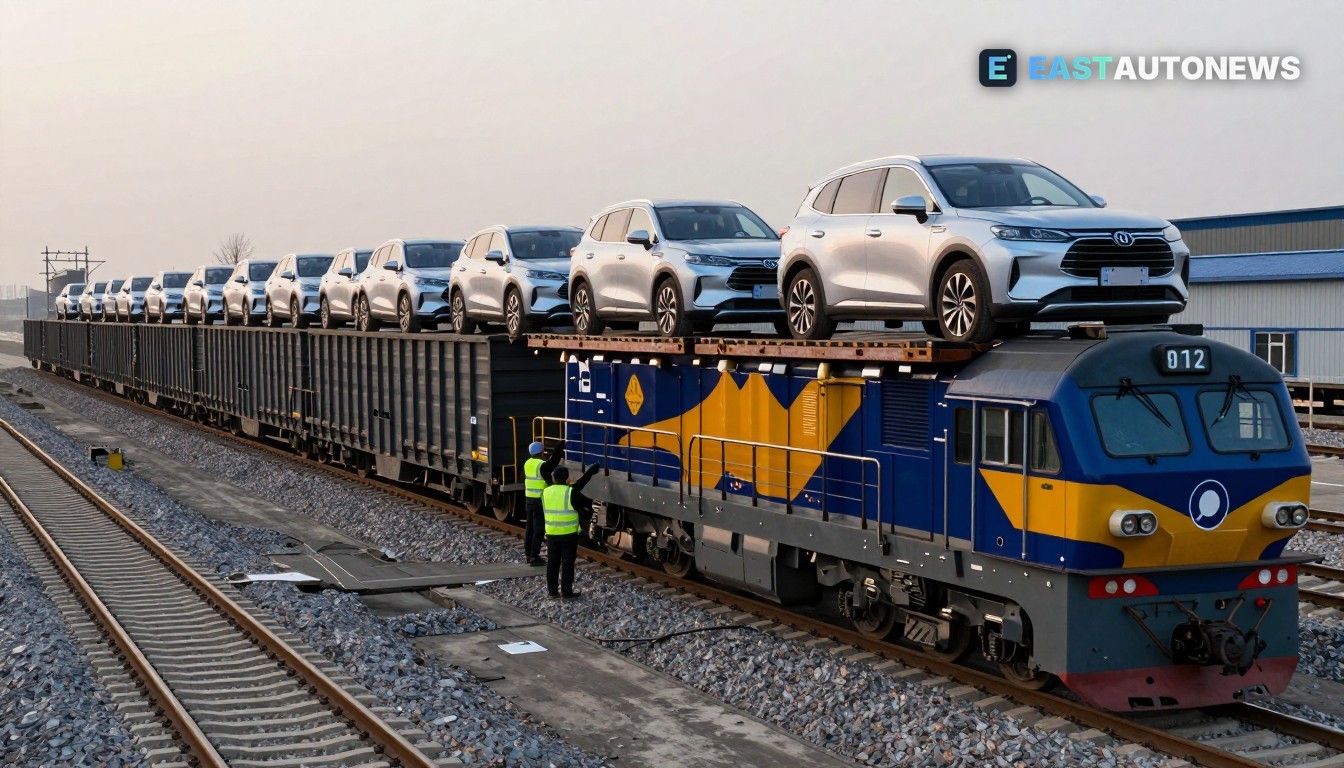
On 19 November 2026 a dedicated freight train carrying 203 Chinese new‑energy vehicles departed Zhengzhou International Land Port — the 10,000th trip in China’s specialised finished‑vehicle export train service. The train will travel by rail to Shanghai Minhang and then sail by roll‑on/roll‑off (Ro‑Ro) vessel to Australia, a route of more than 10,000 km and an ocean leg of about 14 days, according to official reports.
The milestone and the numbers
China Railway Special Cargo Logistics and state media say dedicated vehicle export trains entered regular service in 2021. The operator took roughly four years to run the first 5,000 trains but completed the next 5,000 in just over a year, underlining a step change in scale.
Official reporting and independent logistics analysts put the scale of rail‑borne vehicle exports in 2026 well into the millions: Xinhua and related Chinese industry reporting cite more than 2.035 million vehicles moved by rail for export so far this year — a year‑on‑year increase of about 79% — while national industry tallies for January–October 2026 show overall vehicle exports in the order of multiple millions.
How the train works
The trains use specialised recessed‑floor, double‑deck car‑carrier wagons (JSQ‑type carriers) that carry new vehicles whole (not containerised), typically loading at inland hubs and transferring to Ro‑Ro ships at coastal ports such as Shanghai. Operators report three to four dedicated vehicle trains a day leaving hubs such as Zhengzhou, with local daily throughput quoted at roughly 700–1,000 vehicles from that hub.
What this means for the market
The 10,000‑train milestone is primarily a logistics indicator: it signals faster, repeatable rail‑sea multimodal links between inland Chinese factories and export markets. For Central and Eastern Europe the immediate relevance is operational rather than political — an expanding set of China‑origin routes increases the diversity of inbound supply chains, and it shifts some routing away from deep‑sea-only models toward a mix of rail and Ro‑Ro or rail‑to‑truck connections. Analysts note that inland hubs (Zhengzhou, Chengdu, Chongqing) and land‑port corridors (Horgos, Manzhouli, Alashankou, China‑Laos) are being used increasingly to reach Central Asia, Russia and export ports that serve Europe and beyond.
Practical consequences for CEE logistics operators and ports may include changes in slot demand (rail and Ro‑Ro berths), a need for faster inland clearance and preparation services for high‑volume batches of new cars, and competitive pressure on scheduling and rates where the same port slots are contested by container, Ro‑Ro and rail‑sea flows. These developments do not alter customs or trade rules — they change how and where vehicles arrive. (SinoAutoCars and official reporting provide the operational details cited above.)
The Zhengzhou milestone is not a direct gauge of used‑car exports: the trains carry new vehicles in batch lots. Industry commentators emphasise that the figures and routes cited refer to new‑car logistics and that separate rules and commercial flows govern used‑car and parts shipments.
WorldTrader24 B2B vehicle marketplace for dealers →
Sources: Xinhua, SinoAutoCars