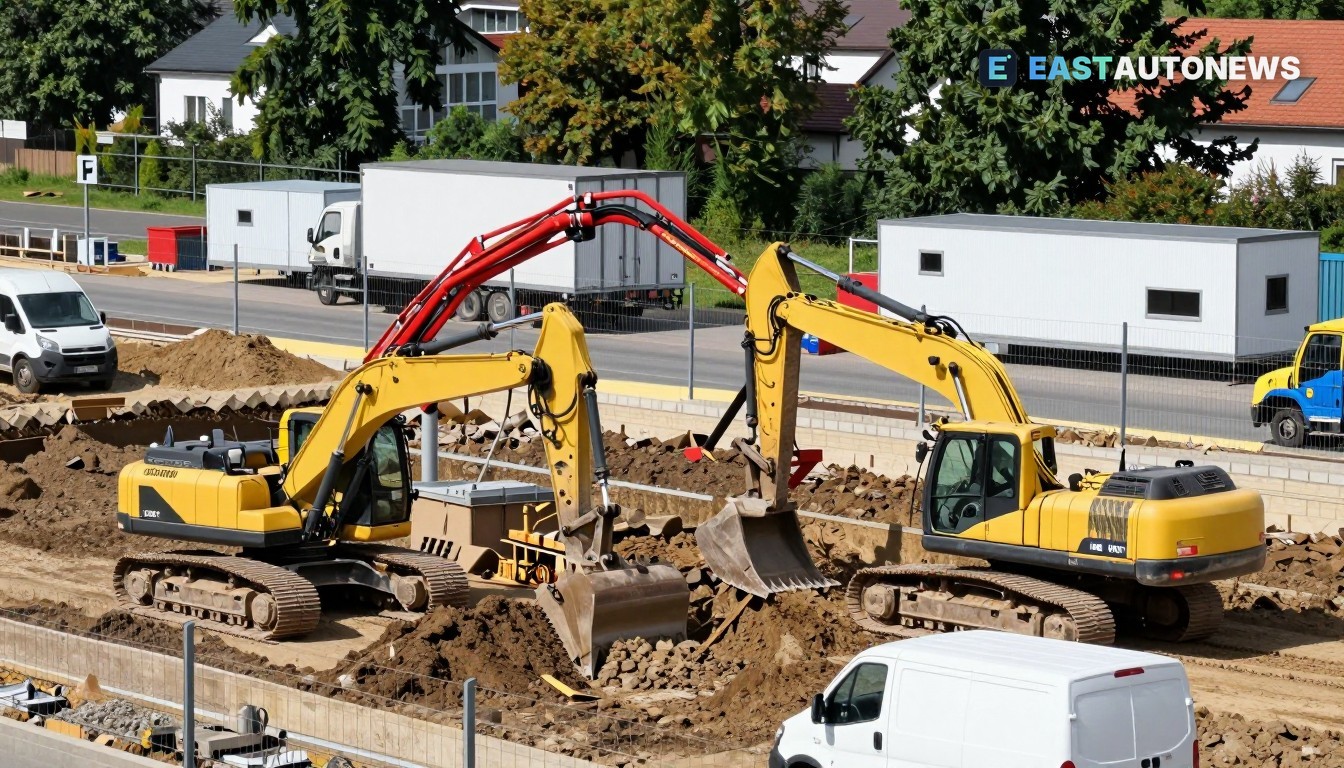
Vulcan Energy Resources has started civil construction works at the site of its commercial Lithium Extraction Plant (LEP) in Landau, Germany — the physical next step for the company’s Project Lionheart, the geothermal‑powered lithium development aimed at supplying battery‑grade material to Europe's EV industry. The company announced the commencement on 16 November 2026, saying civil activities include foundations, concrete works, site roads and drainage infrastructure ahead of equipment erection and process assembly.
Project scope and production targets
Project Lionheart is intended to be an integrated lithium and renewable energy development. Vulcan describes Phase One as targeting 24,000 tonnes per annum (tpa) of lithium hydroxide monohydrate (LHM) — enough, Vulcan says, for roughly 500,000 EV batteries a year — together with substantial co‑produced renewable power and heat. The company is targeting first production in the second half of 2028 and will convert lithium chloride from the LEP into battery‑grade lithium hydroxide at a downstream chemicals plant in Frankfurt‑Hoechst.
Vulcan also highlighted its VULSORB direct lithium extraction technology and the plan to use geothermal energy from the same brine to power operations, a selling point the company emphasises for lower lifecycle emissions compared with conventional hard‑rock or brine‑evaporation routes. The ASX/EQS announcement notes civil works follow earlier bulk earthworks and precede building erection and process equipment assembly.
Regional supply‑chain context
While the LEP is sited in Germany’s Upper Rhine Valley rather than in Central and Eastern Europe, the project is material to CEE automotive supply chains because the lithium hydroxide output is explicitly marketed to European battery and cell makers and downstream pack assemblers — many of which operate in Hungary, Poland and the Czech Republic. Vulcan says downstream conversion and offtake arrangements are aimed at European buyers, which could shorten logistics and reduce import exposure for continental battery supply chains.
What this means for the market
For vehicle manufacturers and tier‑one suppliers across Central and Eastern Europe, Vulcan’s civil start is a reminder that European‑sited raw‑material projects are progressing from permitting and studies into construction. If Lionheart reaches its 24,000 tpa target and H2 2028 start, it would provide a locally produced source of lithium hydroxide tailored for European cell chemistry requirements and potentially ease supplier qualification pressures for local battery plants. That could reduce lead times, freight exposure and part‑content complexity for CEE battery‑pack and cell customers, should offtakes and conversion ramps proceed as Vulcan projects.
Investors and procurement teams will watch the construction schedule, equipment delivery and Vulcan’s downstream integration in Frankfurt‑Hoechst closely; the company’s public update on 16 November 2026 set civil construction as a 2026 milestone but keeps ramp timing tied to detailed engineering and equipment arrival.
Electric cars for sale on WorldTrader24 →
Sources: Vulcan Energy Resources, EQS/ASX, Orecast