Hyundai Motor Group and battery supplier Samsung SDI have moved beyond a standard buyer‑supplier relationship and jointly designed an EV battery pack, according to patent records made public this year and reported by Aju Press on November 11, 2026.
The patent and the tie‑up
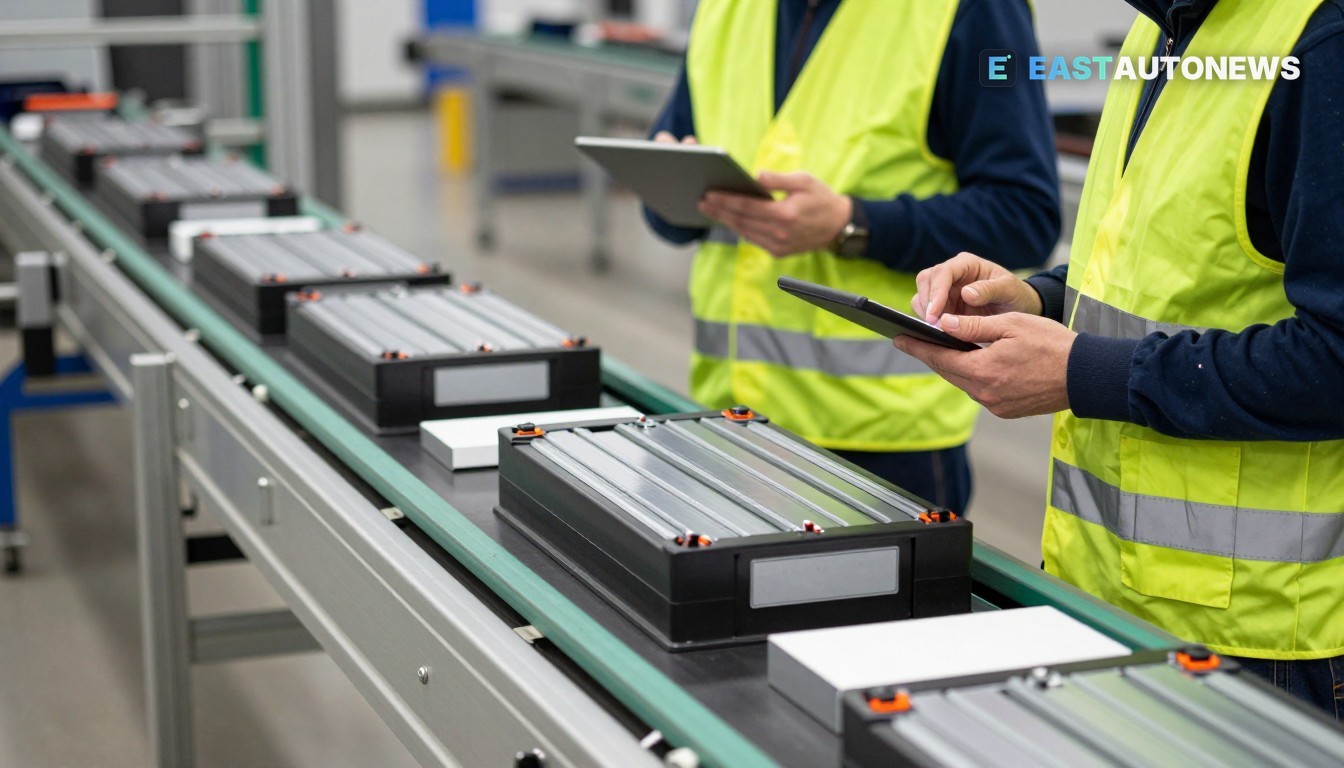
The patent, published on Oct. 22, 2026, describes a pack architecture that routes gases from a cell’s venting mechanism through a passage built into the pack’s lower cover, and merges separate compartments for venting and shock absorption to free space for higher energy density.
Aju Press reports that five researchers from Hyundai and Kia and two engineers from Samsung SDI are listed as inventors on the filing.
The move follows an existing supply relationship: Samsung SDI began supplying prismatic cells in 2026 for Hyundai and Kia’s Europe‑bound EVs under a contract signed in October 2023 that runs through 2032, the report says.
Solid‑state work and broader cooperation
Beyond the prismatic‑cell pack patent, the three companies have filed multiple joint patents on all‑solid‑state battery technology between 2022 and 2025, underscoring R&D cooperation that aims to tackle cell longevity and manufacturability ahead of commercialization.
At a group event reported in mid‑November, Hyundai Motor Group vice‑chairman Jang Jae‑hoon was quoted saying: “Samsung and Hyundai Motor Group are going beyond cooperation in vehicle parts such as electronics, audio and batteries, and broadening the possibilities of cooperation in future industries such as robots and energy.” The line was reported by Aju Press on Nov. 11.
What this means for the market
The patent publication and confirmed supply link to Samsung SDI’s Hungary operations mean Hyundai and Kia are explicitly integrating supplier design work into vehicle‑level safety and packaging — a shift that shortens development cycles for next‑generation packs and increases the strategic importance of Europe‑based cell production. For Central and Eastern Europe the practical effect is twofold: stronger local value chains where battery R&D and production happen close to vehicle assembly, and greater sensitivity to any regulatory or permitting issues at battery plants that would ripple down the region’s EV supply chain.
For suppliers in CEE, the Hyundai–Samsung SDI tie‑up raises the bar on technical integration. Component makers and pack‑assembly suppliers will need to meet tighter mechanical and thermal‑management specifications set by jointly developed pack architecture, while logistics and testing partners should expect more coordinated supplier‑OEM roadmaps that extend to 2030 and beyond.
Electric vehicle listings on WorldTrader24 →
Sources: Aju Press, The Elec, AutoSignal