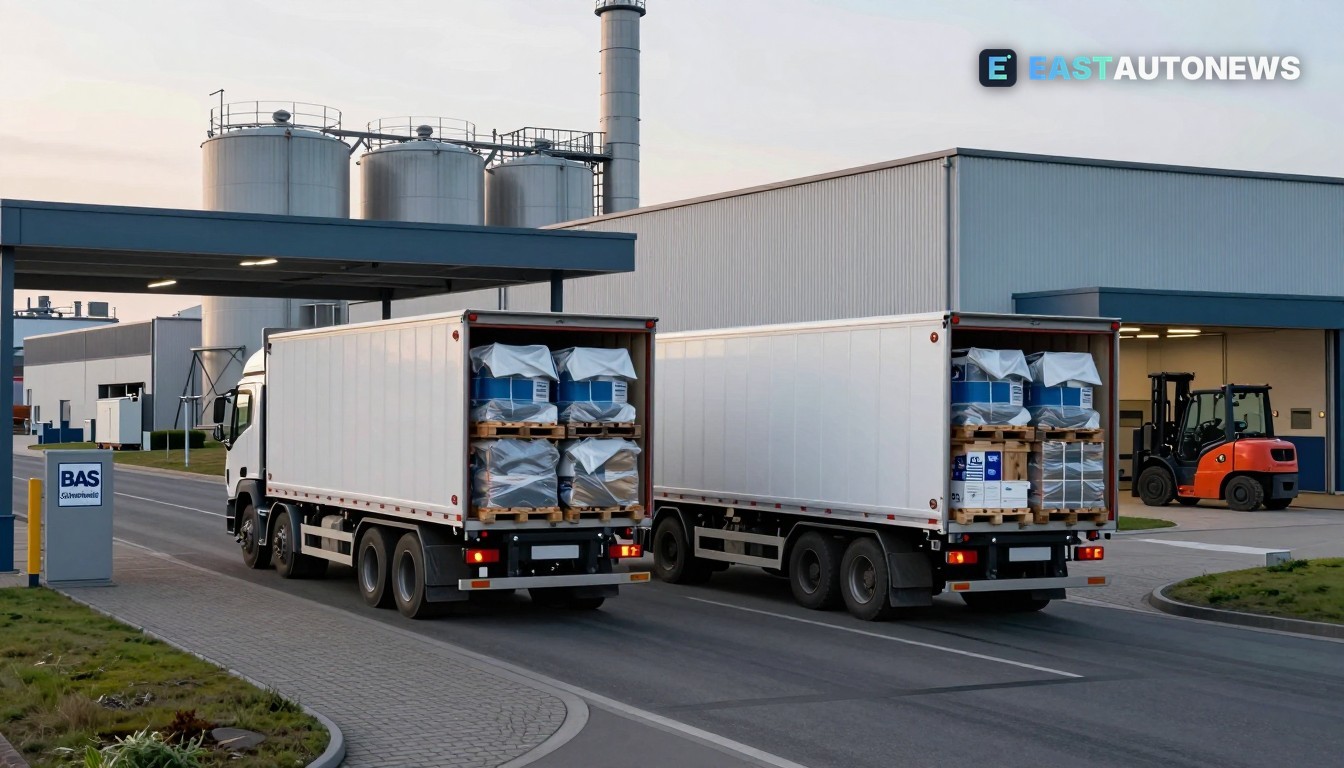
BASF has started initial commercial deliveries of high‑performance cathode active materials (CAM) from its Schwarzheide, Germany, production site to battery maker Contemporary Amperex Technology Co., Limited (CATL). The company said the German shipments run in parallel with supply from BASF’s Changsha plant in China and follow a global CAM framework agreement signed in July 2025.
What BASF announced
The news was published by BASF on 23 November 2026. In the company release Dr. Daniel Schönfelder, President of BASF’s Battery Materials division, said: “We are proud to work with CATL and to have reached this important next milestone together… These first deliveries are the result of close collaboration between our teams across development, qualification, production and supply.” BASF’s statement underlined that the material was developed to meet CATL’s technical parameters and has been transferred into production in Germany.
On the same day BASF also set out a strategic refocus for its Battery Materials business: the division will concentrate exclusively on Cathode Active Materials and, as part of that move, BASF signed an agreement on 20 November 2026 to sell its Battery Recycling business in Europe and North America to German recycler cylib. The transaction includes the Schwarzheide black‑mass production plant and prototype recycling assets; the companies said the deal is expected to close in Q2–Q3 2027, subject to regulatory approvals.
How the announcement fits the supply chain
BASF’s Schwarzheide site is described by the company as Germany’s only plant for the production of high‑performance CAM and the start of deliveries marks the move from development and qualification toward European production and commercial supply. The dual‑hub approach — supplying CATL from both Schwarzheide and Changsha — was presented by BASF as a way to service key battery markets locally. BASF reported group sales of around €60 billion in 2025 in the same release.
What this means for the market
For Central and Eastern Europe the BASF–CATL link matters for two reasons. First, CATL is scaling cell and pack activity in the region (notably its Debrecen project and wider European investments), so locally produced CAM reduces logistics and trade exposure for cells destined for regional factories. Second, BASF’s decision to carve out recycling and hand it to a specialist (cylib) signals an industry trend: chemistry and CAM makers are defending higher‑value, performance‑sensitive steps of the chain while smaller, focused recyclers build closed‑loop scale. Both shifts increase the chance that regional battery and cell lines will see more locally sourced inputs — CAM from European chemical plants and recycled materials processed by dedicated European recyclers.
Operationally, the milestone gives OEMs and cellmakers clearer signals about volumes and qualification timelines: a CAM supply line in Schwarzheide anchors potential offtake for European cell lines and could shorten qualification lead times for producers that already work with CATL or BASF. At the same time, the recycling sale — with a projected close in Q2–Q3 2027 — shifts black‑mass and initial battery‑processing assets to a specialist that says it will scale recovery of lithium, nickel and cobalt inside Europe.
While BASF did not disclose volumes, prices or specific chemistries for the initial deliveries, the company framed the step as a commercialisation of the July 2025 framework agreement and a sign that its Battery Materials unit will prioritise CAM going forward. OEM procurement teams and European cell projects will watch delivery performance and qualification evidence closely as that will determine how quickly CAM from Schwarzheide becomes a firm input in regional cell lines.
Electric vehicle listings on WorldTrader24 →
Sources: BASF, Supwil‑News