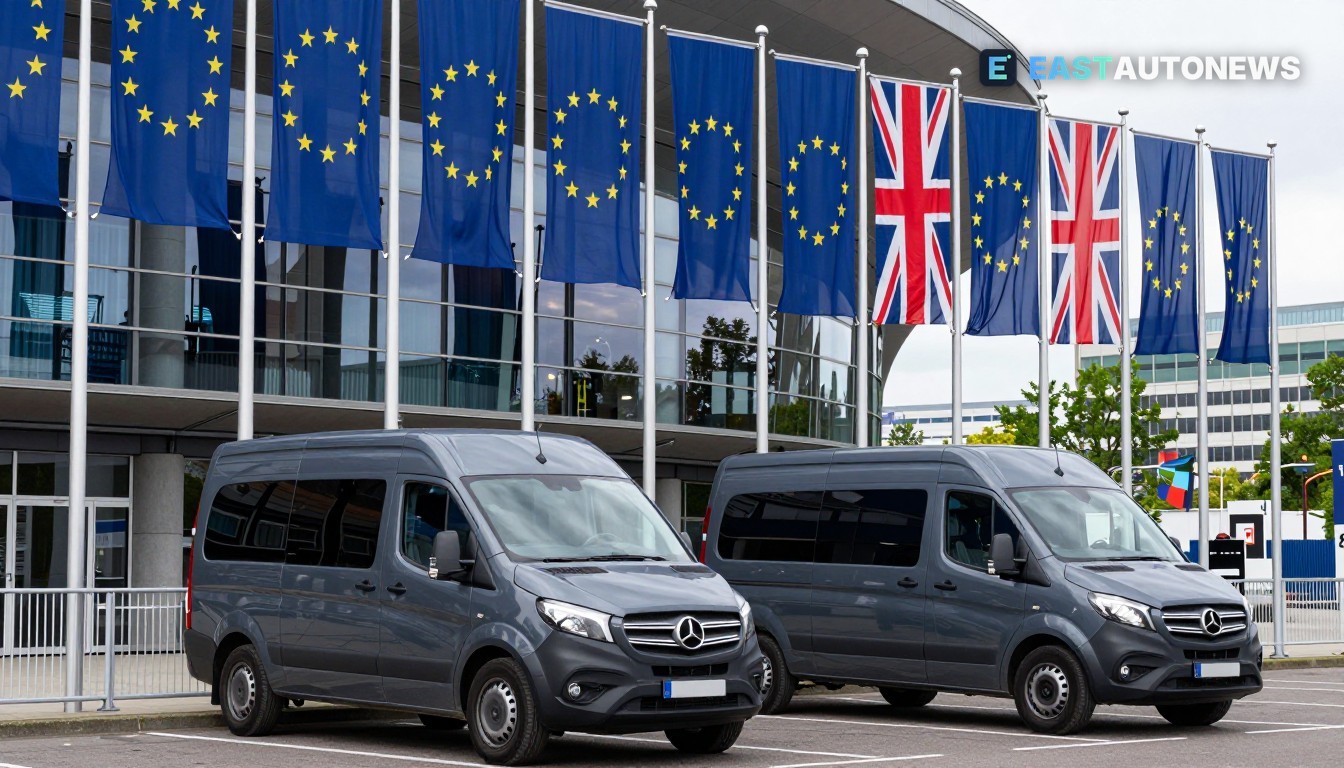
The European Commission has opened consultations with the auto industry on proposals to postpone stricter rules of origin that would trigger a 10% tariff on electric vehicles traded between the EU and the UK from 1 January 2027, the Financial Times reported on 12 November 2026.
What was announced and who is pushing back
Media reporting since 12 November said Brussels is exploring options ranging from a one‑year postponement to a temporary offsetting mechanism while battery supply chains scale up; Reuters carried a summary of the FT account noting the Commission was consulting industry sources.
Automakers’ lobby groups have warned of a large immediate cost if the tighter rules take effect as scheduled. The European Automobile Manufacturers’ Association (ACEA), joined by Britain’s Society of Motor Manufacturers and Traders (SMMT), called for a united political position ahead of the EU‑UK summit and put the potential tariff bill for 2027 at up to €1.8 billion unless a pragmatic solution is found. ACEA’s joint statement was published on 17 November 2026.
The Financial Times and ACEA have repeatedly used the same baseline industry figures: ACEA previously estimated that around 82% of the roughly 520,000 battery‑electric and plug‑in hybrid cars and vans the EU expects to export to the UK in 2027 would fail the tougher origin tests, exposing many shipments to the 10% duty and raising an estimated multi‑hundred‑million euro cost next year.
What this means for the market
For Central and Eastern Europe—home to major vehicle and powertrain assembly plants that export across Europe and to the UK—the dispute matters because tariffs or uncertainty over market access can change delivery economics, inventory planning and pricing for cars built in CEE plants for the British market. ACEA and SMMT have urged political leaders to agree practical rules of origin that keep most cross‑Channel EV trade tariff‑free while domestic battery supply capacity grows. The industry statement was explicitly timed to influence the EU‑UK summit on 20 November 2026.
Policymakers face a trade‑off: delaying the tighter origin requirements eases immediate disruption to manufacturers and export flows (including those from CEE plants), but risks weakening the market signal for investment in European cell and cathode material production that the rules were designed to create. Transport & Environment and some downstream suppliers have opposed repeated postponements for that reason. Reporting on 12 November and subsequent industry releases makes clear that no final political decision had been published as of mid‑November 2026.
If leaders at the November 20 summit do not secure a deal, the existing text of the Trade and Cooperation Agreement means the stricter rules would apply from 1 January 2027 and tariffs could be charged automatically at the border for vehicles and battery packs that do not meet the thresholds. The industry bodies urged an urgent, jointly agreed fix to avert disruption.
Electric vehicle listings on WorldTrader24 →
Sources: ACEA, Reuters, Financial Times