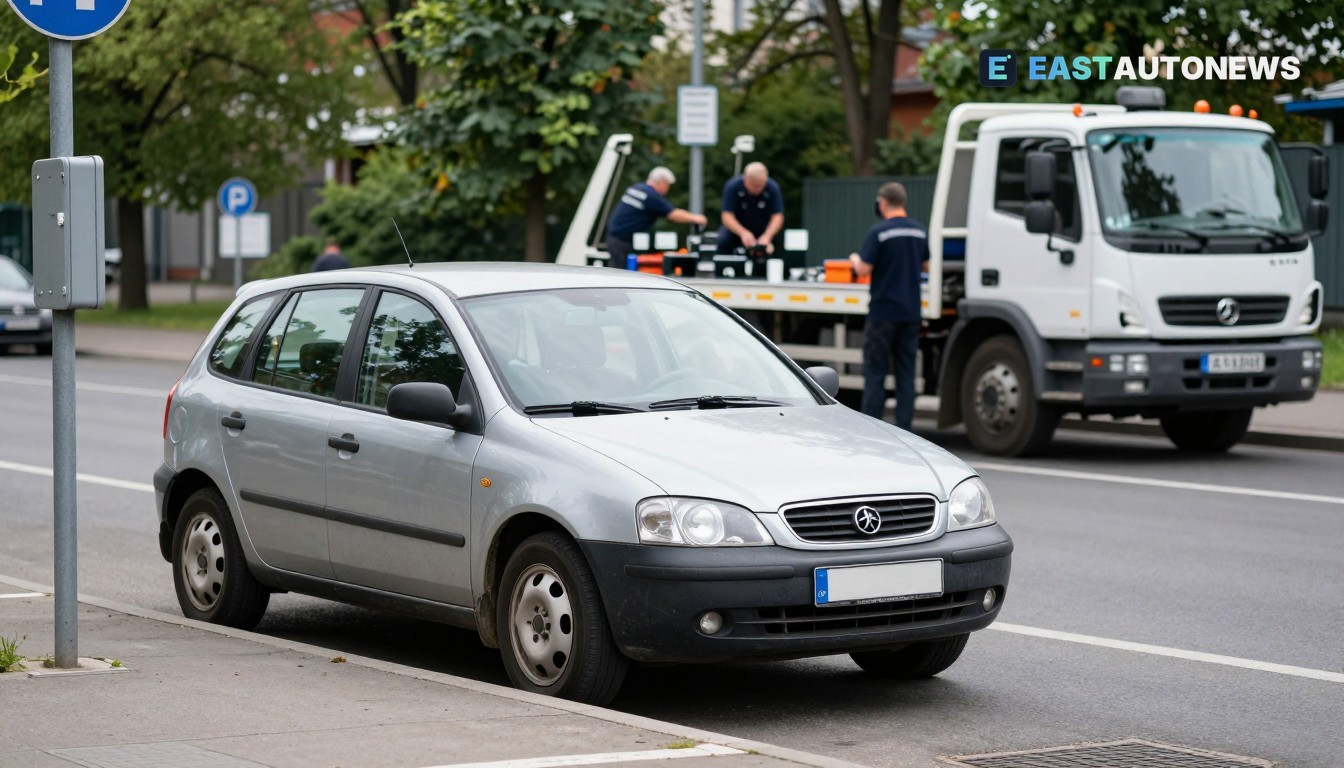
Poland’s Ministry of Infrastructure has advanced a government draft law known as UC95 that would tighten how cars registered outside the EU are treated on Polish roads. The draft — listed in the government’s legislative tracker and described in recent press coverage — would require a foreign‑registered vehicle that remains in Poland for more than 12 months to stop being treated as “in international traffic”, triggering mandatory Polish registration and technical inspection rules.
Key measures in the UC95 draft
Under the text circulated in government files and summarised by AutoCenter365, a person who gains permanent residence in Poland would have 30 days to register a vehicle that is registered in a third country; the draft defines permanent residence as a place where a person stays more than 185 days a year. Separately, any vehicle that has been on Polish territory for longer than one year from the date of entry could be classed as no longer in “international traffic”. The draft names retention of the foreign registration certificate and removal (towing) of the vehicle from the road among possible sanctions for non‑compliance.
The proposal is part of a wider UC95 package formally titled “project to amend vehicle‑homologation and related laws” that the government has been consulting and which has been through inter‑ministerial committees. Government postings show the project on the Rządowy Proces Legislacyjny tracker; as of 18 November 2026 the draft was marked “open” and the Chancellery’s work plan entry was updated on 20 November 2026. The ministry has already run public consultations and the bill has been considered by several government committees, which means its content may still change before any Sejm debate.
What this means for the market
If UC95 reaches law in its present form it would force a significant share of cars now circulating in Poland on Ukrainian and other non‑EU plates to join the Polish registration and inspection system. That shift would increase demand for vehicle inspection services, registration bureaux and compliant insurance — and shrink the practical window for prolonged use of foreign‑registered used cars. The Polish Automotive Chamber notes the draft seeks to close long‑standing gaps over out‑of‑country registrations and roadworthiness checks, a move that dealers and cross‑border resellers will need to factor into pricing and logistics.
For Central and Eastern Europe more broadly, tighter Polish rules could redirect flows of second‑hand cars. Dealers and brokers who currently rely on cross‑border customers or on vehicles staying long‑term on foreign plates would face extra paperwork and costs if those cars must be registered locally within tight deadlines. Border‑area trading patterns — long important for the CEE used‑car market — are likely to adjust rapidly to any new registration and inspection obligations.
At present UC95 remains a draft: it has not been adopted by the Council of Ministers or sent to the Sejm, and ministries have signalled that aspects of the project (for example rules touching micromobility or electronic certificates of conformity) may be separated out for separate treatment, which could delay final enactment. Market participants should watch the Rządowy Proces Legislacyjny entries and the Ministry of Infrastructure’s updates for exact timing and final wording.
WorldTrader24 B2B vehicle marketplace for dealers →
Sources: AutoCenter365, Rządowy Proces Legislacyjny (legislacja.gov.pl)