Romania has amended its e‑MOVE RO state aid scheme for charging infrastructure, moving a key grid‑connection requirement from the application stage to the contracting stage and changing how the five‑year durability period is calculated. The Order of the Minister of Transport and Infrastructure no. 1.161/2026 was published in the Official Gazette (Part I, no. 961) on 18 November 2026 and came into force the same day.
What the amendment changes
The order lets applicants for e‑MOVE RO funding submit an application without the technical connection approval provided they can show they sent the necessary documentation to the distribution system operator before the call for projects was launched; the full technical connection document must then be presented at the contracting stage. The Ministry explicitly confirmed the change applies from the date of publication, 18 November 2026.
The amendment also shifts the five‑year durability period: it now runs from the last payment made under the project rather than from completion of implementation. Beneficiaries’ four core obligations during the durability period remain — not ceasing the activity, not disposing of the assets, avoiding substantial changes that undermine objectives, and ensuring non‑discriminatory public access — but these obligations will in practice stretch over a different interval because the start date has changed.
Technical and eligibility adjustments
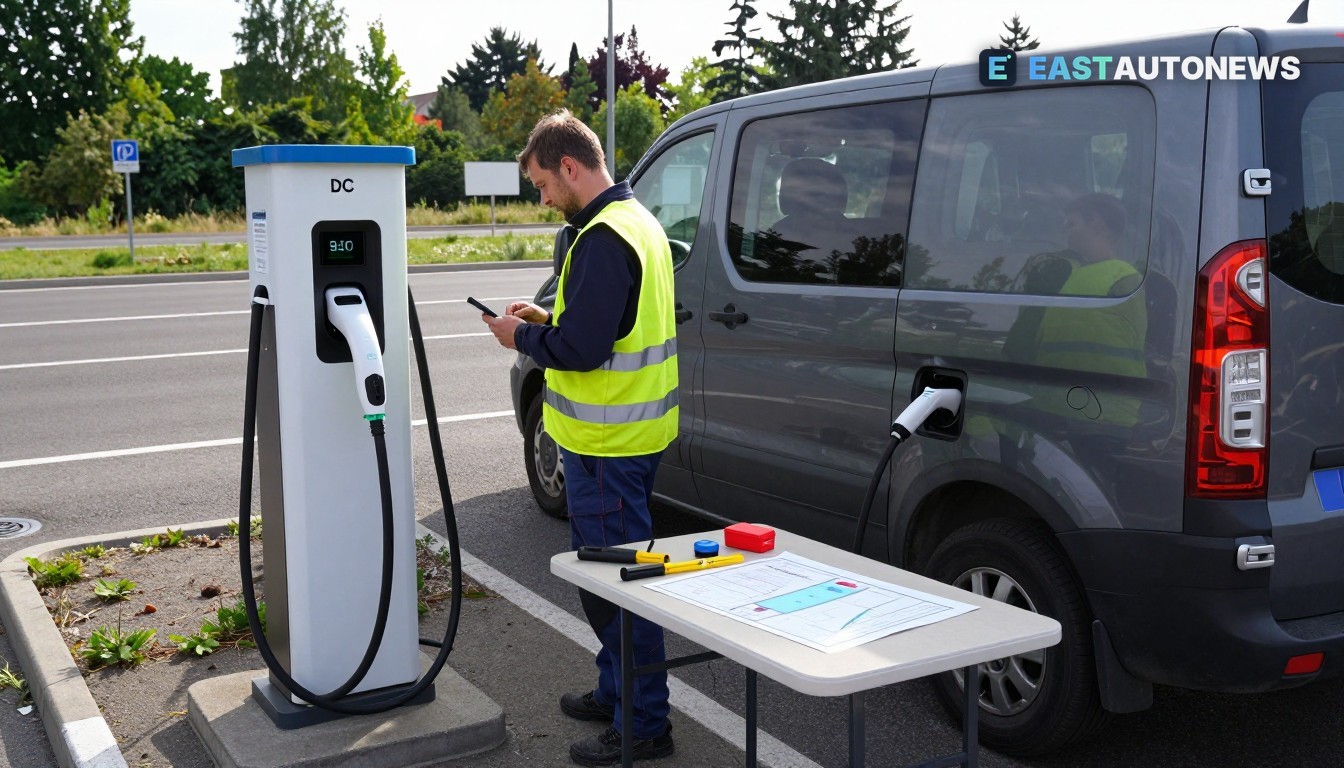
Order 1.161/2026 also tightens technical specifications for publicly accessible sites: each location must host at least two direct‑current points of at least 150 kW and one DC high‑power point of at least 350 kW where the opportunity analysis justifies it (for example, where heavy‑duty vehicles also charge). The amendment clarifies storage rules for projects with batteries (storage must absorb at least 75% of its energy annually from the directly connected renewable installation) and moves electric ground power units (GPUs) for aircraft eligibility exclusively to sub‑measure 1, with a requirement to scrap one combustion GPU within 60 days for each new electric unit.
The ministry noted the order makes no new budget available, opens no call for projects and leaves funding ceilings unchanged. The text was signed on behalf of the minister by Secretary General Marius Toader and cites Competition Council Opinion no. RG/12,524 of 5 August 2026.
What this means for the market
Deferring the technical connection approval to contracting reduces the administrative barrier that has knocked otherwise eligible projects out of competition when distribution operators delayed formal approvals. For fleet operators, airports and local authorities preparing bids under e‑MOVE RO, the change lowers timing risk so long as they can prove they filed connection documentation with the network operator before the call opened. However, applicants must still secure the full technical approval before signing a financing contract, so projects remain exposed to later technical or cost adjustments.
Recalculating the durability period from the last payment may extend the compliance window for beneficiaries (for example, stretching annual energy‑audit obligations), which can affect operational planning and costing for operators and suppliers involved in station maintenance, payment and roaming systems. The clarified minimum power requirements for public sites (two x 150 kW plus a 350 kW point where justified) set a higher baseline for publicly accessible fast charging, signalling procurement demand for mid‑ and high‑power chargers in Romania.
The order’s explicit statement that it introduces no extra funding means market actors cannot assume an immediate new call or more money; the change is procedural and technical rather than financial. Companies planning projects under e‑MOVE RO should update application checklists to keep dated proof of submission to distribution operators and budget for the shifted durability timing.
Electric vehicle listings on WorldTrader24 →
Sources: MonitorLegal.ro, Monitorul Oficial (Official Gazette of Romania)