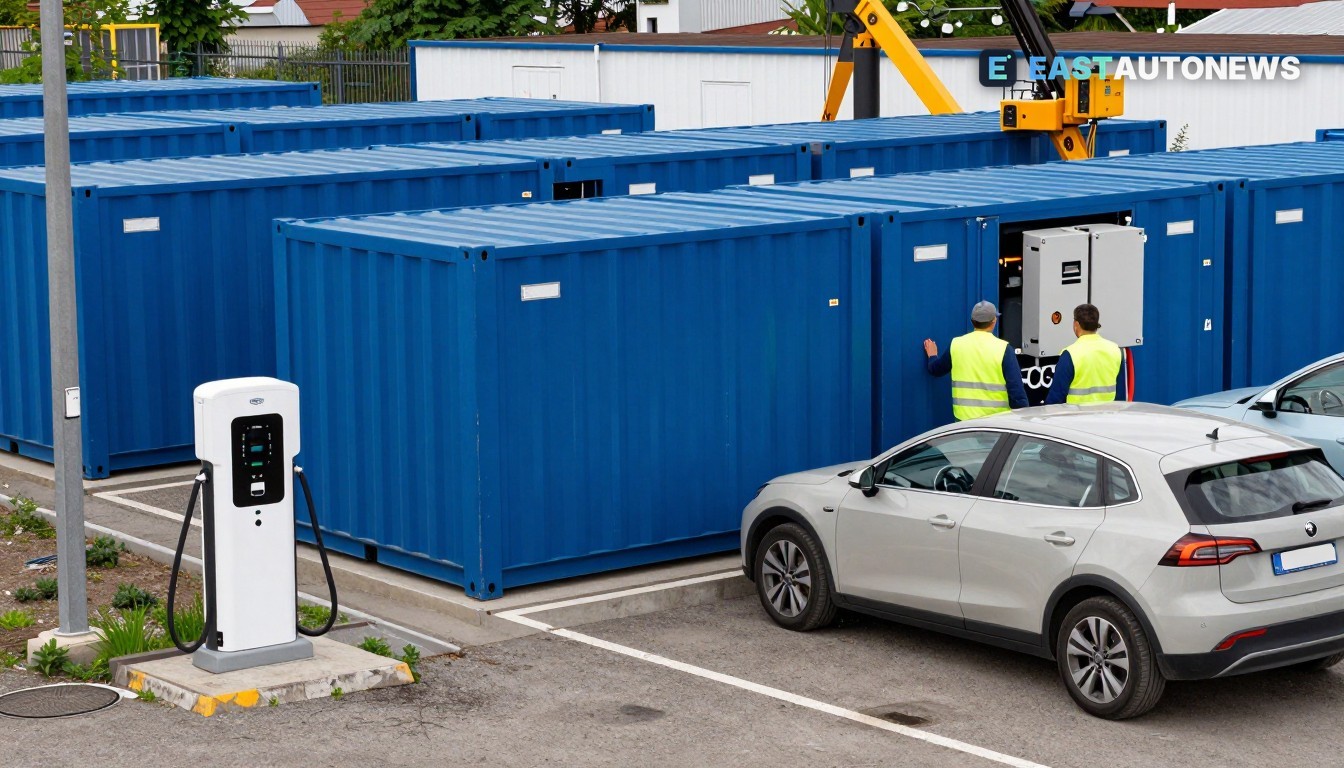
Romania’s Ministry of Energy has extended the application window for a Modernisation Fund call that backs stand‑alone battery storage projects, keeping the deadline open until 15 November 2026 at 23:59 and preserving the scheme’s core terms: a total envelope of €150 million, grants of up to €15 million per beneficiary and a maximum support level of €69,000 per MWh installed. Applications must be submitted via the national MySMIS2021 platform.
The measure and its details
The programme — published by the Ministry of Energy and financed from the EU Modernisation Fund under Key Programme 1 (renewables and storage) — targets new autonomous (stand‑alone) battery installations of at least 1 MW with a minimum two‑hour storage duration. The call was launched earlier in 2026 and the ministry formally confirmed the deadline extension in late October; implementing guidance and the application route (MySMIS2021/AFIR) remain in force. The scheme caps eligible aid at €69,000 per MWh and allows up to 100% of eligible costs for successful projects, with individual grants limited to €15m.
Private‑sector and public‑entity opportunities under the Modernisation Fund have already drawn strong interest: reports show dozens of project proposals filed and active commentary from developers and consultants as the closing date approached. The Ministry’s announcement of the extended deadline was replicated across domestic funding and consultancy channels, underlining that the call is being processed on the national MySMIS2021 submission platform.
What this means for the market
For carmakers, suppliers and charging operators in Central and Eastern Europe, accelerated deployment of grid‑scale battery storage matters in two clear ways. First, more storage smooths renewables variability and reduces the local system risks that can constrain large‑scale fast‑charging hubs — improving the business case for high‑power chargers at factories, urban hubs and motorway nodes. Second, the scheme’s financial structure (high per‑MWh support and large per‑project ceilings) makes bankable, utility‑scale projects more likely to reach financial close in 2027, which can lower future grid connection and capacity‑reservation costs for fleets and OEM‑operated charging networks. Domestic integrators and suppliers of BESS balance‑of‑plant stand to gain if winning projects source locally.
However, the call’s competitiveness — capped aid per MWh and the first‑come/first‑evaluated pace reported for other Modernisation Fund lines — means timely, well‑prepared bids will have an advantage. Companies planning charging or electrification investments that depend on firm grid services should monitor the ministry’s evaluation timetable and the Ministry’s follow‑up publications for provisional rankings and contracting windows.
Electric vehicle listings on WorldTrader24 →
Sources: Ministry of Energy (Romania) reporting collated by Fonduri‑Structurale, Musat Partners and Tagsonne.