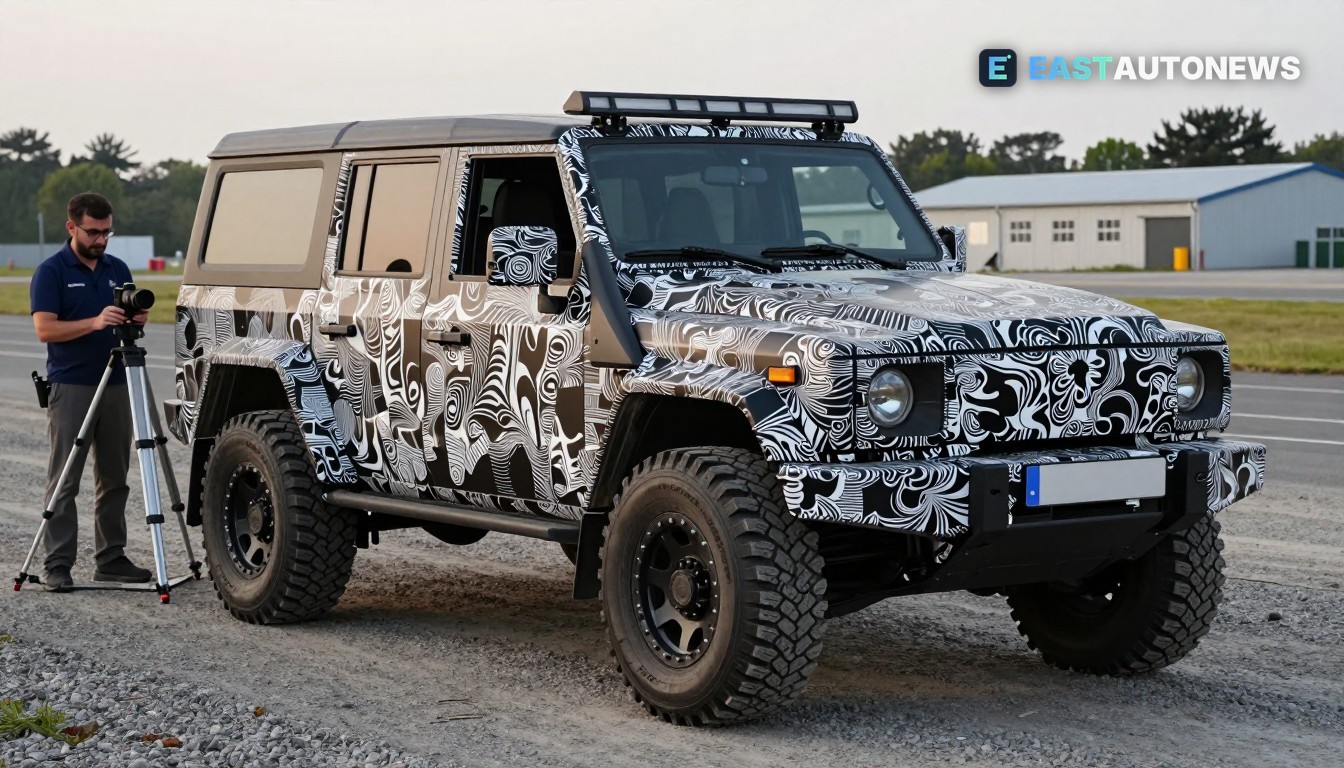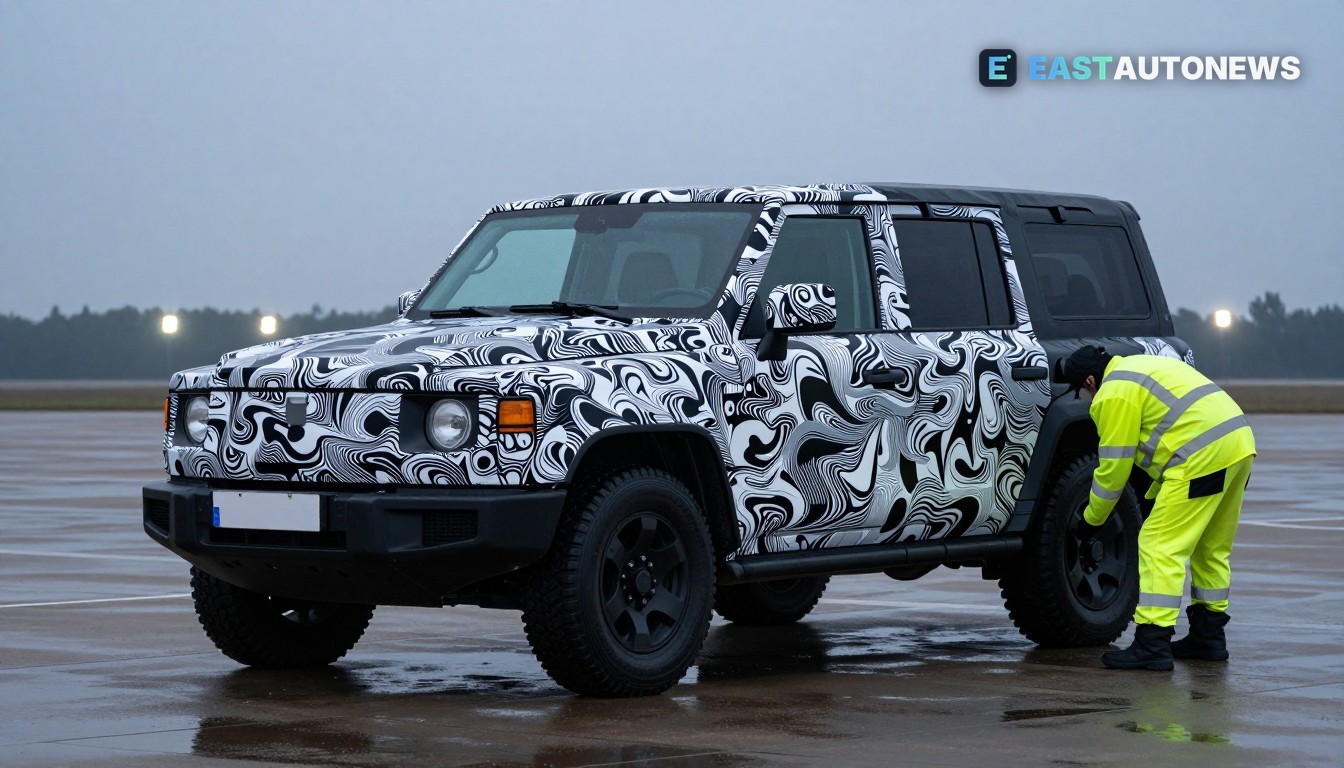
New spy photos published on November 18, 2026 show a heavily camouflaged prototype of Mercedes‑Benz’s much‑anticipated compact G‑Class — the so‑called “Baby G” or “Little G” — undergoing road testing with clear production‑intent details visible on the bodywork. The images emphasise the model’s boxy silhouette, squared windows, roof rails and what appears to be a rear carrier area that may house charging hardware on the EV versions.
What we saw in the latest photos
The Carscoops set published on 18 November shows a single mule wearing heavy wrap but with production‑style lights and panel gaps, indicating the prototype is close to its final form. Reporters note the front and rear treatments look softer and slightly more rounded than the full‑size G‑Class while retaining the family’s upright proportions. Spy photographers and specialist outlets have been tracking multiple test mules through 2025–26, and the latest batch points to continuing refinement rather than major design changes.
Mercedes executives have given a timeline for the project: CEO Ola Källenius told Bloomberg that the smaller G‑Class will arrive "less than 24 months from now," a remark reported in October 2026 that suggests an introduction before October 2028. That timing has been repeated in subsequent reporting.
Where it will be built
Industry reporting in mid‑2026 identified Mercedes’ Kecskemét, Hungary plant as the likely production site for the compact G‑Class, part of a wider reallocation of Mercedes European volume to lower‑cost plants. Those reports say Mercedes invested heavily in Kecskemét and that the factory’s capacity has been expanded in recent months — public company documents show Kecskemét’s capacity is sizeable relative to other group sites. Mercedes’ investment and capacity expansion at Kecskemét were cited in reporting on the Baby G production plan.
What this means for the market
For Central and Eastern Europe the Baby G is notable on two counts. First, a compact, premium off‑roader carrying G‑Class styling would be highly competitive in regional markets where smaller SUVs sell strongly but buyers prize premium badges. Second, a Kecskemét build would consolidate Mercedes manufacturing scale in Hungary and deepen supplier and logistics flows across the region — a shift that has implications for local component suppliers, employment and export volumes. Reports in 2026 say Mercedes boosted capacity and investments in Kecskemét as part of the reorganisation.
Mercedes has also signalled that the Baby G will not be EV‑only: initial testing has included electric‑looking mules, but company and dealer commentary indicate petrol/hybrid variants are expected alongside electric versions, widening the car’s market reach. That product mix would suit Central and Eastern European buyers where both electrified and internal‑combustion options remain important.
Mercedes Benz listings on WorldTrader24 →
Sources: Carscoops, Autoblog, Motor1, NewMobility.news, Mercedes‑Benz Group