Volkswagen AG has formally submitted a catalogue of demands to IG Metall that asks for “significant relief in labour costs”, including a pay freeze for 2027 and 2028, elimination of collectively agreed special payments (27.5% of average monthly earnings or six days’ leave) and a monthly allowance of €167, and far greater flexibility on weekly working hours. The list was lodged on November 19, 2026; negotiations began at Emden on November 24.
What Volkswagen said — and why
In its November 19 press release the group framed the demands as part of a wider “Future Plan 2030” aimed at lowering costs across development, procurement, production and sales to safeguard competitiveness amid shrinking markets and rising protectionism. Volkswagen warned that measures agreed in 2024 are “no longer sufficient” and characterised collective‑bargaining changes as one element of a broad efficiency drive. Volkswagen also noted it operates 111 production facilities in 16 European countries, underlining the group’s continental footprint.
Company negotiators framed the move as necessary to react “quick” to deteriorating conditions: Frank Ischner, the company’s chief negotiator, said the firm needs a “quick agreement to counter the high cost pressure”, while Kerstin Scholz called for “socially responsible solutions” to secure long‑term jobs.
Union blowback and early escalation
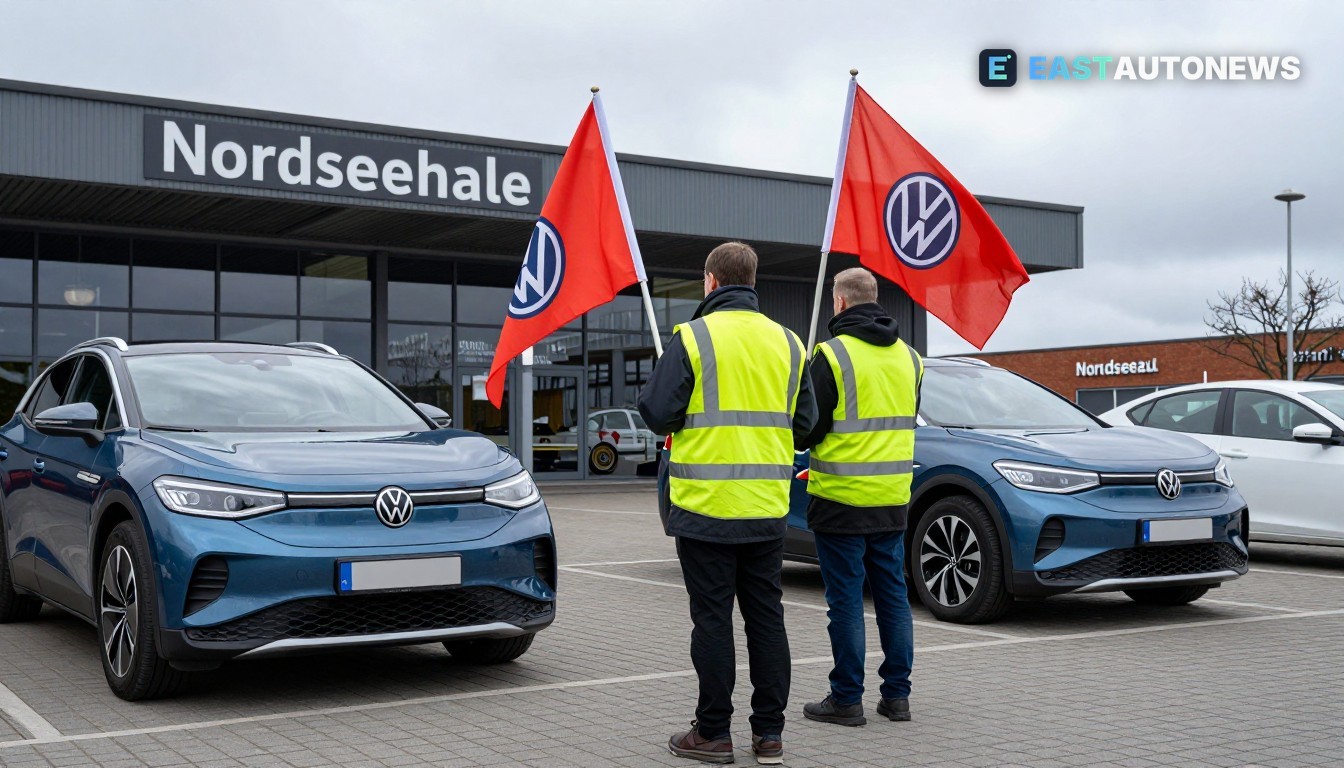
IG Metall responded sharply. At the Emden opening session the union publicly rejected Volkswagen’s demands, describing the employer catalogue as unacceptable and mobilising thousands of workers to protest at the negotiation venue. IG Metall warned the demands could push VW pay levels below the regional metal‑and‑electrical industry benchmarks and has signalled a confrontational negotiating stance at least through the next rounds. Demonstrations outside the Nordseehalle attracted roughly 4,500 people, according to IG Metall local communications.
What this means for the market
The dispute matters for Central and Eastern Europe because Volkswagen is deeply embedded in the region’s manufacturing and supplier network. Any prolonged stand‑off — or a negotiated reset that removes cost protections — can transmit pressure down the supply chain: suppliers in Slovakia, Czechia, Hungary and Poland rely on predictable order volumes and wage baselines when pricing contracts, scheduling shifts and deciding local investments. A push to reduce labour costs at group level raises the prospect of production re‑allocation, intensified price pressure on parts suppliers and renewed incentive for OEMs to seek lower unit costs outside Germany.
For markets and investors the immediate signals are twofold: first, labour cost and employment terms remain an active strategic lever for OEMs as they try to protect margins in a tougher market; second, the timing — coming as European demand softens and trade barriers proliferate — increases short‑term uncertainty for suppliers and logistics providers across CEE.
Volkswagen models available now on WorldTrader24 →
Sources: Volkswagen Group, IG Metall