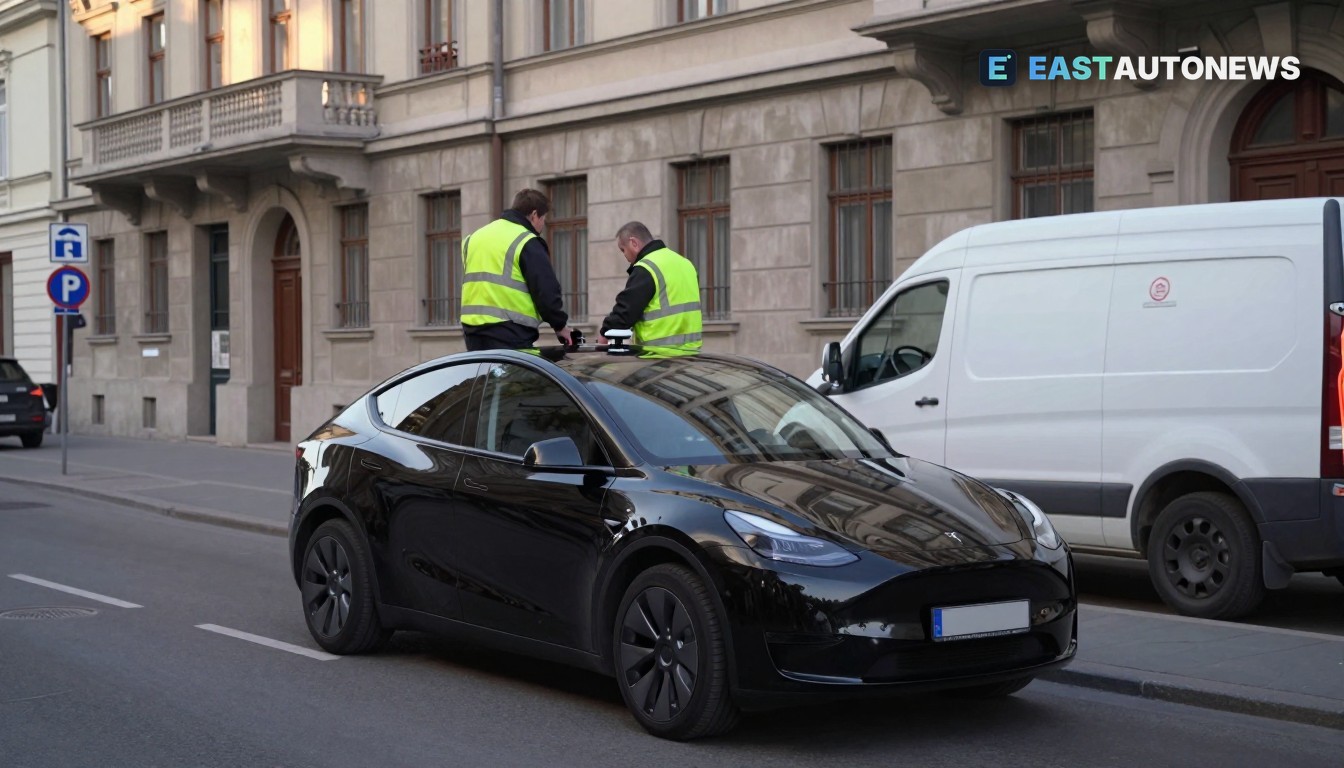
Hungary’s government said on 15 November 2026 it will begin an official, authority‑run test programme to assess Tesla Assisted Driving (the system formerly sold in Europe as FSD (Supervised)) on Hungarian roads, rather than wait for a continent‑wide decision. The announcement came from Science and Technology Minister Zoltán Tanács and was reported by Portfolio and Vezess on 15 November 2026.
What was announced
The Portfolio report quotes Minister Tanács saying the ministry "will start an authority‑run test programme" to determine whether the Tesla software can operate safely while complying with Hungary's KRESZ road code; the ministry had also discussed the issue with Transport Minister Dávid Vitézy, Portfolio said. The article was published on 15 November 2026.
Vezess's same‑day coverage added that Hungary does not intend to wait for the next EU approval round — planned for December 2026 — and emphasised that domestic testing is aimed at checking compliance with national traffic rules rather than constituting immediate consumer access.
Regulatory context
The move follows recent activity at EU member‑state level over Tesla's assisted‑driving software: the Dutch regulator RDW published approval changes for the system on 3 November 2026, renaming it "Tesla Assisted Driving" in car menus and manuals as part of an approval package. Independent trackers and industry outlets report that a limited number of European states have already accepted the system under national processes, while broader EU adoption requires qualified‑majority backing in technical committee votes.
What this means for the market
For the Central and Eastern European market the Hungarian decision is notable on several fronts. First, a national test programme can shorten the time between regulatory debate and practical deployment in one of the region's bigger EV markets, creating earlier clarity for local Tesla owners, dealers and insurers. Portfolio and Vezess both report that the ministry’s action is intended to ensure safety while keeping Hungary positioned to adopt new mobility technologies.
Second, domestic testing could influence neighbouring regulators and accelerate country‑level approvals in the region — an outcome that would affect demand dynamics for advanced driver assistance features, aftersales complexity and insurance exposures. However, the Hungarian test itself does not equal EU approval: a decision at EU level is still subject to the technical committee process due in December 2026, and full continental rollout depends on the votes and legal steps that follow.
Finally, manufacturers, suppliers and service providers in CEE should monitor the test’s scope and findings closely. Results could change requirements for homologation, roadside signage interpretation, telematics data handling and policing of assisted modes — all areas that affect local operations from dealers to parts suppliers and insurers. For now, the announcement is a regulatory and market signal rather than a change in consumer availability; Portfolio and Vezess make clear the system remains unavailable to Hungarian drivers until formal approvals or test outcomes permit use.
Electric cars for sale on WorldTrader24 →
Sources: Portfolio, Vezess