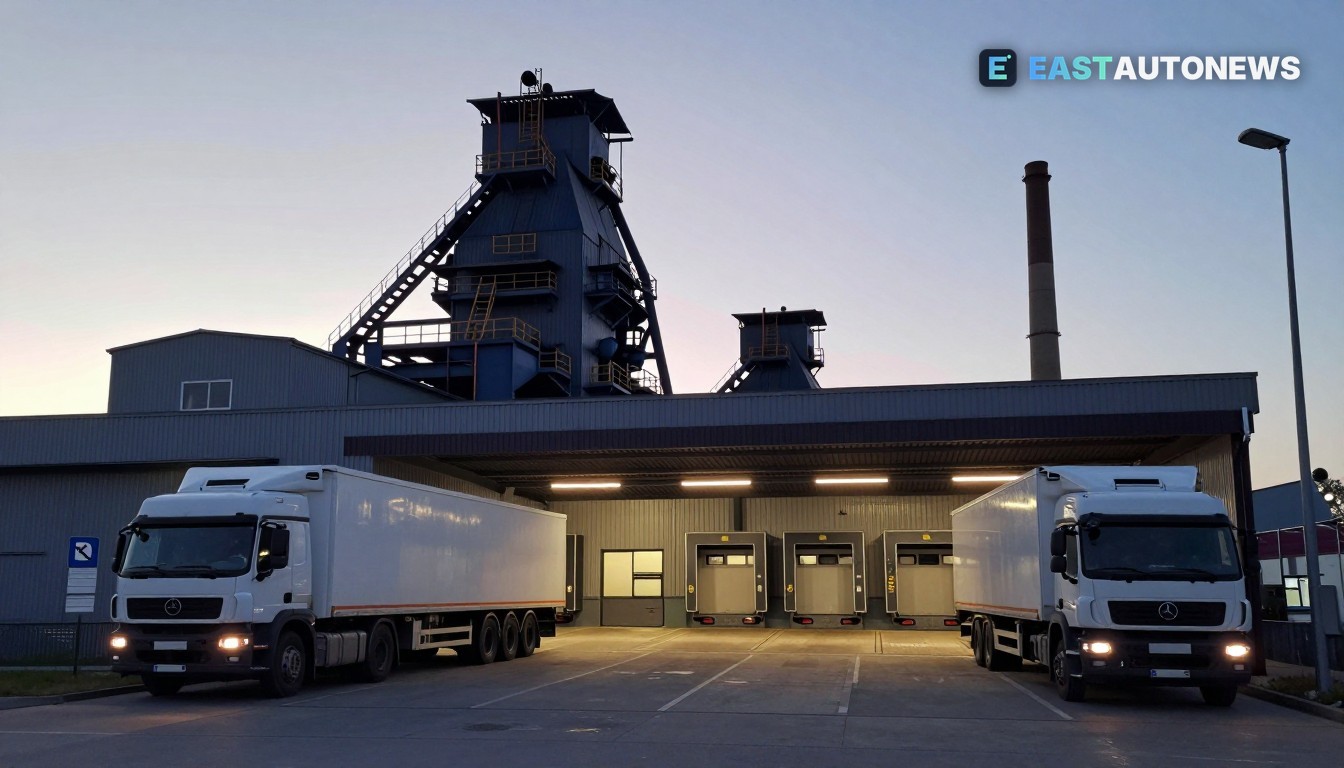
ArcelorMittal has reportedly paused operations at its long‑product rolling mills in Warsaw (Poland) and Hamburg (Germany) with immediate effect, and is running its Duisburg and Sosnowiec plants at reduced rates, according to Kallanish‑sourced reporting carried by industry outlets on 17 November 2026. The reports say the group has stopped taking new orders for bars and rods while seeking large price increases to justify restarting production.
What happened and why
Industry reporting on 17 November 2026 says the stoppages are a direct response to sharply higher power costs. The sources quoted by Kallanish and relayed via trade outlets put the German day‑ahead electricity price as high as €314.85/MWh on 29 October and note that Poland’s day‑ahead electricity price averaged PLN 751.71/MWh in October — levels that, they say, make continuous long‑product steelmaking uneconomic at current contract prices.
According to the same reporting, ArcelorMittal has sought increases of about €100 a tonne for commodity rods and bars and more than €100/t for some high‑grade wire‑rod grades; sources say customers have refused those rises, prompting the company to pause production while it seeks a workable commercial solution. The story has been repeated by specialist metals and trade outlets but, as of 17 November, there was no public confirmation from ArcelorMittal itself.
Immediate effects on the automotive supply chain
Long‑product steel (wire rod, bars and merchant sections) supplies components used across the automotive supply chain — for forgings, fasteners, springs and structural parts. A pause or slow‑down at major mills in Poland and Germany reduces available local supply and shortens options for just‑in‑time buyers in Central and Eastern Europe, where suppliers already face logistics, energy and margin pressure. Specialist commentary notes the move could push buyers to seek imports or secondary market supplies, at an inflationary cost.
What this means for the market
For CEE carmakers and tier‑1/2 suppliers the risk is twofold: higher raw‑material prices and shorter, less reliable local availability. If the reported requirement for a roughly +€100/t price uplift stands, purchasers will either absorb higher steel input costs, which compresses margins, or try to pass them up the chain — a process that can delay contracts and production. Many regional suppliers are energy‑intensive and operate with tight working‑capital, so even short disruptions can force production adjustments. The pause also increases the chance of a scramble for alternative tonnage from non‑EU sources, with potential delays from shipping and customs.
Market participants should watch three near‑term indicators: any formal statement from ArcelorMittal confirming or denying the reported halts; weekly domestic long‑product availability and pricing (wire‑rod/rebar); and day‑ahead power price trends in Germany and Poland. If energy prices remain elevated, more mills with electric‑arc furnaces or continuous long runs could announce selective cuts — a scenario that would prolong pressure on CEE automotive suppliers into Q1 2027.
WorldTrader24 B2B vehicle marketplace for dealers and wholesalers →
Sources: EUROMETAL, Loharo, Metallurgprom