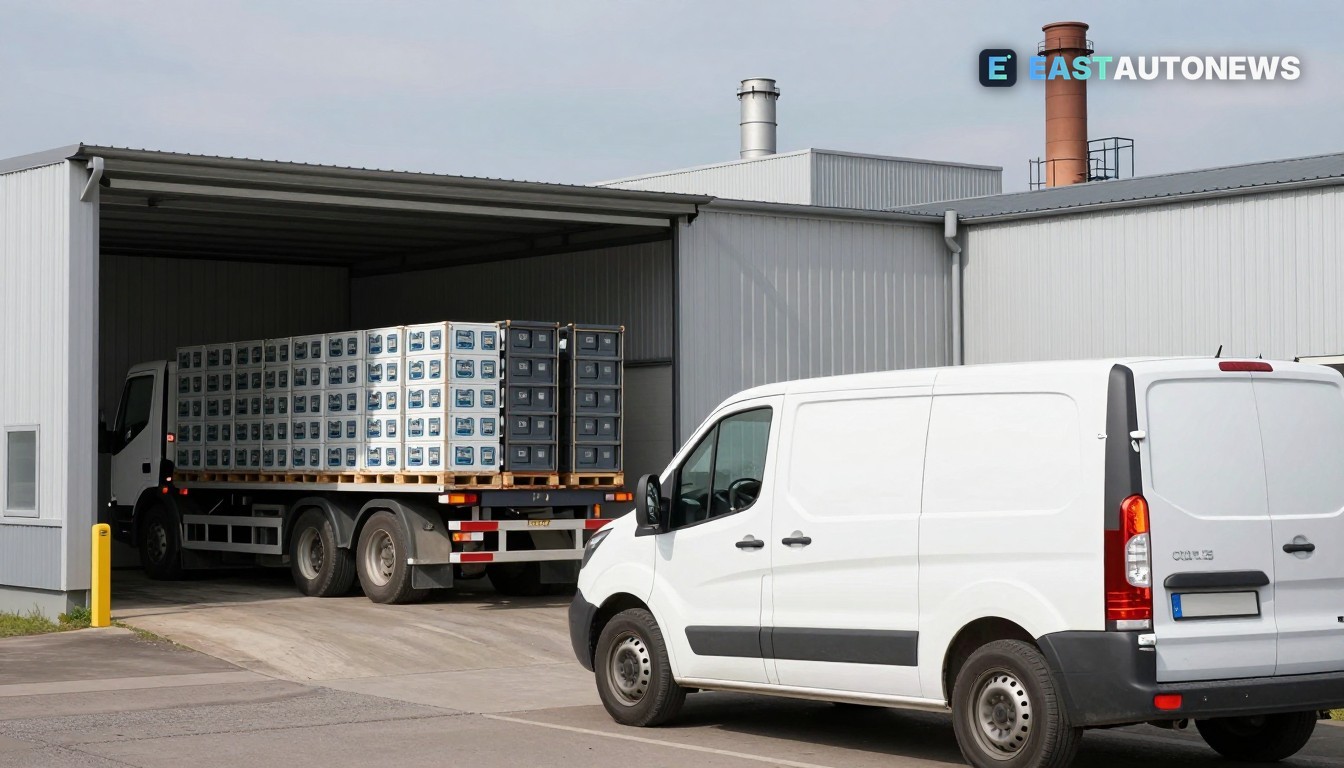
BASF has signed an agreement to sell its Battery Recycling business to German recycler cylib, shifting the chemical group’s battery strategy to focus exclusively on cathode active materials (CAM). The parties signed the deal on 20 November 2026 and announced it publicly on 23 November; the transaction covers BASF’s recycling activities in Europe and North America, including intellectual property, customer contracts and the black‑mass production and prototype plants at Schwarzheide, Germany.
Deal details and timing
BASF said the sale is intended to place the recycling business “in an environment where it can benefit from greater scale, complementary capabilities and closer integration along the recycling value chain.” BASF’s statement named Dr Daniel Schönfelder, President of BASF’s Battery Materials division, and quoted him on the benefits for the recycling operation under cylib’s ownership. The company said the transaction is expected to close between Q2 and Q3 2027, subject to regulatory approval; financial terms were not disclosed.
cylib — founded in 2022 as an RWTH Aachen spin‑off — said the acquisition expands its European footprint and gives it access to the Schwarzheide black‑mass facility, which BASF and industry reporting previously described as capable of processing around 15,000 metric tonnes of batteries and production scrap per year. The Schwarzheide site will add industrial scale and an existing customer base to cylib’s network as it builds hydrometallurgical recovery capacity.
Why BASF is selling
In the same statement BASF said it will concentrate its Battery Materials business on CAM, where it sees the strongest potential for value creation and technological differentiation. The company also said it is pursuing strategic options for two mothballed sites outside Europe — in Battle Creek (Michigan) and Harjavalta (Finland) — as it refocuses capital and R&D on cathode chemistry.
What this means for the market
The deal matters for Central and Eastern European carmakers because it reassigns a major piece of Europe’s emerging black‑mass and secondary‑material capacity to a specialist recycler at a time when the EU is tightening controls on cross‑border movement of battery waste and pushing for on‑continent recovery of critical raw materials. Classifying black mass as hazardous waste and restricting exports outside the OECD has already shifted the economics of recycling and increased demand for European processing capacity. Greater private‑sector consolidation under dedicated recyclers could speed availability of recovered lithium, nickel and cobalt for cell makers and OEMs — many of which source cells and packs from Hungary, Poland and Slovakia — but it may also concentrate negotiating power among fewer suppliers.
For suppliers and smaller recyclers in the CEE region, cylib’s expansion may bring new industrial partners and investment (including planned hydrometallurgical plants such as Dormagen cited by industry reporting), but it will also create an integration task: combining BASF’s established plant, customer contracts and processes with cylib’s technologies and planned upstream collection and dismantling networks. That integration will be visible to buyers and procurement teams at OEMs from early 2027 as the deal approaches regulatory close.
WorldTrader24 B2B-Fahrzeugmarkt für Händler →
Sources: BASF press release; Battery‑News; ICIS