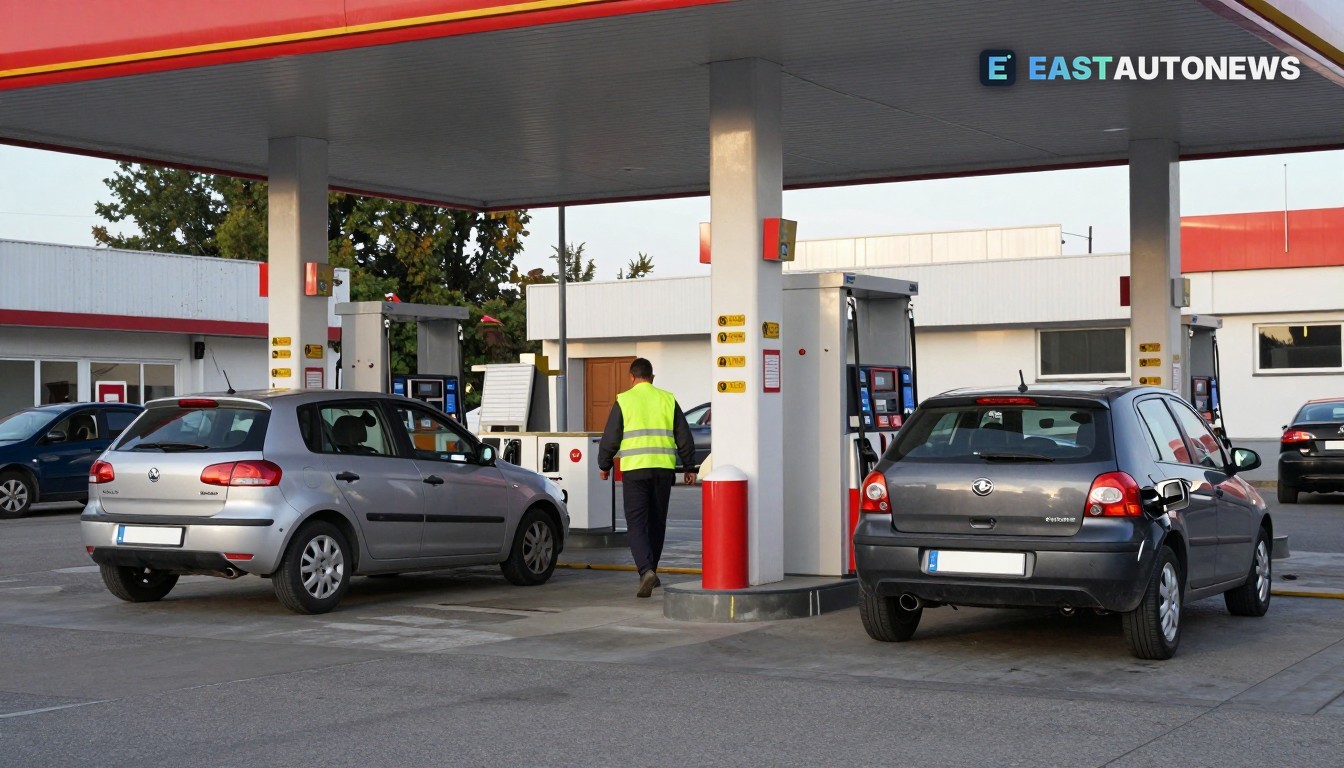
Romanian readers typing a local query for "stiri auto md" — literally "auto news for Moldova" — will currently find that the biggest item on Moldova's motoring agenda is cheaper fuel. The National Agency for Energy Regulation (ANRE) published the reference maximum prices applicable for 18 November 2026: A95 petrol at 28.29 MDL per litre and diesel at 33.72 MDL per litre, reductions of 0.20 MDL and 0.19 MDL respectively from the previous day.
How ANRE set the number
ANRE says its daily maximum (plafon) is calculated from the 14‑day average of Platts quotations, the 14‑day average exchange rate published by the National Bank of Moldova (BNM) and regulated markup elements such as transport, handling and a crisis‑era diesel surcharge set by the National Crisis Management Centre. The regulator published the reference on 17 November for application on 18 November 2026.
Local outlets reporting the change noted the modest size of the cut and pointed to a continuing downward trend in pump ceilings through mid‑November after a peak in late September. Independent trackers that publish ANRE's daily plafon show petrol falling from around 30–31 MDL/l in early November to the 28.29 MDL/l level on 18 November.
Drivers and dealers react
Retail stations in Chișinău and across the country are permitted to sell below ANRE's maximum, and market watchers report some stations using the falling ceiling to offer lower in‑pump prices over the weekend. Coverage in Moldova's auto sites emphasised the immediate consumer impact — lower running costs for motorists and short‑term relief for transport operators — while reminding readers that daily maxima can move up or down depending on global quotations and the leu/dollar rate.
What this means for the market
The move is primarily short‑term and technical: ANRE's mechanism simply passes changes in international quotes and exchange rates to the domestic retail ceiling, so it does not signal structural change in Moldova's vehicle market or energy policy. For consumers and fleet operators, however, the cumulative effect of several days of lower plafon values reduces operating costs and may modestly lift demand for local used‑car transactions and short‑distance travel. Traders who import vehicles or fuel will continue to watch Platts averages and the BNM rate because those inputs determine future plafon updates.
WorldTrader24 B2B vehicle marketplace for dealers →
Sources: Agenția Națională pentru Reglementare în Energetică (ANRE), ȘTIRILE.MD