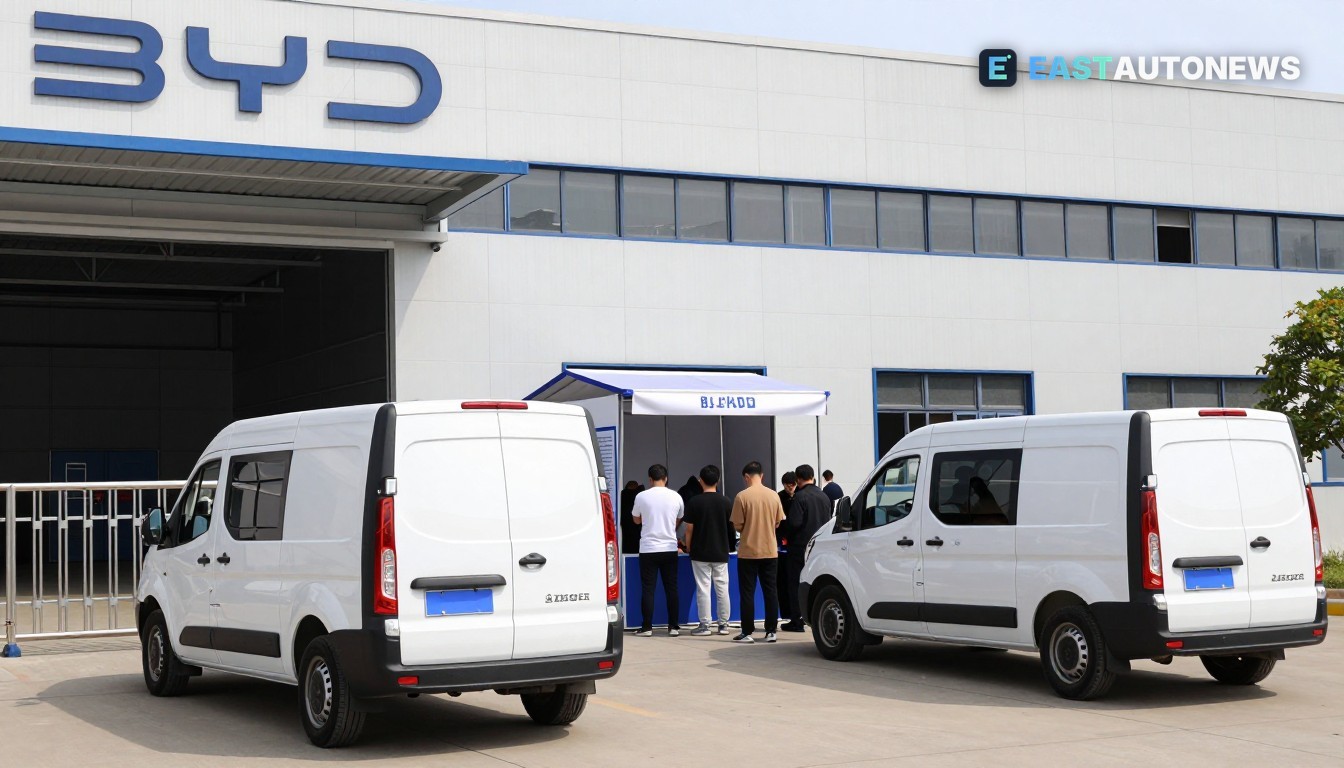
Chinese EV maker BYD has begun recruiting around 600 factory workers for its Szeged vehicle plant, local broadcaster Rádió 88 reported on 18 November 2026, saying the company opened a recruitment office in the city to support the next hiring wave.
Timeline and capacity
BYD continues to publicly target the start of series assembly in the fourth quarter of 2026, a timetable the company reiterated in statements this autumn. At the same time, recently published permitting documents and local reporting sketch a much more phased commissioning plan: an October 9 administrative decision divides the site into five stages, with several core workshop trial runs scheduled to start only at the end of November 2026 and into January 2027. The same documents set a final deadline for full commissioning of 28 February 2028.
Worker recruitment and training
The current recruitment drive targets production and manufacturing roles in Szeged and the surrounding area; local coverage says BYD will also operate a recruitment office in the city centre to process applications. The company has previously employed hundreds of staff at the site — local authorities and municipal statements in January indicated nearly 960 employees had been taken on during earlier start-up phases — and the new hires are intended to staff the plant as it moves from trial runs toward regular production.
What this means for the market
For Central and Eastern Europe, the immediate consequence is practical: BYD is stepping up local hiring even while permitting timetables point to a drawn‑out ramp-up. Locally built cars would avoid the EU duties applied to China-built EV imports, a structural benefit BYD has cited in its European strategy. The staggered commissioning schedule — with key workshops and the FinDreams supplier halls coming online across 2027 and a full‑site deadline in early 2028 — reduces the chance of a rapid, single‑moment surge of new vehicles onto CEE markets and instead implies a multi‑year production growth that buyers, distributors and logistics chains must plan for.
Crucial figures from the permit filings underline the scale: the site is designed in permits for up to 300,000 vehicles a year (roughly 280,000 BEVs and 20,000 plug‑in hybrids), and the administrative timeline explicitly stages the welding, pressing and paint shops' trial runs into late 2026 and early 2027, with battery‑storage and additional supplier halls scheduled for 2027.
The combination of active local hiring now and a legally recorded, phased commissioning timetable matters for suppliers, logistics providers and regional labour markets: recruitment drives indicate BYD expects to staff production lines even if full capacity comes later, while the permit schedule gives market actors concrete dates to plan manufacturing, rail and port capacity expansions.
Electric cars on WorldTrader24 →
Sources: Világgazdaság, Rádió 88 Szeged