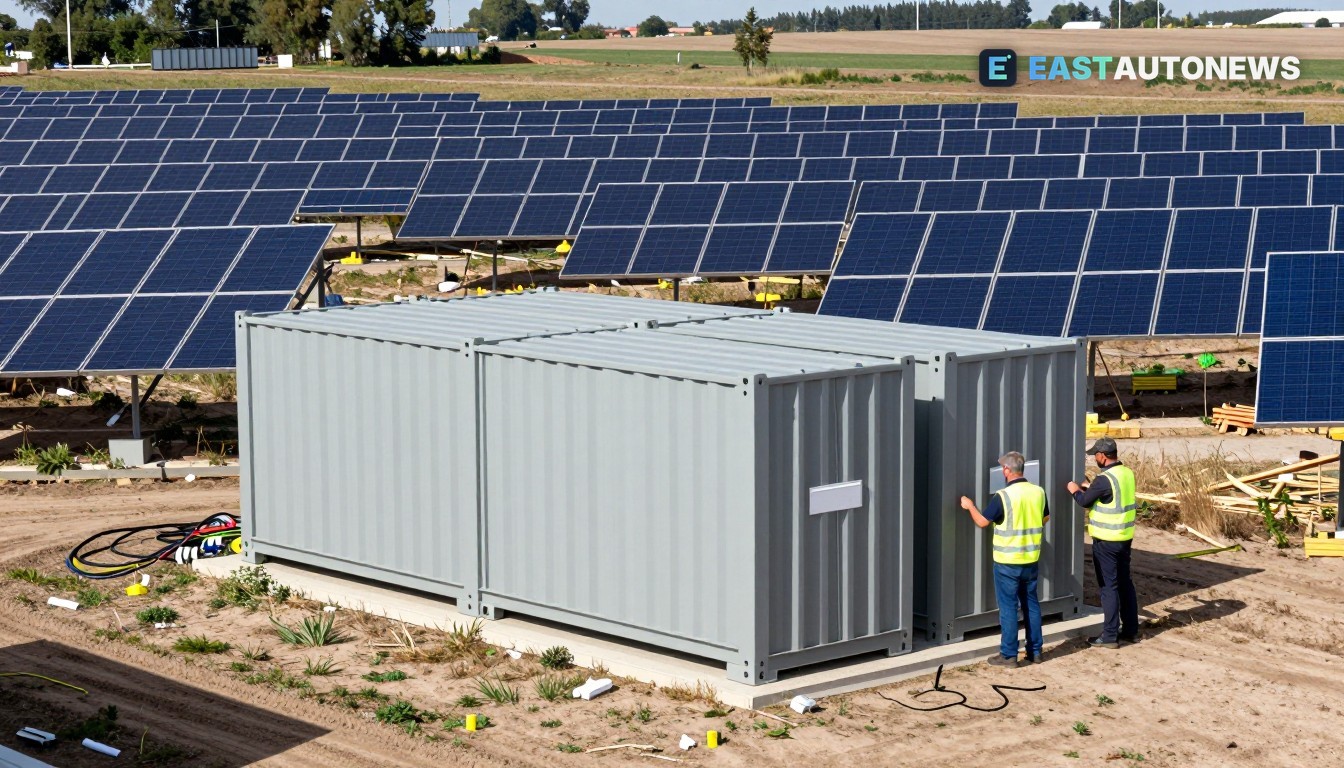
Chinese battery systems maker HiTHIUM has signed a contract to supply 181.25 MWh of containerised battery energy storage for a hybrid solar project near Sebeș in central Romania. The deal — announced on 13 November 2026 — will pair 29 of HiTHIUM’s ∞Power 6.25 MWh containers with 67.46 MWp of photovoltaic capacity for a project developed by Windin Capital and El‑Mor Group through the project company HEPA Energy, with Romanian EPC contractor Simtel as system integrator and O&M partner.
Project facts and timetable
Under the agreement HiTHIUM will deliver 29 containerised units totalling 181.25 MWh of usable energy (29 × 6.25 MWh). The installation is DC‑coupled to the 67.46 MWp solar array and will feed electricity to Romania’s national grid; the announcement (dated 13 November 2026) describes the scheme as one of the largest hybrid solar‑plus‑storage parks in the Central European market. Simtel will provide engineering, procurement and construction services and will support operations and maintenance after commissioning.
Technical and safety notes
HiTHIUM says the ∞Power container design was developed for tight solar‑site integration and includes noise‑control and recyclable components; the company also cited results from an independent open‑door safety test carried out by UL Solutions earlier in 2026. The supplier stated the containerised format aims to simplify installation, spare‑parts logistics and lifecycle servicing from European distribution hubs.
What this means for the market
The Sebeș hybrid park is primarily an energy project, but it has clear market implications for the car industry across Central and Eastern Europe. Large, dispatchable BESS capacity reduces volatility on local grids and can lower peak wholesale prices and balancing costs — factors that matter to energy‑intensive automotive plants and suppliers that face high electricity bills and grid curtailments across the region. By firming renewable output, projects such as Sebeș make it easier for factories and charging hubs to secure stable power without relying solely on grid upgrades or expensive peak‑time imports.
For suppliers and carmakers in Romania and neighbouring CEE states, the deployment also illustrates a maturing market for large stationary batteries: developers, integrators and EU‑marketed Chinese BESS vendors are now delivering multi‑hundred‑MWh projects that can be located close to industrial clusters. That trend matters because automakers that electrify production lines or add battery‑module assembly need reliable, competitively priced power — and local BESS capacity can be a tool to reduce exposure to peak‑price spikes and to support on‑site or nearby fast‑charging installations.
HiTHIUM’s announcement (13 Nov 2026) also highlights growing activity by non‑European storage vendors in CEE project pipelines; the arrival of more large‑scale BESS projects will be watched closely by makers and suppliers planning new factories or expansions, because power availability and price remain a critical element of site competitiveness across the region.
B2B vehicle listings on WorldTrader24 →
Sources: BESSNews, HiTHIUM / Simtel posts.