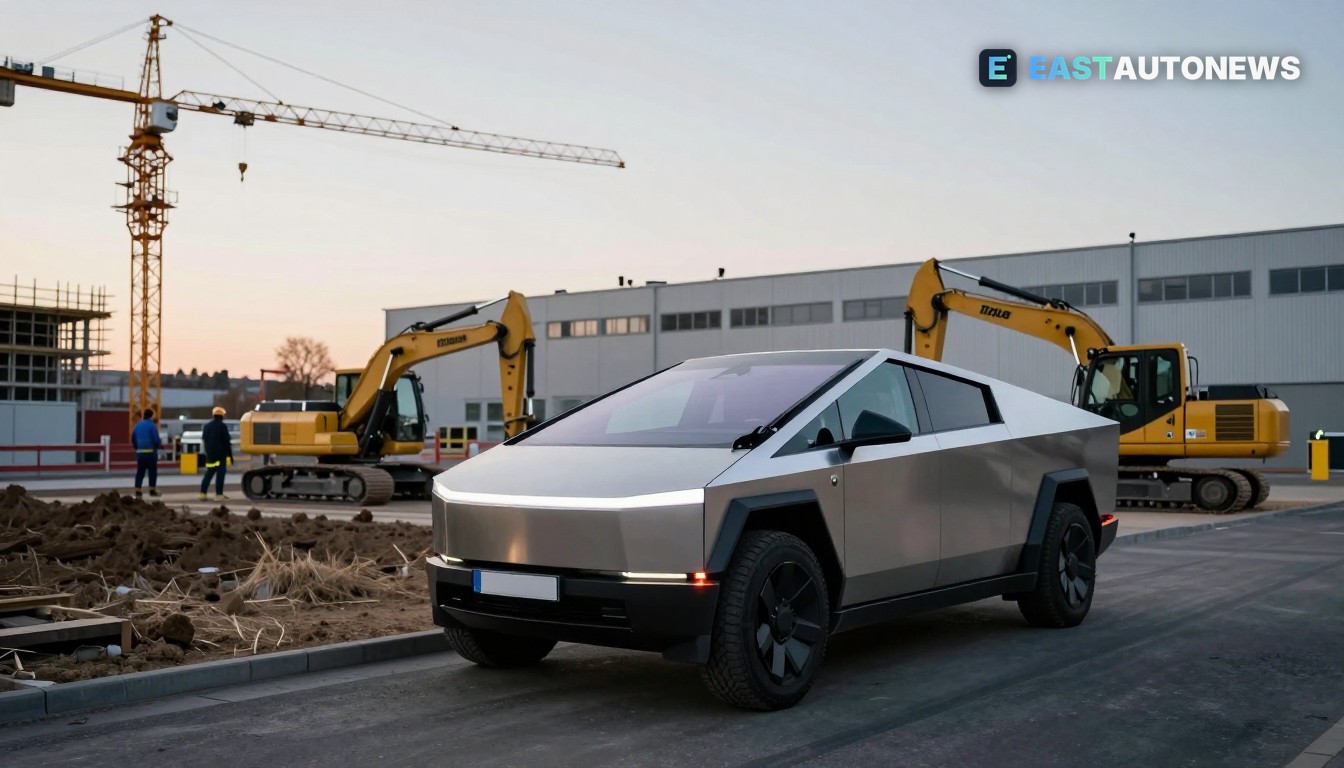
Tesla announced on 16 November 2026 that it will invest about €3 billion in an expansion of its Gigafactory Berlin‑Brandenburg in Grünheide, outside Berlin, to add a new production hall aimed at building the company’s driverless Cybercab. The company said it will file a building‑permit application before the end of 2026, plans construction to start in 2027 and is targeting the first Cybercabs off the line in 2029.
Project details and local reaction
Tesla described the investment as the next step to scale output at its only European vehicle site and said the new hall could be designed to produce up to 1 million Cybercabs when fully scaled. Brandenburg’s state premier, Dietmar Woidke, welcomed the decision, calling the €3 billion investment and the prospect of up to one million Cybercabs "an enormously important economic decision." Tesla also said the expansion will include supporting infrastructure such as an additional wastewater treatment plant and ancillary buildings.
The Grünheide complex has been ramping Model Y production through 2026 and employed about 12,600 people in October; Tesla said the Cybercab building and related work will add several hundred roles for construction and production planning. Plant manager André Thierig has separately said the site is preparing for on‑site 4680 battery cell production, with full cell output targeted for mid‑2027 — a separate, near‑billion‑euro programme that Tesla expects will create roughly 1,500 jobs.
What this means for the market
The move is notable at a time when many incumbent German carmakers and suppliers have announced cuts or cost‑saving programmes. Tesla’s €3 billion expansion in Brandenburg underlines a contrasting strategy: scaling high‑volume robotaxi capacity and localising battery cell production at a single site. That combination — a new vehicle building plus on‑site cell production planned to start in mid‑2027 — boosts Grünheide’s role in Europe’s manufacturing map and raises the bar for local content in EV supply chains.
For Central and Eastern Europe the announcement matters because Grünheide’s growing vertical integration and higher local battery content will change sourcing patterns for cells, modules and some components. It will also affect logistics flows into northern German ports and the road/rail corridors used by suppliers across CEE that feed German assembly lines. At the same time, the project is likely to increase competition for skilled labour and supplier contracts in the wider region as Tesla scales both car and cell output from one site. (Statements above draw on Tesla’s Nov 16 announcement and plant manager comments from industry conference appearances.)
The plan still faces regulatory steps: Tesla said it will submit a building application by the end of 2026 and move to construction in 2027. The firm’s 2029 production target for Cybercabs is an internal timetable and does not alter the need for approvals for driverless operation on public roads in Europe.
WorldTrader24 electric vehicles listings →
Sources: Deutsche Welle, Motor1