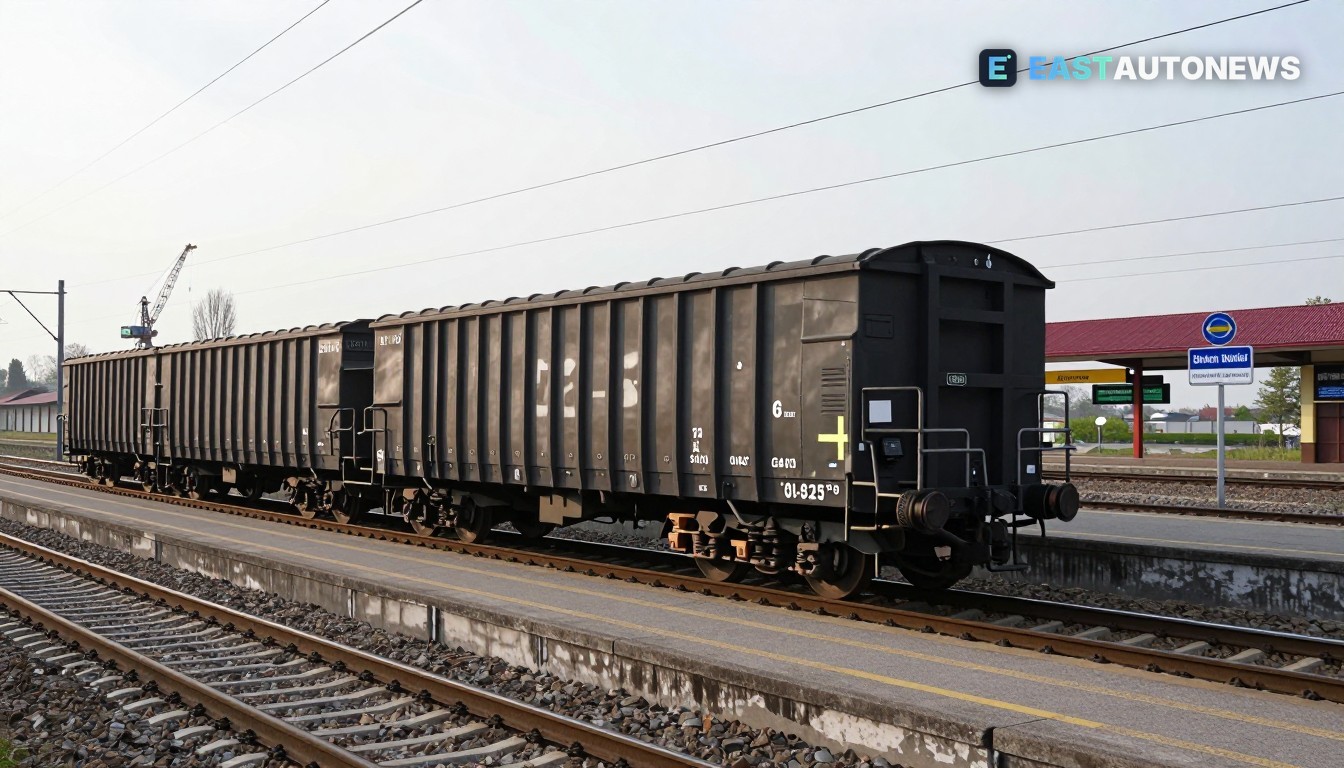
Hungary suspended railway traffic to and from Ukraine on November 17–18 after a Russian drone crashed close to Mukachevo (Mukacheve) station in western Ukraine, the Hungarian prime minister said — a move that interrupted a key east–west freight corridor used by Central and Eastern Europe’s automotive supply chains.
The incident and immediate action
Prime Minister Péter Magyar wrote that "a Russian drone recently crashed in Zakarpattia, 300 metres from the Mukachevo railway station. The Hungarian crew of a train arriving from Hungary was ordered to disembark." He added: "We are suspending rail traffic between Hungary and Ukraine for today and tomorrow." The report was published on November 17, 2026.
Hungarian authorities and the national operator responded quickly: MAV notices and freight‑operations bulletins showed services to Chop/Záhony and onward transits were stopped or limited during the air‑alert period, with operators citing security and air‑raid conditions.
Why this matters for carmakers and suppliers
The Záhony–Chop and Eperjeske–Batovo crossings on the Hungary–Ukraine border form part of the Carpathian freight corridor that carries rail freight, including components and raw materials for Central and Eastern Europe’s automotive industry. The corridor has been identified as strategically important for EU supply‑chain resilience: the European Investment Bank approved a HUF 55,596m (about €152m) package in 2026 to modernise freight and transhipment infrastructure on the Hungarian side of the Záhony/Chop and Eperjeske/Batovo border crossings to increase throughput and border‑handling capacity.
What this means for the market
Short, repeated suspensions of cross‑border rail risk disrupting just‑in‑time deliveries of parts and modules to assembly plants in Hungary, Slovakia and Poland, and delay inbound shipments of subassemblies sourced via Ukraine‑connected routes. Even brief stoppages put pressure on smaller tier‑suppliers that run low inventories and rely on scheduled rail wagons rather than road alternatives. The episode highlights two industry realities: first, the fragility of rail corridors that remain exposed to spill‑over from regional conflict; second, the economic rationale for the EIB and EU investments in transhipment and resilience — investments meant to reduce delays by expanding handling capacity and alternative routing at Záhony/Chop.
For logistics planners at OEMs and tier‑suppliers the near term response will be pragmatic: re‑route critical wagons via Poland or Romania where capacity allows, increase short‑term truck liftings and accelerate bookings at alternative transhipment hubs. Those switch‑overs raise costs and transit times, and — over repeated incidents — they raise the premium on localised supply and spare‑parts buffers.
Commercial vehicle listings on WorldTrader24 →
Sources: Reuters, European Investment Bank