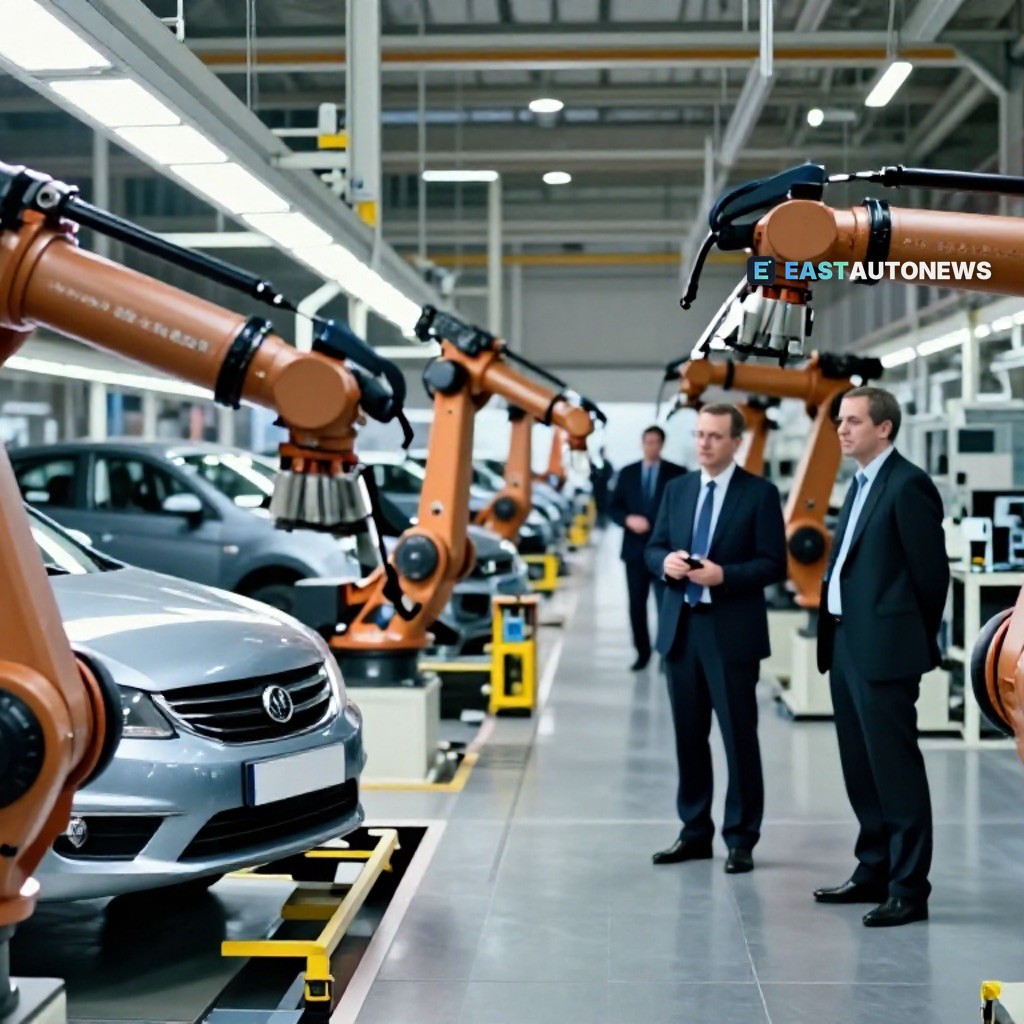
German car manufacturing is entering a decisive phase, with Mercedes and Volkswagen both stalling investment plans — and the economics behind that hesitation now quantified. Production costs at German plants run between €3,500 and €5,000 per vehicle, according to figures reported by Deutsche Welle, compared with just €2,000 to €2,500 in Eastern Europe. At the extremes, that is a gap of up to 100 percent — a margin no volume manufacturer can absorb for long.
The arithmetic explains why the continent's production map keeps tilting eastward. Eastern European sites pair lower costs with proven output: Škoda's Kvasiny plant recently celebrated its five-millionth vehicle after a record 301,500-unit year in 2025, and today builds the Karoq, Kodiaq and Octavia. As Western boardrooms hesitate, the region's factories are quietly making the case that Europe's next round of capacity belongs with them.
The stakes reach far beyond any single site. A consultancy report covered by Euronews on November 25 estimates that around 3.7 million jobs are at risk across Europe's struggling industry. The Industrial Financial Health Index behind those findings tracks almost 1,200 listed and privately held manufacturers in Europe, each with more than €100 million in revenue — a breadth that underlines how systemic the pressure has become.
Yet where incumbents see crisis, newcomers see opportunity. On November 24, BYD confirmed it has entered exclusive negotiations with INEOS Automotive to acquire its manufacturing plant in Hambach, France. Coming after the Chinese group scouted sites in Romania for its European expansion, the move suggests that capacity Western owners no longer want may find eager new tenants — keeping factories running even as the nameplates above the gates change.
For now, the pressure sits squarely on Germany. Closing a per-vehicle cost disadvantage of €1,500 to €3,000 against Eastern European rivals is a formidable task for plants whose owners have already paused spending — and every delayed investment decision pushes more of the continent's 3.7 million at-risk industrial jobs closer to the edge. The coming months will show whether German manufacturing can rebuild its cost base, or whether the industry's center of gravity settles permanently further east.
For buyers and dealers, these industrial shifts eventually reach the forecourt, shaping prices, availability and delivery times across Europe. Anyone weighing a purchase can stay ahead of the market by comparing offers across borders — those looking for a vehicle will find sensational cars at sensational conditions at WorldTrader24, Europe's marketplace with over 70,000 vehicles.