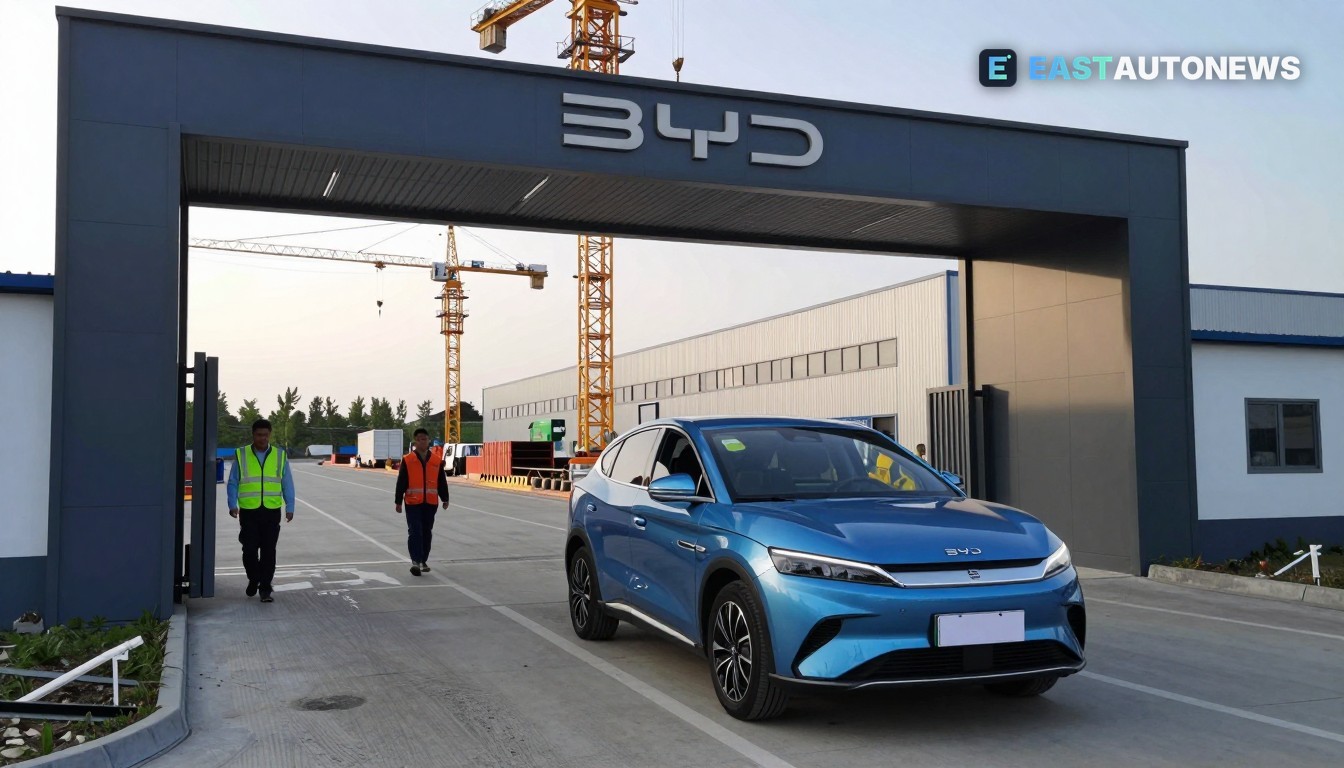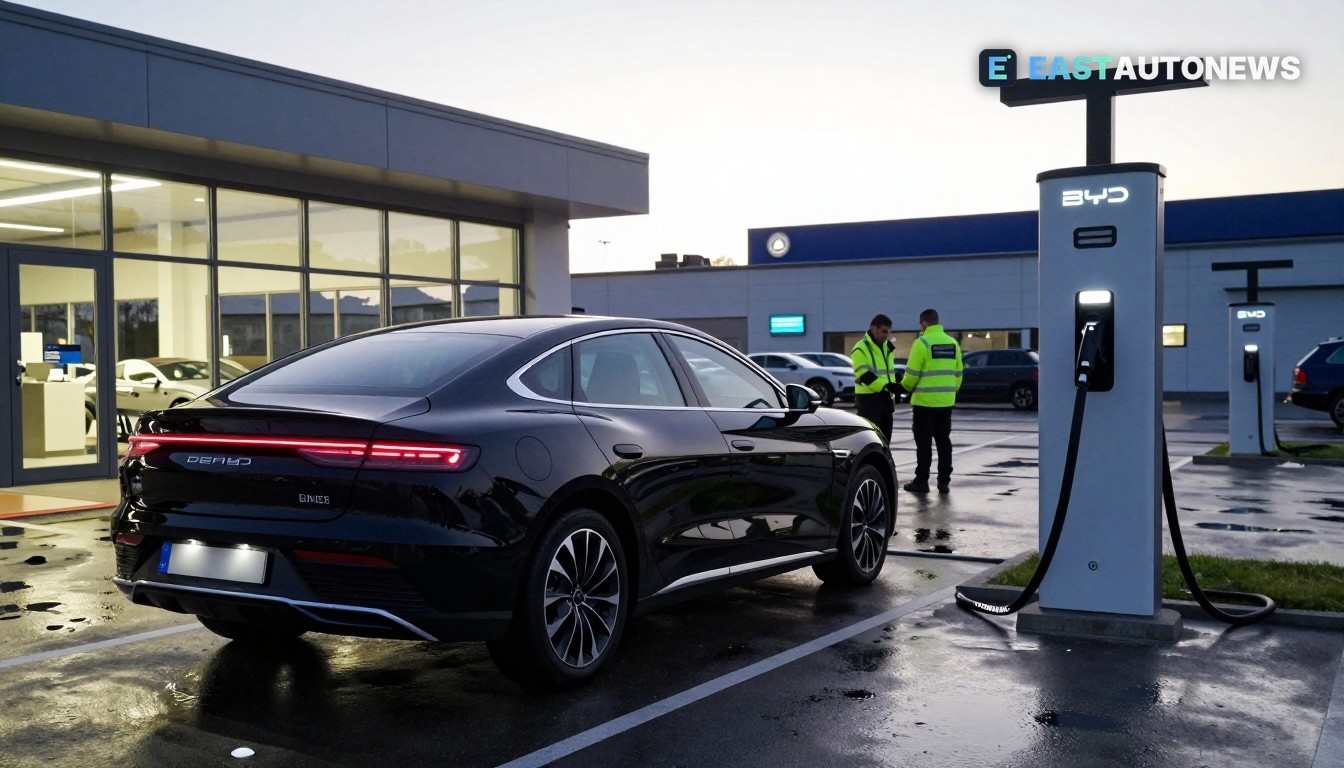
Chinese carmaker BYD has inaugurated a pilot Flash Charging installation at Autohaus Göndle in St. Pölten, Austria. The company says the site—commissioned in mid‑November 2026—represents the DACH region’s first grid‑connected Flash Charger and will remain in test mode through the end of the year.
Pilot details and technical claims
BYD describes the unit as a T‑shaped, CCS2 Flash Charger able to deliver up to 1,500 kW peak power; the pilot pairs the charger with an onsite battery buffer to limit grid demand. Electrive reports the installation at Autohaus Göndle includes roughly a 400 kWh battery storage system as part of the concept. BYD says the chargers are intended to be brand‑agnostic where technical compatibility exists, although only selected BYD models can draw the highest megawatt‑level power.
BYD Austria’s LinkedIn announcement notes the company opened the Flash Charging station together with local dealer partner Autohaus Göndle and described the inauguration as the start of a national rollout. BYD’s local team highlighted that the onsite battery buffer allows ultra‑fast charging without requiring an oversized grid connection at every site.
Regulatory and practical caveats
Independent reporting and BYD itself underline caveats: the pilot is not yet fully compliant with Austria’s metrology (Eichrecht) rules, AFIR acceptance and audio‑guide requirements, and the company says public listing in charging directories will follow after testing. Industry observers also point out that no mass‑market passenger car currently accepts a sustained full‑megawatt charge, so real‑world benefits depend on compatible battery and vehicle designs.
What this means for the market
For Central and Eastern European industry stakeholders the pilot is notable because it links a fast‑growing Chinese OEM’s sales and dealer strategy with infrastructure deployment. BYD told local media it plans to roll the concept out: in Austria the company is targeting up to 100 Flash sites by the end of 2027, and BYD has publicised an ambition of several thousand Flash Chargers across Europe as part of a broader rollout. If realised, the network would strengthen BYD’s aftersales and fleet proposition in nearby markets and increase competitive pressure on incumbent charging operators.
At dealer level the pilot underlines a trend in which manufacturers use dealer networks to host energy assets that support both sales and service operations. Autohaus Göndle’s managing director welcomed the pilot as a commercial opportunity to draw high‑mileage and fleet customers to the site while BYD said storage‑paired Flash Charging can make ultra‑fast stations feasible at locations with modest grid connections.
Whether megawatt charging becomes a mainstream enabler for long‑distance travel across CEE will depend on vehicle compatibility, regulatory approvals, interoperability and how quickly public network operators and grid operators can adapt. For now the St. Pölten pilot is primarily a technical and commercial demonstration that puts another major OEM squarely into the infrastructure game.
Electric car listings on WorldTrader24 →
Sources: electrive.net, BYD Austria (LinkedIn), AutoPresse